








The announcement of a truce between the United States and Iran in early April 2026 opens the way to a possible easing for the air cargo sector, after weeks of severe disruption along corridors crossing the Middle East. According to Xeneta’s analysis, the gradual lifting of airspace restrictions over the Gulf could progressively restore cargo capacity, although a return to pre-conflict levels is expected to take between one and two months. Operational constraints imposed during the conflict forced many airlines to suspend flights and cut frequencies, compressing available supply.
The immediate result was a sharp rise in rates on major Europe-Asia routes. In the week ending 5 April, spot rates from South Asia to Europe rose by 105%, while increases of 87% were recorded from Europe to the Middle East and 84% from South Asia to the Middle East. Routes to North America also showed strain, with an 82% increase from South Asia, while South-east Asia to Europe recorded a 72% rise. These changes, concentrated over a short period between late February and early April, highlight a rapid contraction in available capacity.
According to Niall van de Wouw, Xeneta’s head of air cargo, the trend is primarily driven by an imbalance between supply and demand: "This has been a capacity issue from the start," he explains, noting that the progressive reopening of Middle Eastern airspace will only ease rate pressure once flights are effectively restored. Increased supply will exert downward pressure on prices, but not immediately.
Flow analysis confirms that the centre of the crisis lies along the axis linking the Middle East, South Asia and Europe. Routes near the conflict zone or critical for intercontinental transit have seen the steepest increases, signalling saturation of available capacity. The shift of volumes from maritime to air transport, due to disruptions along ocean routes, has also directly boosted demand for cargo space.
South Asia has emerged as one of the main congestion points in the global logistics network. Longer routings to avoid risk areas and reduced aircraft rotations have further constrained supply. The effect extends to South-east Asia, where rates to the Middle East have risen by 72% and routes to Europe show significant increases, while tensions are also evident on transpacific lanes.
Against this backdrop, a notable anomaly has emerged: the Europe–North America corridor has recorded a 16% decline. This suggests that carriers are reallocating capacity towards more profitable Asian and Middle Eastern routes, resulting in excess supply across the Atlantic. This is compounded by relatively weaker demand for European exports to the United States compared with emergency flows originating in Asia.
The truce introduces elements of potential stabilisation, but uncertainty remains. Xeneta notes that restoring operations depends not only on reopening airspace but also on operational and commercial factors. Airlines must rebuild networks, restore customer confidence and contend with any remaining insurance restrictions on Gulf transits. Another key variable is passenger demand, which directly affects available cargo capacity, particularly for Gulf carriers such as Emirates and Qatar Airways. Reduced tourist confidence in the region could keep passenger load factors low, limiting bellyhold capacity and slowing the overall recovery of the cargo market.
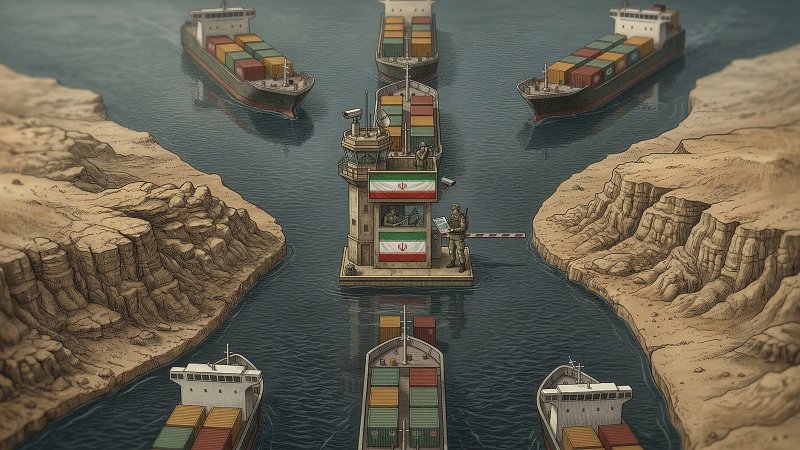
Falling jet fuel prices could contribute to a gradual easing of rates, but Xeneta expects any decline to be slower than the previous surge. Carriers may maintain elevated pricing amid ongoing geopolitical uncertainty and the temporary nature of the truce. Moreover, Iran’s reactivation of the Strait of Hormuz just hours after the agreement underscores the fragility of the operating environment.
For logistics operators and shippers, conditions therefore remain highly volatile. Routing decisions are unlikely to change in the short term on the basis of a limited-duration truce, and planning will continue to favour cautious solutions. Air logistics is thus shaping up as a two-speed system, with intense pressure east of Suez and relative stability on transatlantic routes.
A.M.B.