




On 6 November 2025 more than sixty union delegations from across the world approved a resolution in Lisbon committing dockworkers to a common strategy against the spread of automation that cuts jobs and weakens collective bargaining. The new body, called the Global Maritime Alliance, marks a pivotal step in the international debate on technological change in the ports sector.
The resolution was adopted during the “People over profits” conference, organised by the International Longshoremen’s Association (Teamsters) and the International Dockworkers Council, as the culmination of a process launched in September 2025 with the announcement of an international initiative to defend port employment. Around one thousand union representatives, academics and maritime experts attended the meeting in Lisbon. By signing the Lisbon Summit Resolution, unions created a permanent coordination framework linking port organisations from the United States, Canada, Europe, Latin America, Africa, Asia and Oceania.
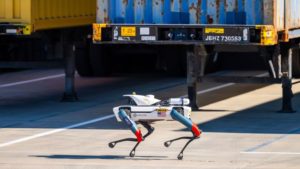
At the heart of the resolution lies the rejection of technologies that replace human labour and undermine port communities, the defence of collective bargaining as the tool for regulating any innovation, and the call for technological investment that reinforces workers’ skills. The text approved in Lisbon states that automation does not deliver structural improvements, highlighting technical shortcomings, continuous reliance on manual intervention and organisational risks for terminals. Studies presented during the conference, according to organisers, indicate more reliable performance in traditional terminals than in fully automated systems.
The alliance’s operational strategy centres on internationally coordinated strikes. Ila president Harold Daggett explained that if a company introduces destructive automation in a participating port, all alliance members will launch simultaneous work stoppages lasting three or four weeks. The goal is not to paralyse the entire global port system, but to apply targeted pressure on companies pushing through non-negotiated innovations. This approach mirrors the model used by the Ila in the United States in October 2024, when a three-day strike across thirty-six ports resulted in a six-year contract with binding anti-automation clauses.
The Global Maritime Alliance provides for regular consultations, a rapid-alert mechanism to flag attempts to introduce new technologies without union engagement, financial support during strikes and public campaigns on the risks linked to job reductions. The involvement of academics and specialists is intended to generate economic, operational and social assessments of automation’s impact across logistics chains. Particular attention is given to effects on coastal communities that depend on ports for a significant share of local income.
The alliance emerges at a time marked by plans for full automation, non-negotiated gate-management systems and technological investments that unions say are introduced without consulting workers. The case of the Port of Mobile in Alabama, where the Ila accused Apm Terminals of installing automated gates without prior discussion, is cited by organisers as a prime example of the need for an international and coordinated response. Workers risk a reduction in operational tasks, the loss of skills built over generations and the downsizing of local port economies.
Speakers at the Lisbon conference repeatedly underlined that port modernisation is compatible with employment and efficient logistics, provided that investment is directed towards sustainable models that value workers’ experience. The alliance’s guiding principle is that technology should support, not replace, labour. Daggett stressed the need for international unity to resist pressure from multinational companies, while the Idc’s labour coordinator, Jordi Aragunde, argued that the global scope of corporations requires an equally broad response from workers. According to participating organisations, other unions are now considering joining the Global Maritime Alliance, which is therefore aiming to expand its network in the next stages.