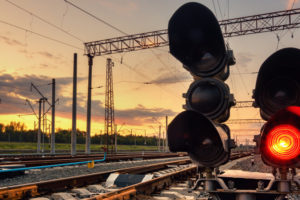









Better late than never. The European Union Agency for Railways (ERA) has acknowledged what railway undertakings have been saying for some time: the European standard signalling system designed to manage, control and protect rail traffic, known as ERTMS/ETCS, is far from being a single language understood across all European networks. Instead, it has become a collection of dialects with minor differences that nevertheless make them mutually incompatible. The root cause of this confusion lies in the decision to incorporate new specifications into European legislation before they had been fully tested and definitively certified against a single, approved standard applicable to everyone. By failing to do so, the authorities left the door open to repeated changes and national variants. According to ERA Executive Director Oana Gherghinescu, the system "remains Europe's flagship in terms of safety, capacity and punctuality", but the real problem lies in how the various European railway administrations have developed and implemented it.
For the first time, the European agency has endorsed a demand long advanced by railway undertakings across Europe, including those operating in Italy and represented by Assorotabili: to freeze the existing specifications for a sufficiently long period to allow equipment to be industrialised. This is particularly important because upgrading a single locomotive can cost hundreds of thousands of euros, while each additional variant requires further investment, in what increasingly resembles an endless race.
The increasingly rapid technological development of successive European and national specifications has undermined the very objective for which ERTMS was created: establishing a single standard. Europe has ultimately ended up with four ETCS levels and three different baselines, which can appear in several variants: L1 BL2, L1 BL3 MR1, L1 BL3 MR1 with Radio Infill, L1 BL3 R2, L2 BL2, L2 BL3 MR1 and L2 BL3 R2. They may look like lottery numbers, but these are the different implementations that European railway undertakings are forced to accommodate. At this point, even the concept of an interoperable locomotive capable of operating along Europe's various rail corridors becomes an illusion. Or rather, it is technically achievable, but only by continuously keeping pace with every new upgrade and bearing the associated costs.
The original mistake was to make decisions driven almost by enthusiasm, as ERA itself describes it, when preparing new solutions that were initially outlined only in fairly general terms, leaving individual markets to develop the details, with all the limitations this entailed. The European agency now appears to have learnt that lesson and has committed to developing and defining harmonised engineering and operational standards that can be "copied and pasted", to borrow a computing expression, into the binding documentation used when tendering for equipment. The intention is also to incorporate common rules for Automatic Train Operation (ATO) systems into the development of the European standard. ERA's change of direction is encapsulated in what appears to be a new guiding principle, expressed through five concepts sharing the same initial letter: standardise, synchronise, stabilise, simplify and scale. This means gradually eliminating all locally developed subsystems to provide the industry with definitive specifications that remain stable over time. Only then will a fully interoperable European railway system become possible.
Piermario Curti Sacchi