










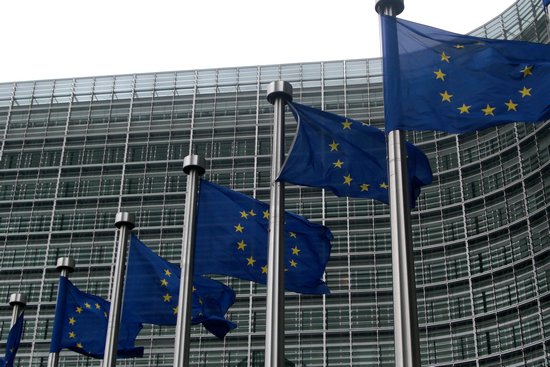
- EU Regulation 2026/2108 was approved by the Council on 3 September and by the European Parliament on 16 September 2026, published in the Official Journal of the EU on 19 September and entered into force the following day. It replaces Regulation 952/2013, with most provisions applying from 21 September 2027.
- The reform establishes the EU Customs Authority (EUCA), based in Lille, and the Data Hub, the common platform intended to replace national IT systems. Its use will become mandatory for e-commerce from 1 July 2028 and for all operators from 1 March 2034, with voluntary adoption from 2031.
- For distance sales, the reform introduces the role of importer, responsible for data, duties and product compliance, together with a €2 per-item handling fee set by the delegated regulation of 21 September and due to apply by 1 November 2026. The Trust and Check regime will ease controls for reliable operators.
The European Union Customs Code is being overhauled under Regulation (EU) 2026/2108 of the European Parliament and of the Council, which establishes the new framework and the EU Customs Authority (EUCA), repealing Regulation (EU) 952/2013. The text is dated 16 September 2026, when Parliament gave its final approval at second reading following the Council’s green light on 3 September. It was published in the Official Journal of the EU on 19 September and entered into force the following day, while most provisions will apply from 21 September 2027. The obligations will affect importers, exporters, customs representatives, platforms and distance sellers, as well as the customs administrations of the 27 Member States.
At the heart of the reform is a move away from a system based on customs declarations towards one built around the sharing of supply-chain data. The European Commission identifies three objectives: more targeted controls, fewer repetitive administrative requirements and more uniform enforcement of the rules across Member States. The party responsible for goods before customs is the liable person, namely the importer, exporter or transit holder, who must provide or make the required data available before release. An indirect customs representative assumes all the obligations of the person represented, including compliance with other rules enforced by customs, and must be established in the Union, while representatives from third countries may continue to operate for parties that are not required to be established in the EU.
The Data Hub will become the common platform that will replace national IT systems, of which the European Parliament has identified at least 111. Its distance-sales functions must be operational from 1 June 2028 and its use will become mandatory for e-commerce from 1 July 2028. For other operators, use will be voluntary from 2031 and compulsory from 1 March 2034. During the transition, operators will still be able to submit customs declarations, which will disappear once the Data Hub becomes fully operational. The information stored may include personal data, for which the regulation sets a maximum retention period of ten years.
The EU Customs Authority will be based in Lille, France, and will be responsible for coordinating risk management at European level, proposing priority areas to the Commission, supporting crisis management and assisting national administrations, which will retain responsibility for on-the-ground controls. The rules governing the Authority will apply from the regulation’s entry into force. In particular, its risk-management tasks will generally become applicable from 21 September 2027, while the Commission may perform some of the Authority’s functions until 30 June 2028.
The Trust and Check regime is being introduced for reliable operators, building on the requirements of Authorised Economic Operator (AEO) status but adding one further obligation: companies must allow customs authorities access to the electronic systems in which they record compliance and goods movements, to an extent that is proportionate and strictly necessary. In return, the regulation provides for operators to release goods on behalf of customs without waiting for customs intervention, defer payment of customs debt and pay duties in their Member State of establishment. The regime is not available to operators that have committed serious or repeated infringements. AEO status will remain in place, including for smaller businesses, and must be reviewed at least every three years. Trust and Check status may be requested from 21 September 2027, with the associated facilitations available from 1 July 2028.
The most immediate changes concern distance sales from third countries. The seller or platform facilitating the sale assumes the role of importer for distance sales: it must transmit the data before release, be liable for the customs debt and ensure that products comply with EU rules. Non-EU operators must be established in the Union or use a qualified representative. Under the Import One-Stop Shop (IOSS) scheme, the customs debt arises when payment is accepted and sales data must be submitted by the following day. The regulation also introduces customs warehousing for distance sales, reserved for operators meeting the reliability criteria of the Trust and Check regime: goods enter in bulk, customs authorities check compliance on entry, and release for free circulation takes place when the goods are sold and leave the warehouse. In practical terms, European buyers should no longer face unexpected requests for duties or handling charges when goods are held at local customs, as these will be processed and guaranteed by the platform directly at online checkout.
Two separate measures must be distinguished when it comes to charges. The flat-rate €3 duty per item has applied since 1 July 2026 to low-value imports, following the abolition of the exemption for consignments worth up to €150, and will remain in place on a transitional basis until the e-commerce Data Hub becomes operational. The EU handling fee introduced by the new Code, meanwhile, is a fixed amount per item intended to cover the cost of customs controls. Commission Delegated Regulation C(2026) 6694, adopted on 21 September 2026, sets the fee at €2 per item. It will apply to all distance sales, including goods worth more than €150, will not be refundable and will be payable by the importer for distance sales or, until the rules on that role become applicable, by the declarant. The consumer will not be liable for the fee. The measure will enter into force once published in the Official Journal of the EU, which has not yet happened, and will apply from the tenth day after publication. The Code sets 1 November 2026 as the deadline by which the fee must enter into force.
The chapter on penalties establishes a common minimum list of infringements and, for distance sales, financial penalties linked to the value of imported goods. Repeated infringements can result in penalties ranging from 1% to 6% of the value of goods imported during the previous twelve months, together with the possible suspension, revocation or cancellation of preferential statuses. Operators that systematically breach the rules will be classified as high risk and lose their facilitations. In the most serious cases, the release of all imported goods may be suspended and the competent authorities may temporarily restrict access to the operator’s online interface. A finding of systematic infringements in distance sales will constitute evidence for refusing the release of goods for at least six months.
Two issues remain open. By 31 December 2031, the Commission will assess the two supervision models: supervision by the Member State of establishment for Trust and Check operators and supervision based on the location of the goods for all others. It may then decide by delegated act whether to retain them. For goods released from customs warehouses for distance sales, a reduced handling fee is due to apply from 1 July 2028, but the delegated regulation of 21 September does not set its amount.
Antonio Illariuzzi