




Kuehne+Nagel partners with Amazon
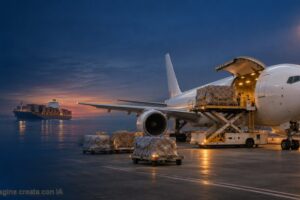
Kuehne+Nagel is expanding its partnership with Amazon through a strategic agreement that also includes Amazon Web Services (AWS), focusing its logistics activities on the lifecycle of cloud and data centre infrastructure. The agreement, announced on 21 September 2026, has a global scope and covers services ranging from site construction and equipment deployment to maintenance, technology upgrades and expansion projects. No details have been provided on the countries involved in the initial phase, the number of data centres covered, expected volumes, or the value and duration of the contract. The transaction includes an option on existing Kuehne+Nagel shares in favour of Amazon, which can be settled in cash or, at Amazon's discretion, in shares. Kuehne+Nagel has also appointed a third-party financial institution to carry out hedging transactions involving its own shares. Based on the information available, the structure does not entail an immediate equity investment by Amazon in Kuehne+Nagel. Operationally, the agreement strengthens the Swiss group's role in digital infrastructure logistics, where international transport, customs management, warehousing and supply coordination support the various stages of data centre construction and upgrading. The expansion of cloud infrastructure requires the management of equipment and components that are critical to the construction, maintenance and expansion of sites. For Amazon and AWS, the partnership is intended to support international growth and strengthen logistics service levels. For Kuehne+Nagel, the agreement provides an opportunity to integrate its air and sea freight activities with logistics services linked to technology infrastructure.
Maersk orders 26 container ships
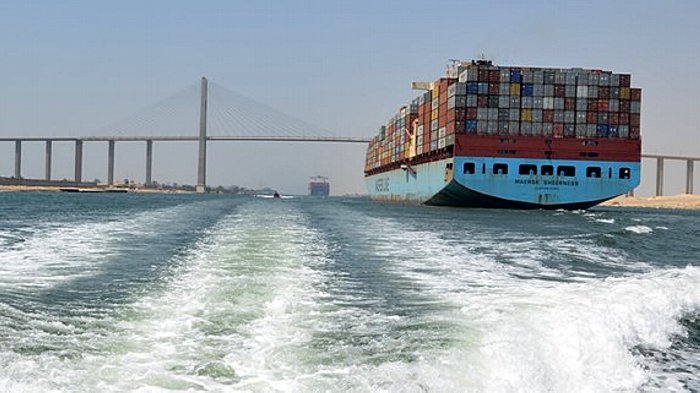
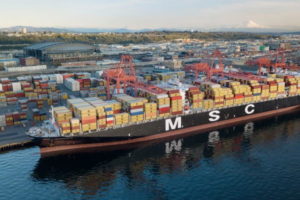
Maersk has confirmed an order for 26 container ships with a capacity of 18,600 TEU each, with deliveries scheduled for 2029 and 2030. The new vessels will have dual-fuel engines capable of running on conventional bunker fuel or liquefied gas. Overall, the order represents around 483,600 TEU of nominal capacity, equivalent to about 10% of the company's current operating capacity. Maersk formally describes the investment as part of its fleet renewal programme, but the size of the order also points to a drive for greater operational flexibility. In 2024, the group set a target of maintaining capacity at around 4.3 million TEU through a programme involving 50-60 new vessels totalling approximately 800,000 TEU, plus a further 500,000 TEU through long-term charters. The newly confirmed order follows an order for eight vessels of the same capacity announced in February 2026. Taken together, the two packages bring Maersk's commitments announced this year to at least 34 vessels of 18,600 TEU, representing around 632,400 TEU of nominal capacity. A net increase in the fleet cannot be assumed, as this will depend on scrapping, charter redeliveries and charter renewals in 2029-2030. The new ships could provide greater flexibility within the Gemini network with Hapag-Lloyd, which is based on shorter rotations, hub concentration and feeder connections, although Maersk has not announced any specific allocation of the vessels to these services.
Austria targets Middle Corridor
Austria is seeking to strengthen its role in rail freight flows between Asia and Europe through the Middle Corridor, the trans-Caspian route that provides an alternative to the northern route via Russia. Minister Peter Hanke met Turkish minister Abdulkadir Uraloğlu in Ankara, with the two sides agreeing to deepen cooperation on cross-border infrastructure, freight transport, digitalisation and international coordination. ÖBB Rail Cargo Group increased its operations on the corridor from just one block train in 2024 to 32 in 2025, and expects further growth of 20% in 2026. Austria's objective is to capture flows arriving in Turkey from China and Central Asia and distribute them across Europe through its rail network. Existing intermodal services already connect Istanbul and Tekirdağ with Budapest and Curtici, with onward links to Vienna, Duisburg, Zeebrugge and Genk. An important element is the Marmaray tunnel, which is used for the transit of containers, swap bodies and semi-trailers. Volumes handled through the Kazakh ports of Aktau and Kuryk reached 4.1 million tonnes in 2024, up 63% on the previous year. The Middle Corridor's overall capacity is estimated at around 10% of that of the Northern Corridor. Further growth will therefore require investment in rail and port capacity, as well as more efficient customs and border procedures. For now, the agreement between Austria and Turkey remains largely political: no quantified new investments, new rail services or operational agreements with a defined timetable have been announced.
Polish haulier suspended in Germany
Germany has banned a Polish road haulage company from carrying out cabotage operations for one year following repeated breaches of the rules between 2023 and 2025. The measure imposed by the Bundesamt für Logistik und Mobilität (Federal Office for Logistics and Mobility, BALM) will apply from 1 October 2026 to 30 September 2027. Before the decision, the carrier had been involved in 23 concluded enforcement proceedings, resulting in fines totalling more than €70,000. Despite the penalties, the company continued to breach cabotage rules. The ban applies throughout Germany and prevents the carrier from carrying out domestic transport operations in the country for 12 months. The authority has not disclosed the company's name for legal reasons, and the decision is not yet final as it can be appealed. The measure is based on Article 3 of the German ordinance governing cross-border freight transport and cabotage and Article 13(2) of Regulation (EC) No 1072/2009. The case shows that serious and repeated infringements can result in consequences extending beyond individual financial penalties to temporary exclusion from the domestic cabotage market.
40 drivers employed illegally in Germany
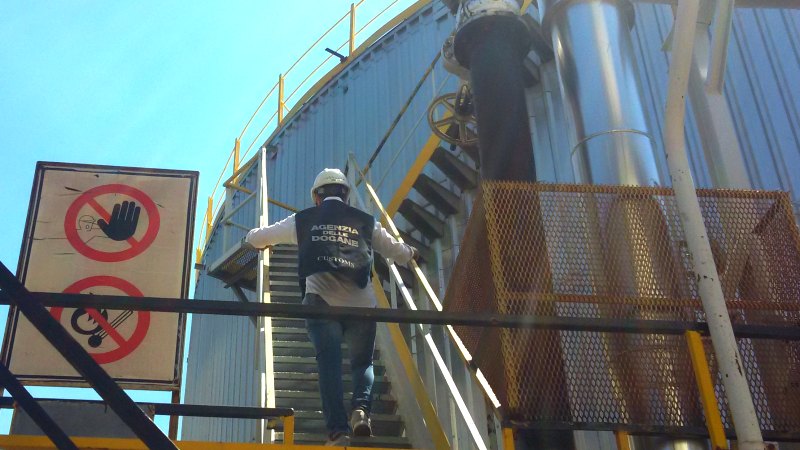
German Customs has imposed penalties in a case involving the unauthorised supply of workers, concerning 40 foreign drivers formally employed by two Lithuanian transport companies. An investigation by the Finanzkontrolle Schwarzarbeit (Financial Control of Undeclared Work) at the Lörrach customs office found that the drivers worked exclusively for a haulier near Freiburg and were integrated into its organisation, following its instructions. The arrangement had been formalised through contracts for services, intended for the independent performance of an activity or the delivery of an agreed result. According to investigators, however, the actual working arrangements amounted to the supply of labour, an activity requiring authorisation in Germany. The German company paid the Lithuanian businesses a predetermined amount for each driver, including wages and Lithuanian social security contributions. The director of the two Lithuanian companies, who according to the authorities was aware of the authorisation requirement, was fined €20,000. The German operator using the drivers was fined €15,000. The penalties therefore total €35,000, and both decisions are final. The case highlights the distinction between outsourcing a transport service and supplying workers: for the authorities, the key issue is determining who actually organises the work, gives instructions and integrates the drivers into their operational structure.