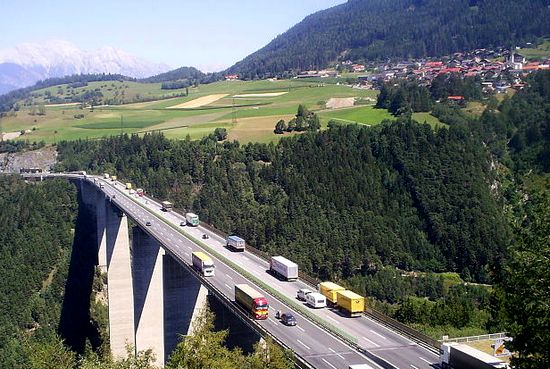






Tyrol governor Anton Mattle has firmly rejected the conclusions published on 16 July 2026 by the advocate general of the Court of Justice of the European Union, which found that three of Tyrol’s four restrictions on heavy goods traffic on the Brenner motorways are incompatible with EU law. “Tyrol will not give way on transit,” Mattle said, according to the German news agency Dpa, adding that it will now be up to the Court’s judges to decide whether to prioritise the health of the population or the interests of road hauliers. The Land, he continued, will keep using all means at its disposal to protect residents from excessive transit traffic.
Vienna and Innsbruck had already defended the measures at the oral hearing in spring 2026, citing environmental pressure and road safety. Without Tyrol’s restrictions, according to Austria’s position, pollution would increase and traffic safety could not be guaranteed. Tyrolean MEP Barbara Thaler (Övp), deputy transport spokesperson for the European People’s Party, has also urged observers to wait for the final ruling before drawing conclusions. The advocate general’s conclusions, she said, remain an “individual opinion”, namely the view of a Spanish legal expert, and are not binding on the Court’s judges.
According to Austrian press reports, the Tyrolean regional government is assessing all possible scenarios ahead of the ruling, without ruling out adjustments to individual measures. However, it categorically excludes any retreat from its underlying transit policy. This is not Austria’s first setback on the issue: Tyrol had already been condemned twice by the Court of Justice for restrictions deemed unlawful in relation to the free movement of goods. German CSU MEP Markus Ferber described the new conclusions as “another warning shot” for Tyrolean and Austrian transport policy. The final ruling of the Court of Justice is not expected before autumn 2026 and, if the judges find an infringement, Austria would be required to comply without delay, or face a possible request for financial penalties from the European Commission.
P.R.