







The French subsidiary of the Ziegler group, a Belgian logistics operator founded in 1908, has entered an acute phase of crisis, culminating on 2 March 2026 with the opening of judicial reorganisation proceedings (redressement judiciaire) by the Commercial Court of Lille Métropole. The decision, registered under case number 2026/272, retroactively sets 3 September 2024 as the date of cessation of payments, indicating that the difficulties began well before judicial intervention.
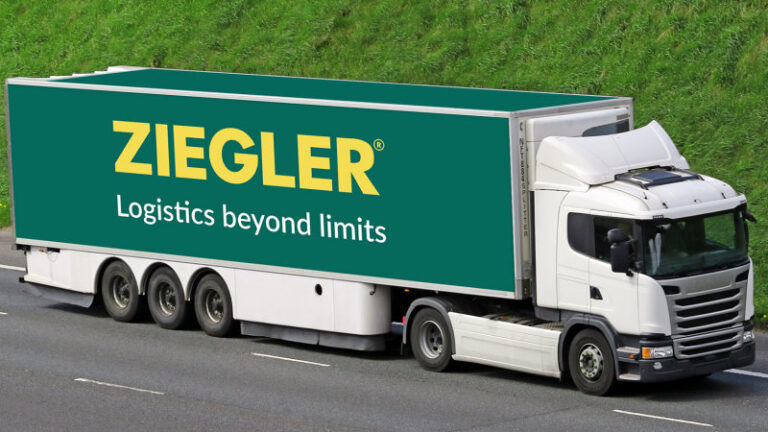
Ziegler France, headquartered in Roncq in the Nord department, employs around 1,400 people and operates a network of approximately 50 branches across the country, from Alsace to Brittany and from Normandy to the Pays de la Loire. The company is active in parcel delivery, full-load transport and international transport and logistics services. On 3 March, management formally announced the start of proceedings, confirming a detailed review of the situation and its intention to develop a sustainable recovery plan.
The deterioration in its financial position has been both rapid and severe. After still posting positive results in 2023, Ziegler France recorded losses of €6 million in 2025. Operating income and EBITDA turned negative, while cash flow came under increasing pressure to the point of becoming unsustainable. Management explicitly cited a challenging macroeconomic environment, including rising energy and fuel costs, intense competitive pressure, and the loss or deterioration of key contracts, all of which eroded margins in a sector already characterised by structurally low profitability. On the operational side, employees at several sites reported that as early as summer 2025 the company was unable to pay subcontractors, some of whom suspended routes and services before partially resuming them after the opening of proceedings.
The financial crisis has been compounded by a significant industrial downturn. At several sites, parcel and transport services have slowed or halted, with trucks running nearly empty for months, particularly in Brittany and western France. Faced with service disruptions, customers have gradually shifted their volumes to other operators, exacerbating the decline in traffic and fuelling a vicious circle of falling volumes, rising difficulty in covering fixed costs, and further loss of commercial appeal. The Theix-Noyalo site in Morbihan, employing around 40 staff, has become a focal point for mobilisation, with demonstrations at the gates and visible protests at nearby industrial roundabouts.
In Bayeux, Normandy, where a site had recently been opened and expanded, workers described a climate of deep uncertainty. Officially, operations were continuing, but concerns about medium-term viability were evident. In Alsace, according to L’Alsace, 170 jobs are directly at risk. Other sites, such as Les Herbiers and Sainte-Luce-sur-Loire in Vendée and Loire-Atlantique, remain operational but could face restructuring as part of the proceedings.
The social dimension of the crisis has become increasingly visible in the weeks before and after the opening of judicial proceedings. Around 1,400 employees, represented within the central Social and Economic Committee, have demanded clarity on the group’s intentions and the future of its sites. Testimonies reported in regional media suggest a widespread feeling of abandonment by management. Workers have criticised a lack of communication and the absence of a clear strategy, and fear that, without a buyer by the end of March 2026, the company could be pushed into liquidation.
The group’s leadership underwent a sudden change at the height of the subsidiary’s downward spiral. At the end of January 2026, Ziegler announced the unexpected departure of chief executive Diane Govaerts, who was replaced by Lee Marshall, previously head of UK operations. The leadership transition, at such a sensitive moment, has raised questions about the group’s strategic positioning in France and the Belgian parent company’s willingness to support its subsidiary.
The Commercial Court of Lille has appointed at least two judicial administrators, Maître Laurent Miquel and Maître Vincent Labis, to assist management in continuing operations, analysing the financial situation and preparing a recovery plan. The ongoing observation period allows the company to operate under creditor protection, but the end-of-March deadline is a tight constraint. The court will need to assess any takeover bids or alternative solutions, and in the absence of credible offers, liquidation proceedings could begin.
Three main options are under consideration. The first is a continuity plan with internal restructuring, involving site closures or downsizing, workforce reductions and a refocus on profitable activities. The second is the full or partial sale of the subsidiary, or individual assets, to an industry operator interested in acquiring the network and remaining client base. The third, and most feared by employees, is judicial liquidation in the absence of viable offers.
The implications of the Ziegler France crisis extend beyond the company itself. From an employment perspective, 1,400 jobs are at stake in regions where the group is often a significant employer. Across the logistics chain, service disruptions have already forced many client companies to reorganise operations, with risks of delays, additional costs and supply chain interruptions, particularly in sectors reliant on parcel delivery and consolidated shipments. From a competitive standpoint, a potential liquidation or piecemeal sale of the French network could accelerate ongoing consolidation in European road freight, reshaping the balance among key operators in the French market.
The Ziegler France case forms part of a broader pattern of structural challenges affecting the European road freight sector, including pricing pressure, rising operating costs, regulatory transitions linked to decarbonisation and volatile demand. For a company with more than a century of history, the reorganisation process represents a decisive test: the ability to deliver a credible plan in the coming weeks will determine whether Ziegler France can survive as an independent entity or whether its network will be absorbed by other market players.
Pietro Rossoni