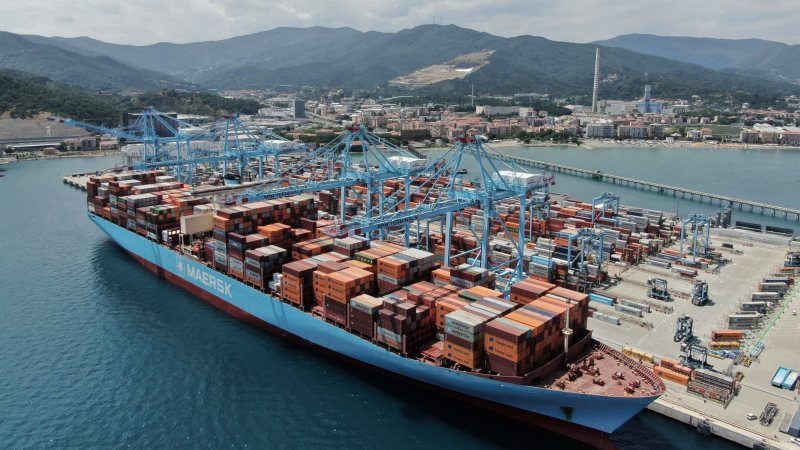







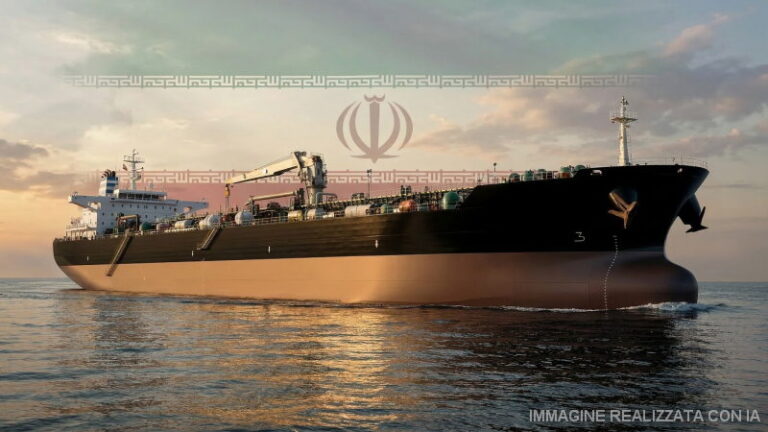
Iran has reportedly started requesting up to two million dollars per voyage to allow some cargo ships to transit the Strait of Hormuz, effectively creating an informal toll system on one of the world’s most strategically important shipping lanes. Bloomberg reported this on 24 March 2026, citing people familiar with the matter who asked to remain anonymous due to its sensitivity. They noted that payments are being requested on a case-by-case basis and have not yet been formalised. The mechanism for collecting the payments, including the currency used, remains unclear. Some vessels are said to have already paid.
The Strait of Hormuz is the corridor through which roughly a fifth of the world’s traded oil and liquefied natural gas passes each day, along with substantial volumes of food, metals and other goods. The de facto control exercised by Tehran over this passage has for decades represented a key geopolitical lever, and the introduction — even informally — of a toll makes its strategic significance even more explicit. Since the start of the third Gulf war, Bloomberg reports that only a limited number of ships have used the route, largely vessels with Iranian links. Some of the few other ships are said to have sailed close to the Iranian coastline, a choice which, according to earlier reporting by the same outlet, suggests that navigation is increasingly taking place on terms set by Tehran.
The lack of transparency over how payments are collected, and the uncertainty over which ships may be affected in future, add a further layer of friction for maritime and international shipping operators. Sources cited by Bloomberg say the payments have been handled discreetly, making it difficult to assess the overall scale of the phenomenon. India has already taken a clear stance. The Government of New Delhi, which succeeded in moving four vessels carrying liquefied petroleum gas out of the Persian Gulf via Hormuz, said on Tuesday that the right to freedom of navigation in the Strait is guaranteed under international law and that no party can impose any charge for transit. India’s response reflects the concerns of consumer countries that depend on the continuity of energy flows and are closely monitoring the resilience of supply routes.
For oil-producing countries in the Arab Gulf, the toll — even in its informal form — is also considered unacceptable. According to Bloomberg’s sources, the objections relate to sovereignty, the precedent such a move would set, and the risk of the gradual militarisation of a route vital to their energy exports. Iran appears intent on institutionalising the mechanism. Again according to Bloomberg, Tehran has proposed formalising tolls as part of a broader post-war peace agreement. Last week, an Iranian MP said parliament was reviewing a proposal to require nations using the Strait to pay Iran a fee to ensure the security of the passage. Iran’s foreign ministry did not respond to Bloomberg’s request for comment, citing government-imposed restrictions on telecommunications and internet access.