




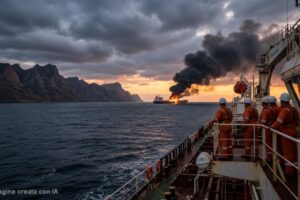

The warning came from LetExpo 2026 in Verona on its opening day, 10 March. On the sidelines of the event, Alis president Guido Grimaldi drew attention to the situation in the Strait of Hormuz, where around 30,000 seafarers are stranded on board their vessels. According to Grimaldi, many of them are Italian and are facing increasingly difficult operating conditions. For this reason, the association is calling for swift action by institutions to guarantee the safety of the crews and the ships involved.
The Alis president stressed that the situation in the strait could have direct effects on the entire international logistics system. An average of around 125 ships a day used to pass through the Strait of Hormuz, and any prolonged closure could significantly slow trade flows. “The risk is that the logistics sector and the entire manufacturing system that depends on the flow of goods will grind to a halt,” Grimaldi added, recalling that 40% of Mediterranean goods pass through Italian ports before reaching many European countries.
During the opening address at LetExpo, Grimaldi highlighted the event’s growth, noting that this year’s edition has 550 exhibitors, up 10% on last year. These figures reflect the scale reached by the association, which now represents more than 2,500 members, over 511,000 workers and around €160 billion in aggregate turnover. In his speech, the Alis president linked the growth of the event to the increasing centrality of the logistics sector in global economic dynamics. For this very reason, he observed, geopolitical tensions in the Middle East are not a distant scenario but a factor that directly affects trade routes, operating costs and transport planning.
The Strait of Hormuz carries around 20% of global oil, and any disruption to maritime traffic can have significant effects on energy supply chains and transport costs. This adds to other warning signs already identified by operators in the sector, including rising sea freight rates, higher insurance premiums and the first repercussions reported by ports and airlines involved in trade routes crossing the area. According to Grimaldi, the situation requires a coordinated response at European level. Common policies are needed on the security of trade routes, strategic infrastructure and the continent’s energy autonomy. Otherwise, the Alis president warned, international instability could quickly translate into further price rises with direct effects on businesses and households.
Massimiliano Barberis