





Trieste strengthens intermodality
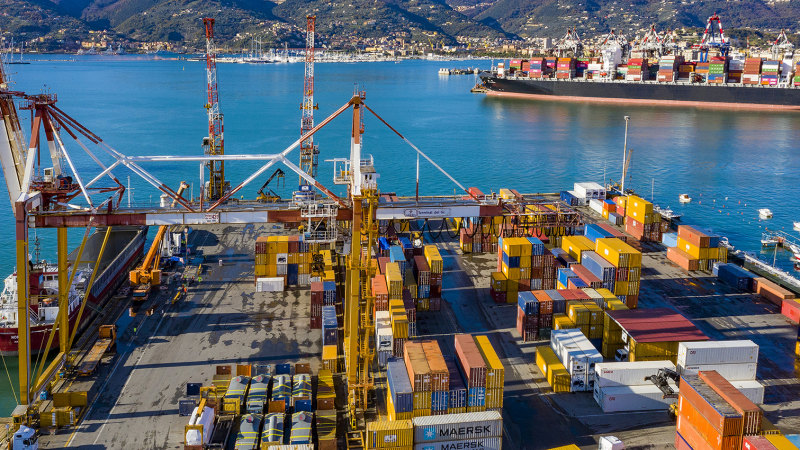
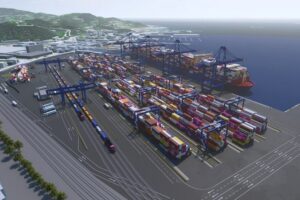
Metrans Group and Adria Port have entered into a collaboration to enhance the intermodal network connected to the port of Trieste, aiming to make links between the Mediterranean and Central-Eastern Europe more competitive. The cooperation focuses in particular on plans for a new multipurpose terminal in the former Aquilinia refinery area in Muggia and seeks to improve service quality, expand operational capacity and develop flexible infrastructure able to support growth. The two companies also intend to reinforce their commercial presence in the region through joint initiatives. During the same days, the president of the Friuli Venezia Giulia Regional Government, Massimiliano Fedriga, met a Hungarian government delegation including, among others, Deputy Foreign Minister Levente Magyar and Deputy Defence Minister Tamás Vargha. Fedriga stressed that Hungary is a significant partner for regional port and logistics activities and that these collaborations could be further developed within the Indo-Mediterranean Corridor, an infrastructure project identified as a connector between Southern Central Europe, the East and the Far East.
Air France-KLM interested in TAP
Air France-KLM has submitted its expression of interest to acquire up to 44.9% of TAP, formally entering the first stage of the process launched by the Portuguese government. The tender covers an overall 49.9% stake, with 5% reserved for employees, and requires bidders to have posted at least €5 billion in annual revenue in one of the past three years. Proposals will be evaluated on the basis of industrial plans, price and commitments on fleet and network, with particular attention to routes serving Portuguese-speaking countries and to safeguarding the Lisbon hub. The Franco-Dutch group has stated its intention to preserve the TAP brand, maintain Lisbon as a central node and further expand the network while strengthening its position in the North American market. The interest comes as Portuguese police have carried out searches at the airline as part of an investigation into the 2015 privatisation, which was later reversed by the following government. Lufthansa and IAG have already signalled their interest.
Rhenus improves pharmaceutical control
Rhenus Logistics has expanded its partnership with Testo Saveris to ensure more stable storage conditions for pharmaceutical products handled worldwide. The collaboration, active for more than a decade, now includes advanced data archiving, verification and analysis services, with more than 250 measurement points and 150 devices installed at the Strasbourg site. Temperature and humidity control is central to pharmaceutical quality and, as explained by Head of Quality Assurance Patrice Kaps, continuous monitoring is required both in warehouses and during transport. The choice of Testo technology derives from the reliability of its systems and the ability to tailor digital analyses to the specific needs of healthcare customers. Rhenus uses two generations of the Saveris 1 system, benefiting from the evolution of hardware, software and services as its infrastructure expands.
Electric truck charging on the rise
According to an update issued by CharIN on 18 November 2025, standardisation of the high-power electric charging system MCS is advancing across multiple industrial sectors, with significant implications for port logistics and freight flows. In mining, CharIN and ICMM have defined technical requirements for dynamic charging solutions and reinforced R-MCS and X-MCS systems for high-consumption vehicles, aiming to reduce emissions from large haul trucks that account for between 30% and 80% of energy use at extraction sites. Activities include technical documents, pilot projects and guidelines to promote interoperability and integration into daily operations. In the maritime sector, the Marine Task Force is defining requirements for shore-power charging connections compatible with MCS and CCS, building on existing infrastructures and protocols such as Ethernet 10Base-T1S and working with shipyards, ports and energy suppliers. CharIN has also expanded its testing perimeter by including complete M-system trials in its technical sessions with various manufacturers. The organisation has launched activities in the aviation sector to close regulatory gaps and support global uptake of high-power charging solutions.
US container traffic steady
US container traffic is expected to close the year at levels similar to 2024 thanks to consumer demand and early shipments, according to operators at major gateways. The Port of Los Angeles handled around 848,400 TEU in October, a 6% decline year-on-year; imports, at 429,300 TEU, fell by 7%, while loaded exports, representing 15% of the total, saw a slight increase. According to Executive Director Gene Seroka, the first ten months reached 8.6 million TEU, up 2%, putting the port close to the 10-million-TEU threshold for the third time. Seroka expects a seasonal slowdown of between 10% and 15% by year-end and signals caution for 2026 due to import tariffs and uncertainty over future trade agreements, factors that are holding back investment and hiring. At the Port of Long Beach, President Mario Cordero also expects 2025 to close near the record 9.6 million TEU despite the anticipated slowdown. On the East Coast, according to Georgia Ports, Savannah handled 4.8 million TEU between January and October, up 4%, although October volumes were down 8.4%. South Carolina ports reported a 1% drop in total October volumes and an 18% rise in loaded exports. President Micah Mallace confirmed support for operators as they navigate current challenges.
Lhyfe supplies renewable hydrogen
Lhyfe has signed a multi-year contract to supply renewable hydrogen for heavy-duty mobility, committing to more than 200 tonnes of RFNBO-certified hydrogen, the EU’s most stringent standard. Effective from 1 November 2025, the contract covers deliveries sufficient for more than 2.5 million kilometres travelled by hydrogen-powered commercial vehicles, helping to avoid around 1,700 tonnes of CO₂ emissions. The agreement sends a positive signal for freight transport powered by renewable energy carriers, coinciding with the opening of the Solutrans trade fair.
Pony AI autonomous trucks
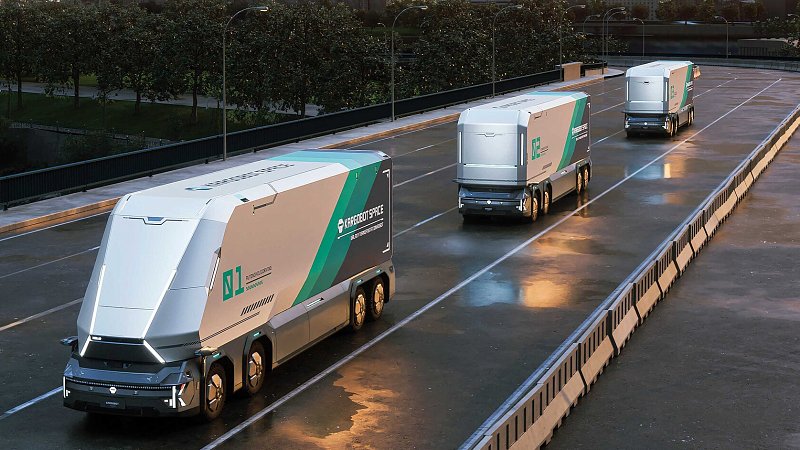
According to information released by China’s Pony AI, the fourth generation of autonomous trucks developed with Sany Truck and Dongfeng Liuzhou Motor introduces fully automotive-grade components and cuts material costs per vehicle by about 70% compared with the previous series, integrating solutions already adopted in the latest-generation robotaxi. Expected durability reaches up to 20,000 hours and operating autonomy up to one million kilometres. The first two models will be built on battery-electric platforms ready for production at several thousand units, with operations scheduled to begin in 2026. The company aims to reduce transport costs and improve logistics efficiency. In current tests, the “1+4” configuration, consisting of a lead vehicle with a driver and four driverless trucks, shows a 29% reduction in cost per kilometre and a 195% increase in operating margin, as well as a cut of around 60 tonnes of carbon emissions per vehicle per year. Pony AI has been active in freight transport since 2018 and now operates a fleet of around 200 trucks with more than one billion tonne-kilometres travelled.