







A combination of ship and rail transport is being tested for container shipments between Japan and Turkey, with the possibility of extending services towards Europe. The Middle Corridor, which crosses Central Asia while bypassing Russia, was trialled by Maersk in February 2025 with a container shipment from the Japanese city of Nagoya to Istanbul. The containers were shipped to China on a container vessel, then transported by train through Georgia, crossed the Caspian Sea by ship, and continued by rail and then by sea across the Black Sea to reach Turkey. This solution avoids two risk-prone areas, Russia and the Red Sea, while offering shorter transit times than an all-sea route.
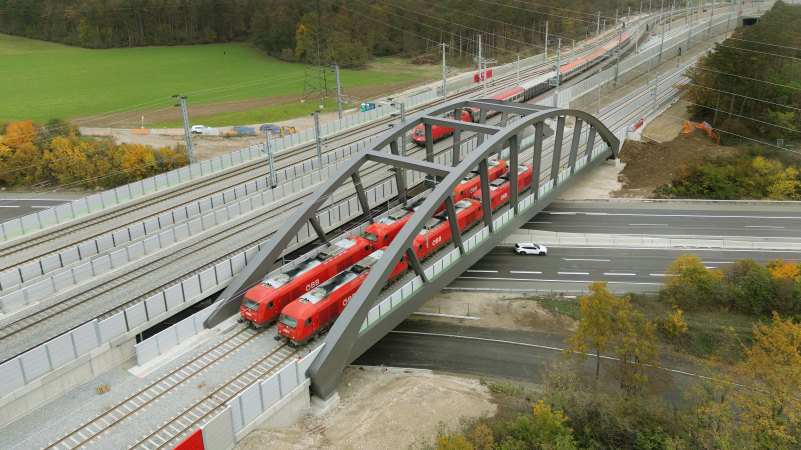
Specifically, Maersk's shipment followed a complex yet efficient route. From Nagoya, goods were shipped to Qingdao, China, then transported by rail to Xian, an inland logistics hub, before continuing by train through Georgia (Poti) and finally reaching Ambarli, near Istanbul, via the Black Sea. The Chinese railway section also benefited from the high-speed network developed under the Belt and Road Initiative, while the Georgian port of Poti has recently undergone expansion funded by international investments.
Preliminary data indicates that this route reduces transit time from Japan to Turkey from 45-60 days via sea to just 15-20 days, with costs falling between sea and air transport. For Japanese and South Korean companies, this translates into greater flexibility in inventory management and a reduced risk of supply chain disruptions. Min Young Kim, Maersk’s head of Northeast Asia, emphasised that the corridor provides "a reliable logistics solution that enhances supply chain resilience."
Maersk has not limited its role to transportation alone but has developed an end-to-end offering that includes customs services, risk management, and cargo optimisation. The company has leveraged its long-standing presence in Japan, with offices in Tokyo, Nagoya, and Osaka since 1950, to coordinate synergies between ports, rail networks, and local authorities. One key tool in this strategy is the Maersk Go Visibility Tool, a digital platform that provides real-time tracking of shipments, minimising delays and improving transparency for customers.
The success of the project has been made possible by active support from the governments of Tokyo and Seoul, which have identified the Middle Corridor as a strategic priority. Japan has allocated funds to improve port infrastructure in Qingdao and Xian, while South Korea has encouraged its companies to trial the new route through tax incentives. Maersk is already considering extending the corridor towards Southern Europe via Greece and South Asia via Pakistan. Meanwhile, the Zengezur Corridor initiative, which will connect Turkey to Azerbaijan through Armenia, could further improve transit times. These developments will require political cooperation and an estimated $20 billion in investment by 2030.
The Middle Corridor is already generating positive economic effects for Central Asian economies. Kazakhstan, for example, has recorded a 30% increase in freight traffic through the port of Aktau on the Caspian Sea, while Azerbaijan has attracted foreign investments to expand the capacity of the Baku-Tbilisi-Kars railway. For landlocked countries such as Uzbekistan and Turkmenistan, the corridor represents a unique opportunity to integrate into global trade flows and reduce dependence on Russian routes.
Turkey is the main geopolitical beneficiary of this initiative. The port of Ambarli, already the leading hub for Black Sea trade, is strengthening its position as a key entry point for Asian goods into the EU. Local analysts have compared the impact of the Middle Corridor to that of the Suez Canal, with forecasts suggesting a 0.5% annual increase in Turkey’s GDP due to transit fees and logistics services.
Despite these advancements, the Middle Corridor faces several challenges. Railway infrastructure in Georgia and Kazakhstan requires modernisation to handle increasing volumes, while customs procedures among the participating countries remain inconsistent. A report from Ahmet Yesevi University highlighted that border delays could erode up to 40% of the corridor’s time-saving advantages.