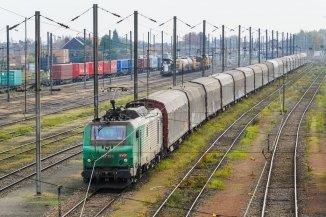







The French state-owned railway group SNCF is considering the sale of a minority stake in Rail Logistics Europe (RLE), its division dedicated to rail freight transport and related logistics services. According to Bloomberg, the transaction could value the business at up to €800 million, with investment bank Lazard tasked with exploring available options. The exact stake to be sold has not yet been determined: sources indicate that SNCF has not taken a final decision on the percentage to divest and that the dossier remains at an exploratory stage, with several options under review. Interest in RLE, according to the “people familiar with the matter” cited by Bloomberg, involves leading operators such as shipping group CMA CGM, Denmark’s Maersk and integrated logistics group DSV. None of the three has made any public comment.
Rail Logistics Europe is the result of a deep restructuring of SNCF’s freight division, launched in response to proceedings by the European Commission on state aid. Brussels found that public support granted to Fret SNCF constituted aid incompatible with EU rules, requiring remedies to avoid the repayment of around €5.3 billion. The plan agreed with the Commission led to the creation of two new operating companies, Hexafret and Technis, which from 1 January 2025 took over, respectively, the commercial activities and rolling stock maintenance of Fret SNCF.
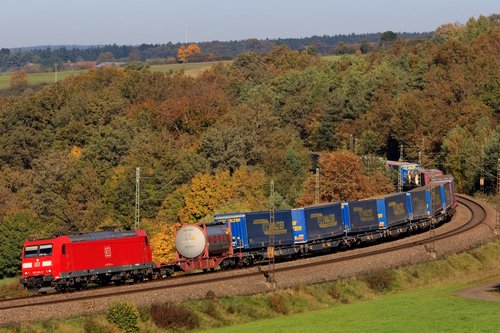
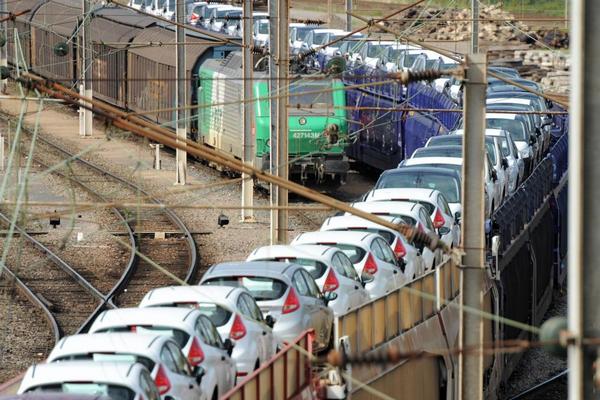
RLE’s current scope includes six brands. Hexafret manages rail freight operations within France, while Technis handles rolling stock maintenance. Captrain is the group’s rail operator active in several European countries. Forwardis designs and manages rail and multimodal transport solutions. Naviland Cargo specialises in door-to-door intermodal container transport. Viia operates so-called rail motorways, namely high-frequency combined road–rail services linking France, Spain and Italy. For 2025, the group is targeting total revenues of around €1.9 billion, a scale that places RLE among Europe’s leading rail freight operators.
The planned transaction involves a minority stake: sources agree in describing the operation as a “stake sale”, ruling out both full privatisation and a transfer of control. The stated objective is to enhance the value of a recently restructured asset, with the possibility of attracting a strategic or financial partner capable of delivering commercial synergies and access to broader logistics networks. Analyses such as that published on 31 March 2026 by TrustFinance place the move within SNCF’s broader need to streamline its portfolio and contain debt, against a backdrop of public spending constraints and significant investment requirements for the green transition of the network.
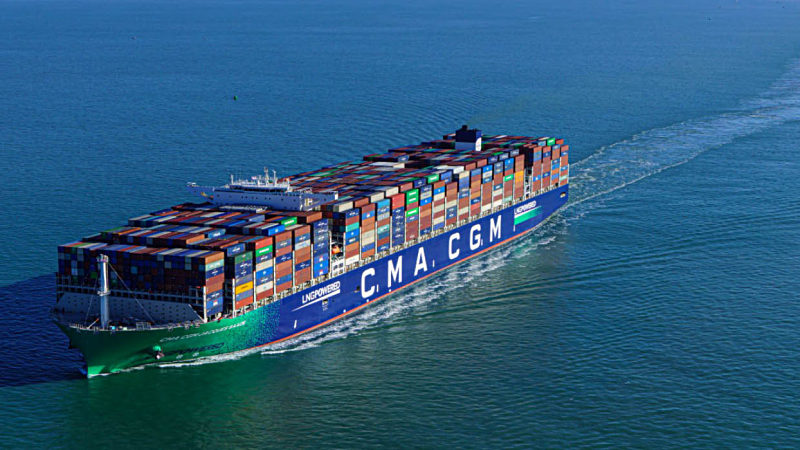
For CMA CGM, taking a stake in RLE would be consistent with the vertical integration strategy pursued in recent years by the French shipping group controlled by the Saadé family. Following the acquisitions of CEVA Logistics and Bolloré Logistics, CMA CGM strengthened its presence in rail intermodal with the acquisition of Freightliner UK Intermodal Logistics, a key operator in the British intermodal segment, with the deal announced in 2025 and completion expected in early 2026. Even partial control of a European-scale rail freight platform such as RLE would allow the group to complete its sea–rail–road chain for integrated services. A similar rationale applies to Maersk and DSV, both focused on developing end-to-end solutions in the European market. For these operators, RLE represents privileged access to the French rail market, with significant assets in terms of rail paths, terminals, technical expertise and customer base.
The geographic dimension of the transaction extends beyond France. While Hexafret and Technis are conceived as national operators, created to ensure continuity of former Fret SNCF activities in compliance with commitments to the European Commission, RLE’s other components — Captrain, Naviland Cargo and Viia — have an established European footprint, with a direct presence along the continent’s main freight corridors.
The regulatory framework remains a central element of the case. The restructuring of Fret SNCF was agreed with the European Commission, and any entry of new shareholders into RLE could attract the attention of antitrust authorities, particularly if the future partner were one of the largest global operators. On the political and trade union front, the prospect of a private shareholder in the freight division of a state-owned rail group touches on issues of industrial sovereignty, control of strategic assets and employment protection. The precedent of the Commission-imposed restructuring of Fret SNCF has already fuelled a heated debate in France over the role of the state and working conditions in the sector.