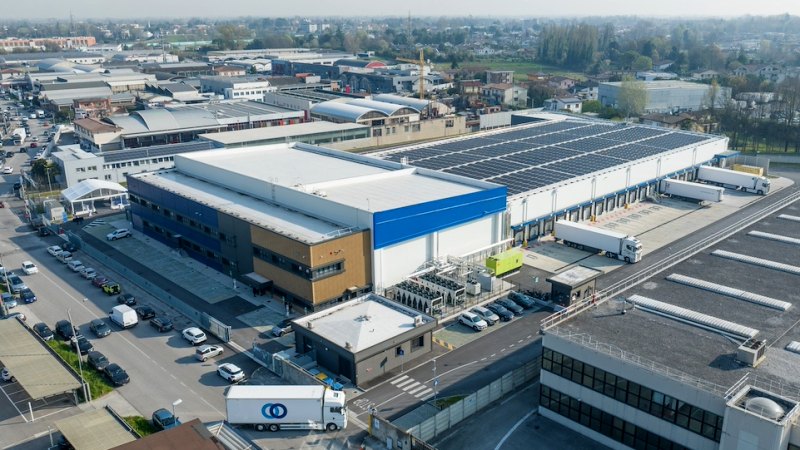



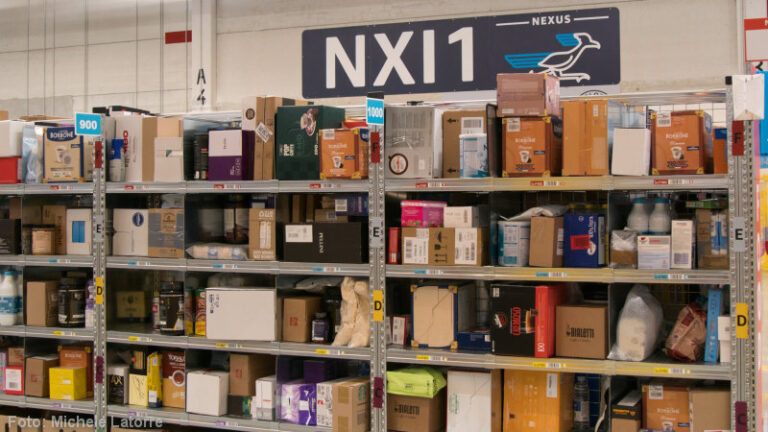
In September 2020, Amazon opened a facility in Peschiera Borromeo, in the south-eastern outskirts of Milan, that remains a unique case in the Italian logistics landscape. It is a sorting depot that not only receives and distributes parcels but also handles order preparation on site, integrating fulfilment and last-mile delivery under one roof. Covering 12,000 square metres and with a workforce that has grown from 30 to 80 permanent employees, the site processes thousands of orders each month destined for the Milan metropolitan area, with an ambitious promise: delivery by the evening of the same day the order is placed. We visited the site to understand how ultrafast delivery operates.
The same-day delivery service is structured across four operating windows: from 07:00 to 11:00, 11:00 to 14:00, 15:00 to 18:00 and 18:00 to 22:00, the latter reserved for orders confirmed by 17:00. Customers can choose the time slot that best suits their needs or opt for standard next-day delivery if preferred. The service area offers tens of thousands of items, with a strong focus on everyday goods, which are the most requested: household and kitchen products, childcare items, pet supplies and consumer electronics.
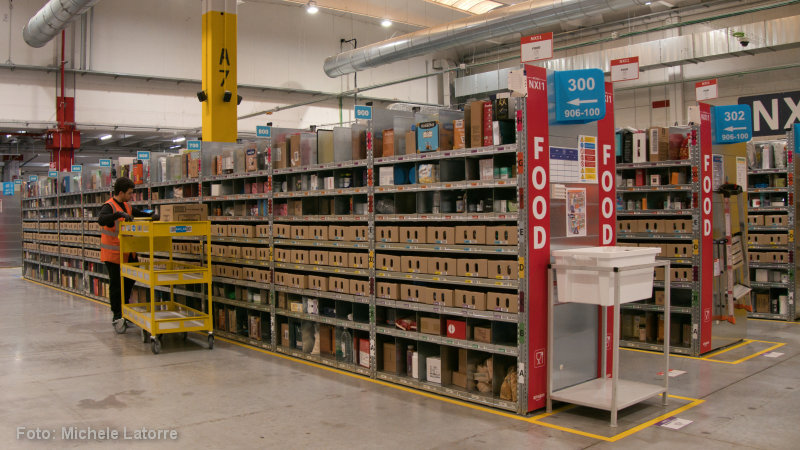
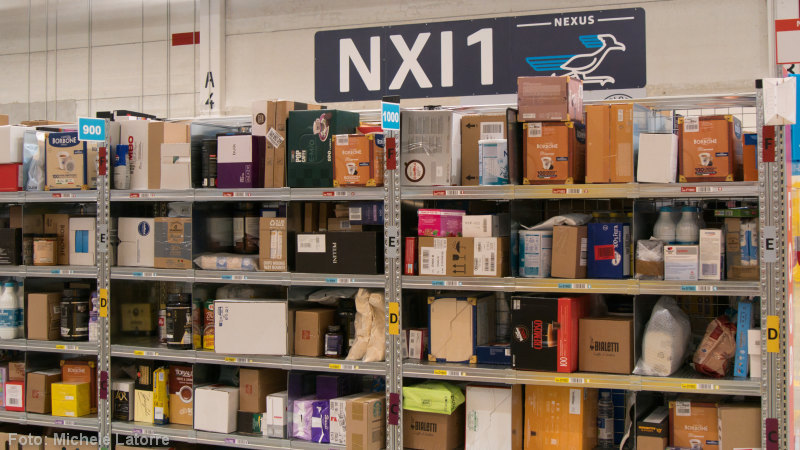
The facility’s operations are supported by artificial intelligence and machine learning, which perform three main functions. The first is inventory management, with algorithms analysing demand by location and season, forecasting customer needs and updating stock levels in real time. The second concerns product placement, with the system identifying the optimal location for each item on the shelves, reducing distances between goods and dispatch points. The third relates to last-mile route planning, with AI designing delivery routes to improve efficiency in terms of time, safety and environmental impact. To accommodate these technologies and new processes, the warehouse layout has been completely redesigned and staff retrained for roles that differ in part from those in traditional depots.
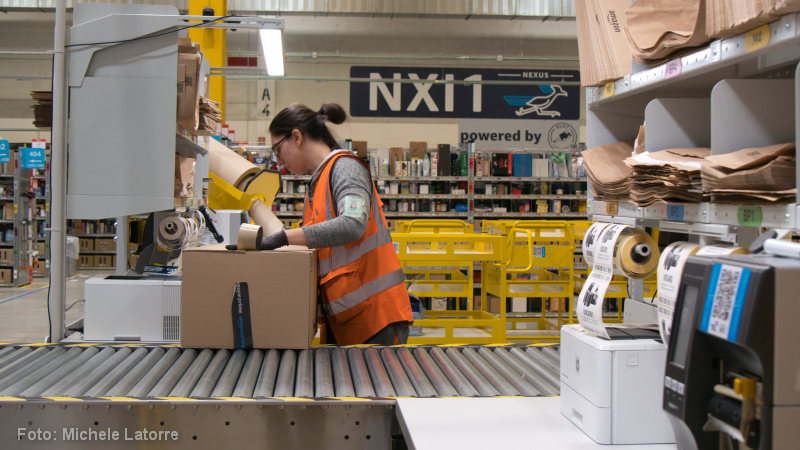
The flow of goods within the site follows a precise sequence. Supply trucks typically arrive in the morning or late afternoon, unloading goods into a dedicated receiving area, from which products are placed on shelves according to the IT system’s instructions. When an order is received, an operator picks the item and transfers it to the packing area. Here, an automated machine developed at Amazon’s Innovation Hub in Vercelli produces right-sized packaging made of lightweight recycled paper, adapting each parcel to the product. This approach improves vehicle fill rates and reduces the number of trips required. Single-use plastic has been eliminated from all shipments. In addition, for more than 11% of deliveries, items can be shipped in the manufacturer’s original packaging without an Amazon box, provided the product allows it and the customer has given consent at checkout.
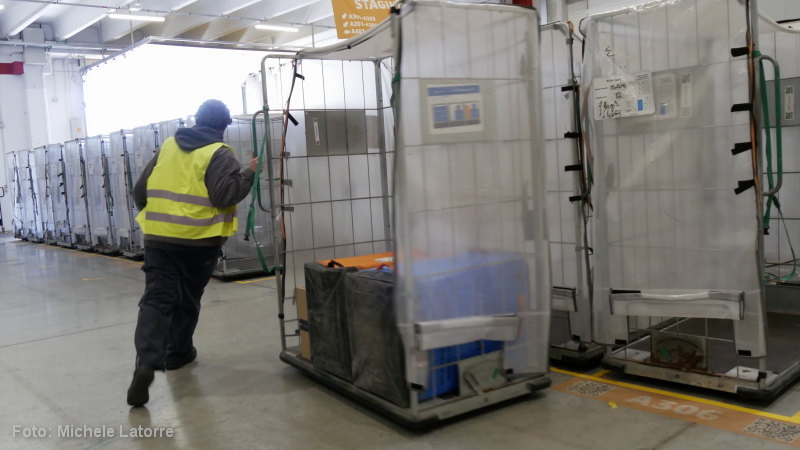
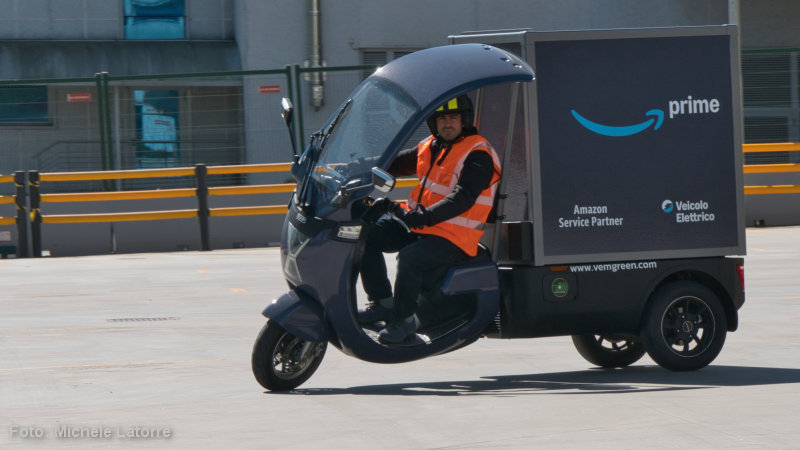
Once packed, goods enter the distribution flow managed by delivery partners. This is where the Peschiera Borromeo model shows its most innovative aspect in terms of urban mobility. To serve central Milan, particularly the Area C congestion charge zone, Amazon uses a fleet of zero-emission electric cargo scooters. Milan was the first city in Europe to trial same-day deliveries using these vehicles, contributing to reduced traffic and lower noise and air pollution in densely populated areas.
Because cargo scooters have a range of around 80 kilometres and are not considered suitable for high-speed roads linking Peschiera Borromeo to the city centre, the model includes an intermediate hub. A shuttle transfers parcels from the depot to a micro-hub in Via Toffetti, about 10 kilometres away within the urban area. From there, cargo scooters handle deliveries in restricted traffic zones. For more distant destinations, electric vans are used. Both micromobility vehicles and electric vans can be powered by energy generated from photovoltaic panels installed on the warehouse roof, completing a system designed to reduce emissions across the entire operation, in line with Amazon’s global target of achieving net-zero CO2 emissions by 2040.
The Peschiera Borromeo facility is at the forefront not only in Italy but also in Europe, demonstrating a high level of integration between new technologies, transport decarbonisation and customer service. Amazon states that delivery speed is not at odds with environmental sustainability, arguing that storing goods closer to customers, optimising routes through AI and using zero-emission vehicles for urban deliveries creates a system in which speed and sustainability reinforce each other rather than compete.
Michele Latorre