



Libya has taken operational control of the Arctic Metagaz and begun the recovery phase for the Russian LNG carrier that caught fire in the central Mediterranean. The National Oil Corporation (NOC) announced between 20 and 21 March 2026 that it had engaged a specialised international company to secure the hull and tow it to a Libyan port, after the vessel entered the country’s SAR zone on a stable basis. The operation, carried out in coordination with Italy’s Eni through the Mellitah joint venture, is intended to remove an environmental threat described as “imminent and serious” by several European Union member states.
The vessel, an LNG carrier of around 277 metres belonging to the so-called Russian shadow fleet and subject to international sanctions, is still carrying more than 60,000 tonnes of liquefied natural gas and between 700 and 900 tonnes of diesel. Following explosions and a fire on 3 March 2026, about 160–170 miles south-east of Malta, the crew was evacuated and the wreck drifted for nearly two weeks without propulsion, sustaining significant structural damage.
According to NOC, a dedicated emergency structure has been activated and a contract finalised with a global maritime salvage company tasked with managing the securing and towing operations. The operation also involves the Libyan Ports Authority and other competent authorities, with the aim of transferring the vessel to a port facility equipped to handle hazardous cargo. Cooperation with Eni, through Mellitah Oil & Gas, is a key element for technical and operational support.
Libya’s intervention follows a period of operational deadlock in the central Mediterranean, during which the Arctic Metagaz passed through several search and rescue responsibility zones, including those of Italy, Malta and Libya. During this time, nine EU member states called for coordination at European level, highlighting the risk of an environmental catastrophe in the event of hull failure or cargo release.
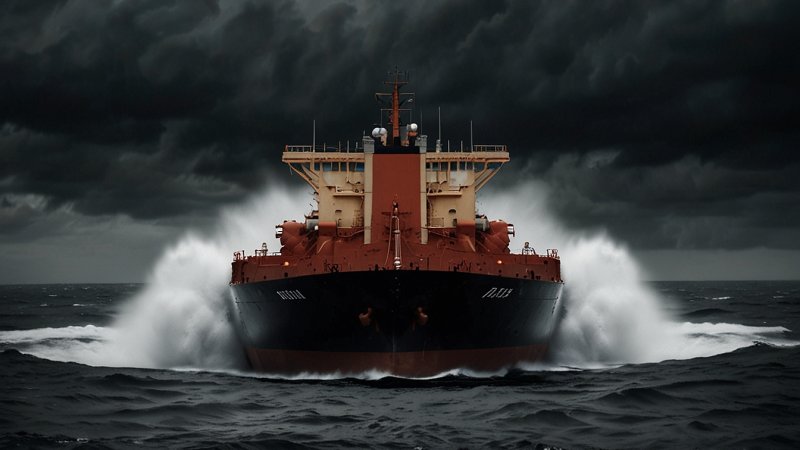
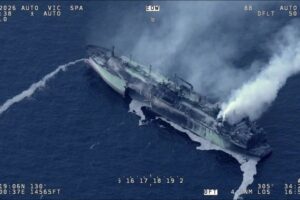
Images collected during the drift show a severely compromised hull, listing by up to around 30 degrees, with clear signs of fire damage and ruptures midship. The presence of an oily film on the surface has also been reported, indicating possible fuel leaks. In these conditions, the main risk remains both the dispersion of hydrocarbons and the potential for explosions linked to liquefied natural gas if the tanks are damaged.
The incident comes amid ongoing tensions linked to Russian energy traffic. Moscow claims the accident was caused by an attack by Ukrainian maritime drones, an accusation not confirmed by Kyiv. At the same time, several European countries have highlighted the structural risks associated with the presence in the Mediterranean of vessels belonging to the shadow fleet, often characterised by limited operational transparency and unclear insurance coverage.
The handling of the case also exposes weaknesses in coordination among European coastal states. Despite geographical proximity, Italy and Malta did not assume direct responsibility for recovery or for allowing the vessel into port, partly due to the implications of the sanctions regime. The vessel’s entry into the Libyan SAR zone therefore formally transferred operational responsibility to Tripoli, which opted for a direct approach involving industrial partners.
Eni’s involvement reflects the established role of energy cooperation between Italy and Libya. Through Mellitah, the Italian multinational provides technical expertise and an operational presence in a strategic area for gas supplies to Europe. The operation represents a test case for the joint management of complex maritime emergencies in a context shaped by regulatory constraints, environmental risks and international tensions.
Antonio Illariuzzi