





Waberer’s closed 2025 as a turning point in its corporate history. The Hungarian group, listed on the Budapest Stock Exchange, reported consolidated net revenues of €816.2 million, up 7.7% from €757.5 million in 2024. Consolidated net profit more than doubled, rising from €21.7 million to €43.6 million (+101%), while the EBITDA margin increased to 14.5%, up by 1.1 percentage points. This growth was not driven by road transport — the group’s original business — but by the insurance segment, which generated revenues that doubled year on year to €161 million.
The engine of this transformation is subsidiary Gránit Biztosító, strengthened during 2025 by the full acquisition of Magyar Posta Biztosító Zrt. and its affiliate Életbiztosító. The insurance division delivered operating profit (EBIT) of €37.6 million, up 55% year on year, effectively becoming the group’s main contributor to profitability. Financial markets responded positively: Waberer’s shares closed 2025 up 32.5%, rising from around 4,000 Hungarian forints in January to over 5,500 by the end of November, coinciding with the completion of the insurance acquisition.
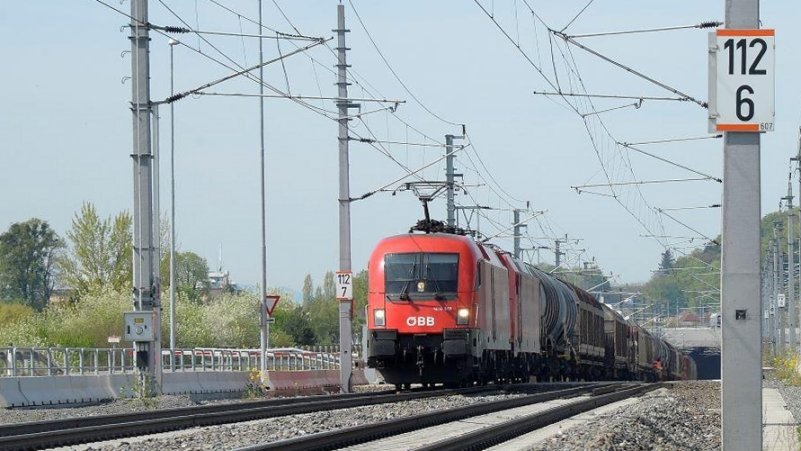
By contrast, the logistics segment recorded a slight decline in revenues, down 3% to €655.1 million, offset by careful cost management that kept EBIT stable at €20.4 million. In this context, Waberer’s is building a position in intermodal transport: the integration of Psp Group and proprietary rail terminals responds both to the needs of large multinational clients and to the need to reduce dependence on professional drivers, who are increasingly scarce in the European market. On the infrastructure side, the group opened a new owned warehouse in Ecser and began construction of a logistics hub in Debrecen, designed to serve the local automotive supply chain, including the BMW plant.
A combined reading of the consolidated and separate financial statements, however, reveals a structural tension the group cannot ignore. The accounts of the parent company Waberer’s International Nyrt. — which consolidates road transport and freight forwarding — show net revenues broadly unchanged at €337 million (€336.7 million in 2024), against direct costs rising from €318.8 million to €328.1 million. The result is an operating loss of €20.3 million. The parent company’s final net profit of €13.8 million was achieved only thanks to financial income from shareholdings in subsidiaries, particularly the insurance division. This internal cross-subsidy mechanism works in the short term but signals the need for a turnaround in core logistics.
The group’s net financial position improved significantly: debt fell from €236.7 million to €157.6 million, with leverage reduced from 2.3 to 1.3 times EBITDA. Total exposure to external funding sources stands at €336 million, of which €203 million relates to long-term lease contracts for vehicles and real estate — a structure typical of the sector, allowing operational liquidity to be preserved while avoiding capital lock-up. The remaining €114 million consists of a corporate bond issued in 2022 and maturing in 2032, ensuring financial stability over the medium term.
Control of Waberer’s remains firmly concentrated in the hands of the Bdpst Group, which holds a total of 54.5% of the capital through Merkport Zrt. (49.6%) and Geraldton Invest Zrt. (4.9%). The free float stands at 27.2%, a level that ensures stock liquidity while preserving a long-term strategic orientation in ownership decisions.
The transition to a holding model — formally launched in 2025 — reflects the need to separate the management of different business lines and to enhance the value of the most profitable segments individually. The acquisition of Pannon-Busz-Rent Kft., which brings the group into passenger transport, fits this diversification strategy, creating potential operational synergies in fleet management. At the same time, Waberer’s has begun recruiting drivers from Asian countries to address the shortage of European drivers, exacerbated by uncertainty over the use of Ukrainian drivers in an unstable geopolitical context.
On the environmental front, the group is renewing its fleet, with an average age of 2.5 years, and is increasing the share of LNG- and electric-powered vehicles, alongside the use of HVO100 biofuel. Major warehouses have been equipped with photovoltaic systems, including the one at headquarters. These choices are not driven solely by regulatory obligations linked to the European Mobility Package; they also represent a concrete response to fuel price volatility, amplified in 2025 by tensions in international energy markets linked to the conflict in the Middle East.
A comparison between 2024 and 2025 shows that the increase in consolidated net profit was partly supported by a non-recurring financial component: unrealised exchange rate effects moved from a loss of €3.7 million in 2024 to a gain of €9.2 million in 2025, a positive swing of €12.9 million. Adjusting for this factor, organic net profit growth stands at 35.6%, reaching €34.4 million — confirming the strength of the group’s operating structure beyond currency market fluctuations.
The Polish subsidiary Link, although not detailed in this reporting cycle, is identified as an underperforming area in 2025, alongside the parent company’s core logistics operations. These two areas are likely to be management priorities in the coming years, with the aim of restoring autonomous profitability across the group’s entire operating structure, without relying on contributions from the insurance segment or extraordinary financial items.
Antonio Illariuzzi