







The Italian commercial vehicle market broke a nearly year-long negative streak over the summer. According to figures released by Unrae, registrations in July 2025 reached 17,648 units, up 4.5% compared with the same month in 2024, while August recorded a 5.7% increase with 8,016 vehicles. Despite the summer recovery, the overall result for the first eight months of 2025 shows an 8.8% drop, equal to 124,426 units against 136,435 in the same period of 2024. The return to growth was also driven by a comparison with last year’s months, marked by slowing demand and the start of the downward cycle, as well as the expiry of some approvals linked to European safety legislation.
The electric segment shows mixed signals. In July the share rose to 5.2% and in August to 2.9%, higher than the 1.7% and 2.0% of the same months in 2024, though below the levels reached earlier in the year. Overall, between January and August battery-powered vans accounted for 4.4% of the market, up from 1.7% a year earlier. Looking at other fuel types, diesel maintained an 80.3% share over the period, down 3.5 percentage points from 2024. Petrol increased to 4.0%, LPG stopped at 2.5% and hybrids rose to 8.1%. Plug-ins remained marginal with a 0.7% share. Average weighted CO2 emissions in the first eight months fell by 5.7% to 184.5 g/km compared with 195.6 g/km in 2024.
Market structure data show private buyers shrinking to 14.7% of total registrations. Self-registrations grew to 9.0% (+1.3 percentage points), while long-term rental recovered to a 31.2% share, although still down compared with 2024. Short-term rental proved more dynamic at 5.8% of the total, while public bodies and companies remained the leading component with 39.2% of the market.
On the regulatory side, on 8 September the Ministry for the Environment and Energy Security published the decree activating incentives for the purchase of electric vans and cars. The measure allocates a single fund of almost 600 million euros to finance at least 39,000 new electric registrations by 30 June 2026. Micro-enterprises based in functional urban areas will be eligible for subsidies of up to 30% of the purchase price, with a ceiling of 20,000 euros per vehicle.
Unrae stressed the importance of a swift launch of the incentives, expected in the second half of October, to avoid a market freeze. The association also called for coordination with the Ecobonus scheme currently being defined by the Ministry for Business, which should draw on leftover funds from previous years. Finally, Unrae drew attention to the ageing of the vehicle fleet.
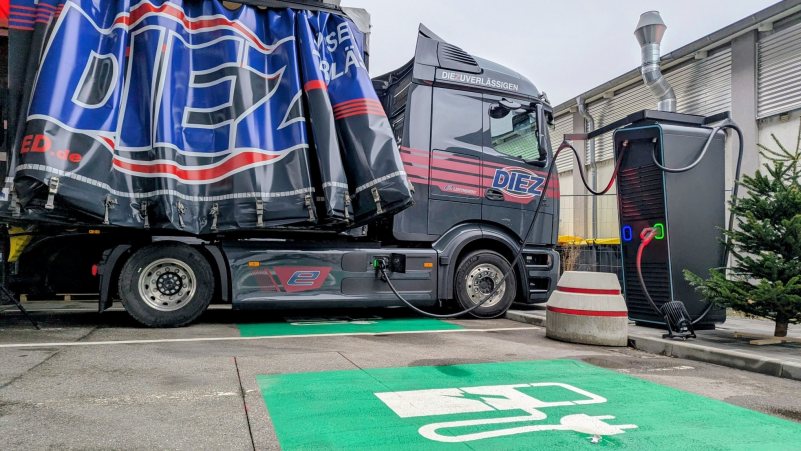
As of 30 June 2025, of the 4.58 million commercial vehicles on the road, more than 36% were pre-Euro 4, meaning over twenty years in service. To speed up fleet renewal and foster electric mobility, the association has proposed measures including dedicated charging infrastructure for light vehicles, a 50% tax credit for private investments in fast-charging stations above 70 kW during the 2026-2028 period, and initiatives to cut recharging costs.