





Stena Line in Liepaja
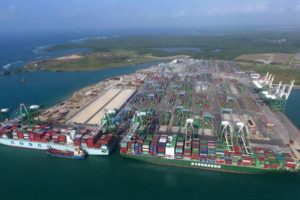
Stena Line has completed the acquisition of terminal operator Terrabalt at the port of Liepaja, Latvia, formally taking over ro-ro, bulk and general cargo operations after obtaining all the necessary approvals from the competent Authorities and government institutions. Stena Line is now registered as the owner and the terminal has been renamed Stena Line Ports Liepajas Sez. Liepaja is Latvia’s third-largest port and plays a significant role in regional and international supply chains. Stena Line already operates the Liepaja–Travemünde maritime service with two vessels. The transaction forms part of the group’s long-term strategy to develop trade and resilience in the Baltic Sea, strengthening a network that already includes port operations in Ventspils and Karlskrona and connections with Sweden, Germany and Poland. The company plans a gradual programme of development and modernisation of the terminal, with a focus on safety, traffic management and service quality, while ensuring operational continuity. In parallel, according to the Liepaja Special Economic Zone Authority, reconstruction works are planned on berth 46, to be completed by 31 December 2027, in order to increase the port’s capacity and infrastructure. The deal consolidates Stena Line’s presence in the Baltic countries and coordination with local and national institutions.
EU delays in transport networks
The European Union is accumulating delays and higher costs in the delivery of key transport infrastructure projects critical to economic competitiveness and resilience, according to a report by the European Court of Auditors published in January 2026. The analysis finds that some flagship projects within the trans-European transport network are running an average delay of around 17 years compared with original plans, with current cost estimates almost double initial forecasts. The target agreed by Member States in 2013 to complete core network links by 2030 will not be met, while full completion of the network is now expected by 2050. The Court examined four railway lines, one inland waterway, one motorway and two multimodal links across 13 EU countries. Some schemes were originally scheduled for completion by 2010 but have been repeatedly postponed. The Seine–North Europe Canal, a key piece of inland freight infrastructure, is now expected to open in 2032, at a cost 225% higher than initial estimates. According to the European Court of Auditors, the causes include major project changes, the pandemic, the war in Ukraine, new regulatory requirements and technical issues that emerged during construction. The report also shows that these delays call into question the EU’s ability to implement infrastructure and defence investment plans efficiently.
Eaton weighs vehicle spin-off
Eaton is assessing options for its vehicle division, including a potential sale or spin-off, according to people familiar with the matter cited by Bloomberg in an article published on 21 January 2026. The transaction, being evaluated with the support of an adviser, could value the unit at up to $5 billion. The division manufactures control systems and transmissions for commercial vehicles, and assessments are still ongoing, with no certainty over a final decision, while an Eaton spokesperson declined to comment. The possible separation fits with the strategy of the new chief executive Paulo Ruiz, who took office in June, aimed at focusing the group on higher-growth activities. A few months after his appointment, Eaton agreed to acquire liquid-cooling specialist Boyd Thermal for $9.5 billion to address demand linked to artificial intelligence data centres. According to financial data cited by Bloomberg, revenues at the vehicle division have been declining since 2023 and in the third quarter of 2025 fell 8% to $639 million. Over the same period, the group’s other three main divisions – Electrical Americas, Electrical Global and Aerospace – recorded double-digit growth. Over the past twelve months, Eaton’s shares have fallen 5.8%, with a market capitalisation of around $131 billion.
Chaos in US flights
Disruption to air transport in the United States is set to continue at the start of the week, as airlines work to restore operations after a severe winter storm. According to FlightAware data, around 3,500 flights had been cancelled by 1.30 a.m. New York time on Monday, down from more than 11,600 on Sunday, which marked the highest number of cancellations since the early months of the Covid pandemic. The storm particularly affected the South and the Mid-Atlantic coast, coating large areas in ice and bringing some of the country’s main hubs to a standstill. Cirium data show that on Sunday morning more than 80% of departures were cancelled at Newark, LaGuardia and John F. Kennedy airports, while Ronald Reagan Washington National Airport exceeded 90%. Airlines report ongoing difficulties due to persistently low temperatures and icy conditions on runways, roads and infrastructure, with aircraft and crews out of position. United Airlines said it would begin a gradual restoration of operations from Monday, JetBlue, which cancelled more than 70% of its flights on Sunday, plans to add extra services to assist passengers, while Delta warned of possible impacts in the early hours in the North East.
DeepWay heads for Hong Kong IPO
DeepWay Technology, a Chinese company active in road transport technologies, has raised around 1.2 billion yuan in a pre-IPO financing round ahead of a planned listing in Hong Kong. According to a statement seen by Bloomberg News, investors included ABC Impact, backed by Temasek Holdings, Lenovo Capital, Puhua Capital and battery manufacturer Sunwoda Electronic. Founded in 2020 and based in Anhui province, DeepWay develops assisted driving solutions and freight transport systems for electric trucks. Early investors also include Baidu, which entered the company’s capital in the initial stages of the project. The company filed its listing application in Hong Kong last November. The prospectus shows that revenues reached 1.5 billion yuan in the first half of 2025, although the company has yet to achieve a positive operating result.
Russian tanker in the Arctic
The first domestically built Russian ice-class tanker, the Alexey Kosygin, is approaching the Arctic LNG 2 facility, which is subject to US sanctions, after completing its maiden voyage along the eastern section of the Northern Sea Route. The vessel, rated Arc-7, the highest class for ice operations, will become the second ship capable of docking at the facility during winter, after the Christophe De Margerie. Arctic LNG 2, led by Novatek, is Russia’s largest liquefied natural gas plant, with a capacity of almost 20 million tonnes per year, and forms part of the national goal to raise output to 100 million tonnes annually and reach 20% of the global market. The arrival of the new tanker is expected to support winter exports, which have so far been constrained by a shortage of reinforced-hull vessels, exacerbated by Western restrictions. Domestic construction of these ships has faced delays due to technological limitations, and the Alexey Kosygin, built at the Zvezda shipyard in Russia’s Far East, was originally scheduled for delivery in March 2023. The lack of ice-class vessels had prevented cargo loadings in the winter of 2023–24, with output falling to around one million cubic metres per day between November and December 2024, while last month average production rose to 9.3 million cubic metres per day, according to data.