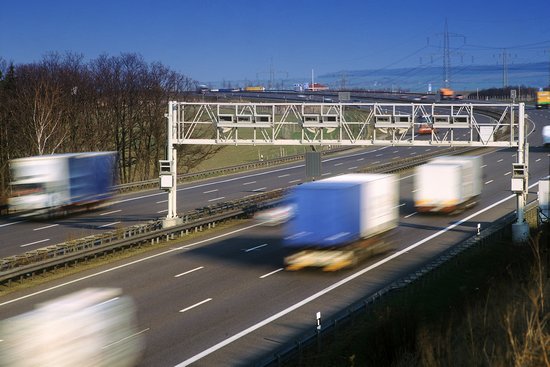








Germany is preparing a significant innovation for road haulage, introducing the possibility of paying the Maut toll for industrial vehicles via a new smartphone application. Schnieder announced the plan on 19 August 2025, explaining that it is contained in the official draft document known as Referentenentwurf. According to the text, the app allows real time routing on the mobile device, starting when the journey begins and ending when it is completed. The most innovative aspect is the freedom to choose the route, similar to the automatic toll collection system, but without the need for a physical device installed in the vehicle.
The current framework relies on two payment options: OBU devices fitted in trucks, which automatically detect routes through GPS and mobile communication, or manual registration via the Toll Collect app. The system covers the entire German motorway network and around 40,000 kilometres of federal roads, generating significant revenue for the German state, estimated at around 13.37 billion euros in 2025. However, it has a major limitation: while the Toll Collect app does not require a dedicated device, it demands manual registration before the journey starts, with a binding definition of the route.
This rigidity has long been a hurdle for many transport companies, particularly those that only occasionally use motorways or federal roads. The new proposal would instead rely on automatic real time detection through smartphones, making use of GPS and mobile communication technologies already built into modern devices. The app would then be able to track vehicles on tolled routes automatically, without requiring detailed pre planning of the trip.
The first reactions from the sector have been largely positive, especially from trade associations. Uniti has highlighted how this solution could reduce both costs and administrative burdens for transport companies. The flexibility is particularly welcomed by firms that cannot justify the expense of installing OBU devices for only occasional use.
Nonetheless, several questions remain about the practical implementation of the plan. The ministry document does not specify whether the app is already operational or when it could be introduced. From a technical perspective, ensuring reliability and precision in automatic tracking through smartphones will be crucial. Unlike OBU devices, which are specifically designed and calibrated for toll detection, smartphones are more vulnerable to fluctuations in GPS accuracy and data connection stability.
Schnieder’s proposal marks the latest stage in the evolution of a system that has already undergone several transformations in recent years. The most recent change, on 1 July 2024, extended the toll obligation to commercial vehicles weighing more than 3.5 tonnes, which increased the pressure to provide flexible solutions for smaller operators. The German plan could also have European implications: with the ongoing development of EU directives on electronic tolling and the goal of creating continent wide interoperable systems, Germany’s move towards smartphone based payments could serve as a model for other European countries.
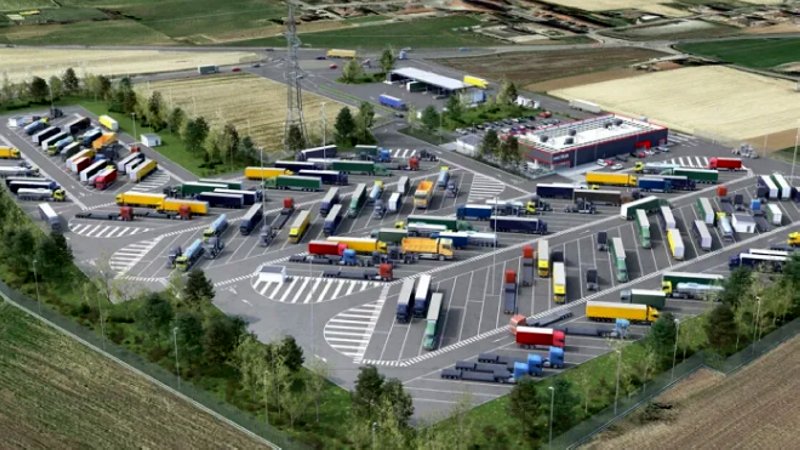
The initiative also forms part of a broader digitalisation programme for road transport. During his first hundred days in office, Schnieder has placed particular emphasis on using digital tools to improve efficiency and reduce bureaucracy. Among the initiatives already launched are the development of a digital circulation document to be accessed via app and a new Truck Parking Information Service, which shows near real time availability of free spaces at motorway service areas.