







The French group Kering, one of the global leaders in the luxury industry, has completed the gradual dismantling of its logistics operations in the Swiss canton of Ticino, bringing to a close a presence that lasted nearly thirty years. This transition culminated in the formal closure of Luxury Goods Logistics in Sant’Antonino, officially enacted on 16 July 2025 and made public a few days later in the official bulletin, along with the announcement of a gradual downsizing of Luxury Goods International in Cadempino, where 123 employees will remain in post until the end of 2026 before being relocated or enrolled in retraining programmes.
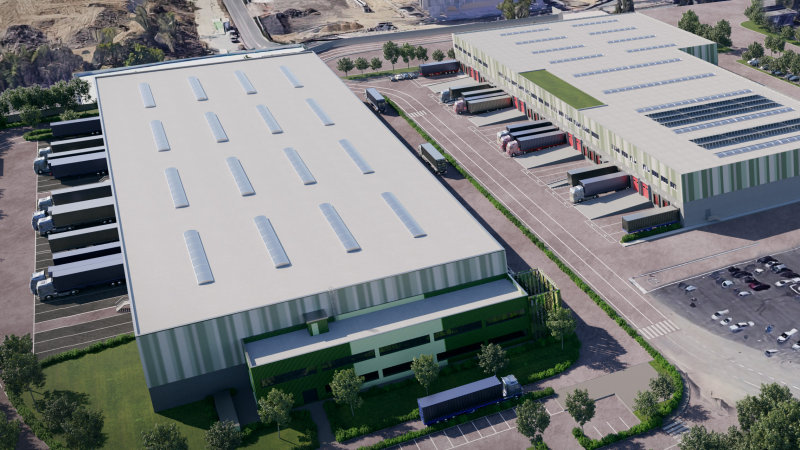
The history of Kering’s link with Ticino dates back to 1997, when Gucci SA – the original name of Lgi – chose Cadempino as its administrative and operational base for the global distribution of its branded products. The move helped spark the emergence of Ticino’s so-called “Fashion Valley”, an economic ecosystem particularly attractive to luxury multinationals thanks to favourable tax conditions and a flexible labour framework. In this supportive context, Kering further strengthened its presence with the opening of a logistics centre in Bioggio and, in 2013, the construction in Sant’Antonino of a technologically advanced facility, designed with energy efficiency criteria and awarded Leed Platinum certification, built by Csc Costruzioni SA.
However, the relationship between the French group and the canton began to deteriorate in 2018, when Kering opted to reorganise its logistics structure. Officially, the decision was driven by space constraints and the desire to consolidate operations within a larger, integrated platform. Yet increasing fiscal pressures also played a decisive role. In 2019, Kering reached a settlement with the Italian Revenue Agency, agreeing to pay approximately 1.25 billion euros in back taxes, penalties and interest related to the period in which logistics activities were managed from Switzerland. This agreement effectively brought the group back under the Italian tax umbrella and paved the way for the construction of a new logistics hub in Trecate, in the province of Novara, inaugurated in 2021 and spanning over 162,000 square metres, set to become the core of Kering’s European logistics operations.
The closure of Lgl marked the final step in this strategy. The company’s board of directors resolved to dissolve it on 16 July 2025, ending the Sant’Antonino hub’s operations, which had already been partially handed over to Gxo for the management of Zalando’s return logistics. Kering’s last operations there will cease by the end of the year, while operational staff were able to continue their employment under the new management, benefiting from the preservation of cantonal collective contracts.
The situation is more complex at Lgi, where a broader downsizing process has begun. The company announced a collective redundancy plan affecting 120 employees, about half of whom reside in Ticino, with a gradual cessation of activities scheduled throughout 2026. The roles affected include customer service, finance, human resources, IT systems and customs operations. These employees have been offered the chance to apply for positions at Italian locations or to participate in training programmes supported by the company. The Ocst trade union expressed concern over the announcement, calling for a serious dialogue among social partners to reflect on the future of industrial employment in the canton.
With the end of Lgl’s operations and the ongoing closure of Lgi, Ticino’s logistics and industrial landscape has taken a heavy blow. The municipalities of Cadempino, Bioggio and Sant’Antonino are now faced with vacant facilities, a sharp decline in tax revenues and the loss of hundreds of skilled jobs. Kering’s departure is part of a broader trend that has been underway for some time: other luxury firms, such as Zegna and Hugo Boss, had already scaled back their presence in Switzerland years ago, confirming a gradual erosion of the region’s tax-based appeal.
Ticino now enters a difficult phase of transition, involving the repurposing of industrial sites and the search for new investors, both in logistics and in other production sectors. The era of the Fashion Valley appears to have drawn to a close. What remains to be seen is whether the canton can seize this turning point as an opportunity to rethink its economic future on more diversified and sustainable foundations. In the meantime, the new Trecate hub has taken on a central role in the French group’s logistics strategy, becoming the main platform for managing integrated European flows.