







The proposed rail tunnel linking Spain and Morocco beneath the Strait of Gibraltar—often described as visionary—is, in fact, entirely feasible with current engineering capabilities, though logistical and financial challenges remain significant. The assessment may appear somewhat self-interested, as it comes from Herrenknecht, one of the world’s leading manufacturers of tunnel boring machines. However, the German company was appointed as a technical consultant by the Spanish government precisely because of its recognised expertise.
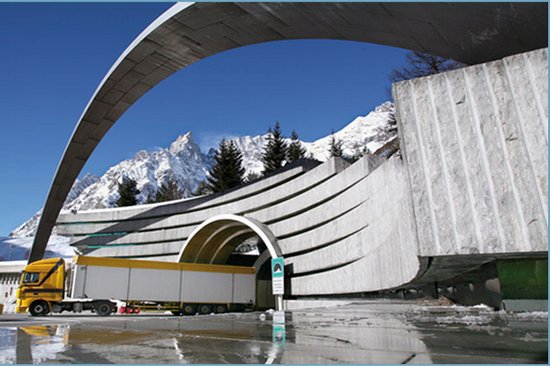
Herrenknecht’s portfolio is impressive, with numerous ongoing European projects, including the Mont Cenis base tunnel on the Turin–Lyon line, where the promoter Telt has ordered all seven tunnel boring machines from the German manufacturer. According to unofficial sources, Telt legally limited the tender to the European market to avoid competition from lower-quality Asian producers. Herrenknecht is also involved in the second tube of the Gotthard motorway tunnel and in the excavation of Trento’s freight bypass.
According to the design hypotheses, the Spain–Morocco tunnel would extend slightly over 38 kilometres, with a 28-kilometre underwater section at depths ranging between 175 and 475 metres below sea level. It would start west of Algeciras in Spain and reach Tangier in Morocco, covering a total distance of 42 kilometres between terminals. Plans foresee two separate bores, each carrying a single rail track, plus a service tunnel. The option of opening one section to traffic before the full completion of the project is also being considered.
The study focused on the most critical section of the route—the geological transition between the Atlantic Ocean and the Mediterranean Sea—known as the Camarinal Sill (Gibraltar threshold). Herrenknecht’s findings will complement and update preliminary studies already being conducted by the Spanish engineering company Ineco, which is affiliated with Spain’s Ministry of Transport.
Spanish authorities are reportedly eager to accelerate progress towards the operational phase of what is being described as a “project of the century”. All relevant government departments are working on preparing the tender documentation for the excavation of an exploratory tunnel that will provide the necessary geological and technical data for the main construction phase. This documentation could be finalised by 2026, with the tender expected to be launched in 2027. Initial estimates suggest a construction period of between six and nine years, to be confirmed once the final design is approved.
Attention is already turning to the project’s financial viability, with possible funding models being explored. These could include a concession arrangement similar to the Channel Tunnel, or other forms of cross-border management like the Figueres–Perpignan railway between Spain and France, or the Telt model for the Turin–Lyon line. This choice will also involve assessing access tariffs for rail operators, alongside potential complementary revenue sources such as hosting fibre optic cables or power lines in the service tunnels. The terminal locations remain to be defined: in Spain, a connecting line will need to be built from either Algeciras or Cádiz, depending on where the new cross-border link begins.
Piermario Curti Sacchi