








Array ( [0] => 8 [1] => 39 )

Podcast K44

Cronaca

  • Controllo straordinario sui camion in Germania sull’A2

    Controllo straordinario sui camion in Germania sull’A2

    La Polizia autostradale tedesca di Bielefeld ha controllato circa 130 veicoli industriali sulle aree di servizio Lipperland Nord e Sud, tra Bielefeld e Herford. Contestate 87 infrazioni, di cui 35 su tempi di guida e riposo. La Dogana ha avviato ulteriori verifiche su lavoro irregolare e salario minimo.

Transpotalk

Normativa

Mare

  • Pesanti attacchi a navi cargo nel Mar Nero

    Pesanti attacchi a navi cargo nel Mar Nero

    Droni hanno colpito due navi cargo nel Mar Nero, il giorno dopo l'affondamento della Royad Mammadov, diretta a Ravenna, al largo della Romania. Una nave è affondata e il suo equipaggio risulta disperso, mentre i 18 marinai dell'altra sono stati salvati dopo un incendio a bordo.

Autotrasporto

  • Fusione miliardaria nell’autotrasporto Usa

    Fusione miliardaria nell’autotrasporto Usa

    L'accordo annunciato il 5 ottobre 2026 unisce due dei principali intermediari del trasporto stradale nordamericano, C.H. Robinson e Rxo. La chiusura è prevista nel primo semestre 2027, dopo il voto degli azionisti Rxo e le autorizzazioni regolatorie. L'obiettivo è attuare 300 milioni di dollari di sinergie annue entro due anni.

    Spain divided over railway gauge dilemma

    Is it more appropriate to invest in railway infrastructure or in rolling stock? This question, which may seem somewhat nonsensical at first—since one does not necessarily exclude the other—actually arises quite naturally and holds its own logic when the debate centres on the different rail gauge systems adopted across Europe's main networks. The exceptions to the European standard gauge of 1435 mm are found in the Iberian Peninsula and the Russian-speaking world, both of which use broader gauges, albeit with different measurements.

    What’s curious is that recent developments on this front appear to be moving along parallel tracks, if not in outright contradiction. Here’s why. In March 2025, Adif, the Spanish railway infrastructure manager, launched a pilot project to test a gauge-changing system for freight trains at the Irun station, located at the French border and one of the main crossing points between the two countries affected by the gauge difference. With a relatively modest investment of 2.3 million euros, two modular gauge-changing platforms were installed, suitable for freight wagons fitted with wheels of 920 and 760 mm diameter.

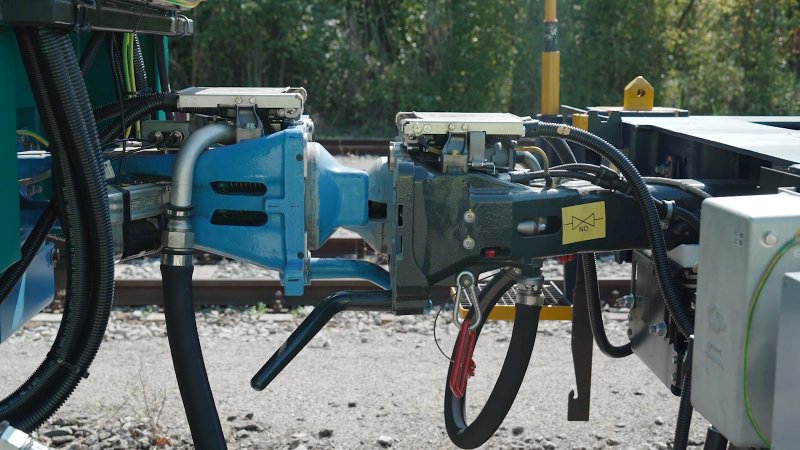
    Without undermining the merit of this initiative, the pilot project seems to echo the long-running and still inconclusive trials surrounding the Dac, the digital automatic coupler. Numerous prototypes have been tested across Europe and often seem on the verge of being adopted, only for everything to be postponed yet again. Already in June 2019, the Aesf—Spain’s state railway safety agency—had authorised variable gauge freight wagons for regular commercial service. The variable-width axle system had been jointly developed and tested by three companies: Adif, Azvi and Tria.

    The secret behind that project lay in the ability to adjust the axles, telescopically, so to speak, allowing them to automatically adapt as the train passed over specially designed gauge-changing platforms, with the only requirement being that they travel at low speed during the transition. Approval had been granted for container wagons and vehicle transporters—the types most frequently used in these international routes—with maximum speeds of up to 120 km/h and axle loads of up to 22.5 tonnes, depending on the wagon type. Apparently, though, this solution did not progress any further.

    But do these trials make sense if they remain little more than prototypes? The question is reasonable, especially given that, almost in contrast to these limited experiments, Spain is now decisively accelerating the conversion of track gauge on its key rail corridors—those forming part of the Ten-T European freight network. In March 2025, the Ministry of Transport awarded three contracts marking another step towards completing the conversion to standard gauge along the entire Mediterranean corridor, from the French border down to the southern Spanish port of Algeciras.

    Sleepers are being replaced with ones designed to accommodate a third rail, allowing for dual gauge operations: both the European standard and the broader Spanish gauge of 1668 mm. The electrification system is also being upgraded, shifting from 3 kV direct current to 25 kV alternating current. Almost simultaneously with the awarding of these contracts, rail traffic between Barcelona and Tarragona returned to full capacity following the reopening of the Roda de Berà tunnel, now equipped with dual gauge. This is a development with far-reaching implications, well beyond the local level, to the extent that Hupac immediately announced an intermodal service to Antwerp, Belgium, seizing the new opportunities created for freight traffic on standard European gauge.

    Piermario Curti Sacchi

    © TrasportoEuropa - Riproduzione riservata - Foto di repertorio

    Segnalazioni, informazioni, comunicati, nonché rettifiche o precisazioni sugli articoli pubblicati vanno inviate a: redazione@trasportoeuropa.it


      Puoi commentare questo articolo nella pagina Facebook di TrasportoEuropa

      bottone newsletter piccolo Vuoi rimanere aggiornato sulle ultime novità sul trasporto e la logistica e non perderti neanche una notizia di TrasportoEuropa? Iscriviti alla nostra Newsletter con l'elenco ed i link di tutti gli articoli pubblicati nei giorni precedenti l'invio. Gratuita e NO SPAM!


    CONTENUTI SPONSORIZZATI


Videocast K44

Aereo

  • La domanda di cargo aereo supera la capacità ad agosto 2026

    La domanda di cargo aereo supera la capacità ad agosto 2026

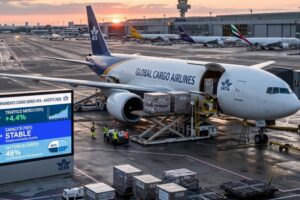
    Le rilevazioni della Iata ad agosto 2026 mostrano che il trasporto merci aereo mondiale è cresciuto del 4,4% su base annua mentre la capacità è sostanzialmente stabile, portando il riempimento al 46%. Guidano Nord America e Asia-Pacifico, arretrano i corridoi mediorientali e il cherosene sale a 157 dollari al barile.

Ferrovia

  • Duisport potenzia i collegamenti ferroviari da Trieste

    Duisport potenzia i collegamenti ferroviari da Trieste

    Duisport porta a quattro le circolazioni settimanali sia sul servizio intermodale Cervignano-Duisburg sia sulla navetta tra il terminal Plt Hhla Italy e l'Interporto di Cervignano. Il servizio, gestito da +.intermodal si basa su un modello neutrale e prevede l'estensione a Wels, in Austria, dal prossimo anno.

Persone

  • L’autotrasporto veronese perde Francesco Corsi

    L’autotrasporto veronese perde Francesco Corsi

    Il 26 settembre 2026 è morto nella sua casa di Colognola ai Colli l’autotrasportare veneto Francesco Corsi. Cominciò nel 1960 con un Leoncino e l’omonima azienda Corsi, specializzata nel trasporto logistica a temperatura controllata e insediata nell'interporto Quadrante Europa di Verona.
L’elettrico Volta Zero torna allo Iaa 2026

TECNICA

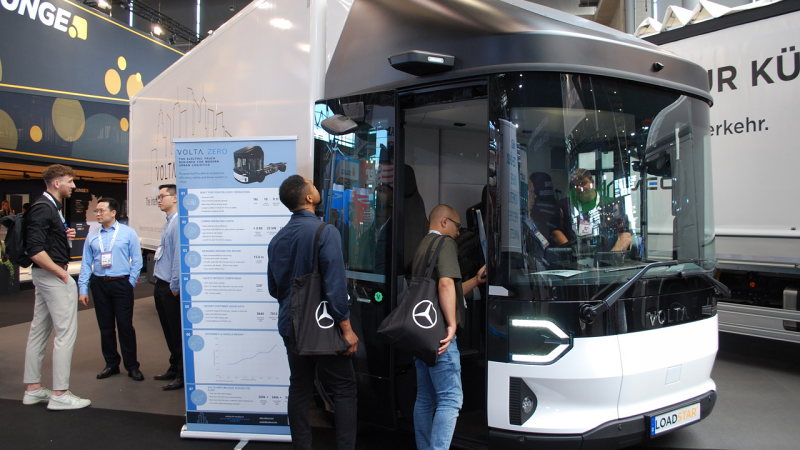
L’elettrico Volta Zero torna allo Iaa 2026
previous arrow
next arrow
Parte la riforma del Codice Doganale europeo

LOGISTICA

Parte la riforma del Codice Doganale europeo
previous arrow
next arrow
Scoperta a Venezia una frode sui carburanti

ENERGIE

Scoperta a Venezia una frode sui carburanti
previous arrow
next arrow
Sanilog avvia una nuova campagna oncologica

SERVIZI

Sanilog avvia una nuova campagna oncologica
previous arrow
next arrow