






Dachser strengthens logistics in Tangier
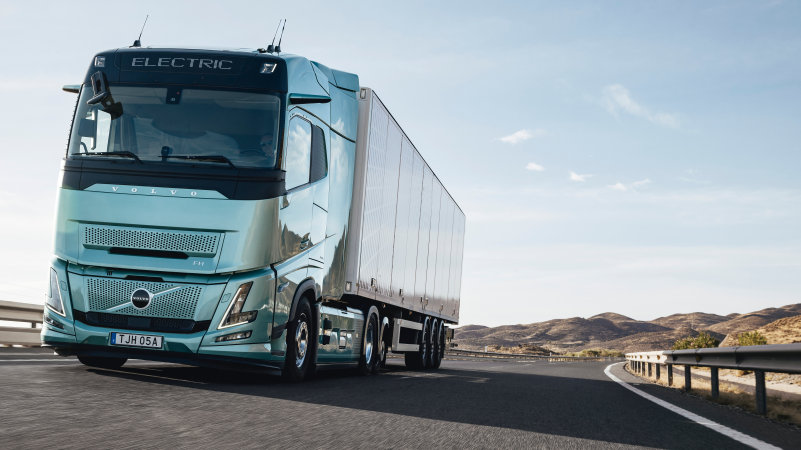
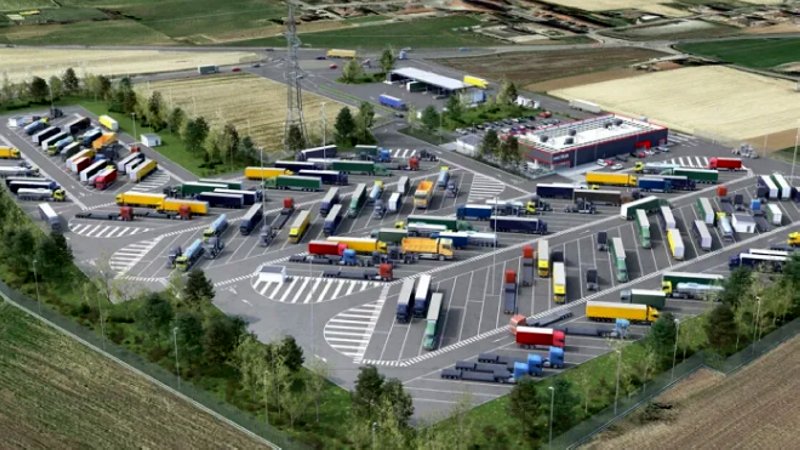
Dachser is building a new logistics hub on a 75,000-square-metre site in Tangier Automotive City, scheduled to open in June 2026 and supported by 206.5 million mad (around €19.3 million) in funding from the European Bank for Reconstruction and Development. The project includes a 20,000-square-metre warehouse with dedicated customs areas and will be the first private logistics building in Morocco to obtain an international sustainability certification. Total investment amounts to 284.3 million mad (around €26.6 million), split into two tranches of 160 million mad and 46.5 million mad. The new platform will combine road, air and sea transport with warehousing services, strengthening connectivity with Europe thanks to its proximity to the port of Tanger Med. The plan aims for Edge Advanced certification, supported by the Fintecc programme, with measures covering energy efficiency, water management, materials and on-site energy generation. The initiative also includes gender-integration measures, with the recruitment of at least fifteen women for operational roles. Dachser is also developing a new customs warehouse in Marrakech and benefits from daily connections with Strasbourg launched in 2023. The company has been operating in the country since 1984 and currently employs 232 people across six sites.
Container route between Italy and Egypt
Unimed has launched a maritime link between Port Said and the Adriatic, with calls at Venice and Ancona. The service, active since 1 November, connects the Suez Canal Container Company terminal with the Italian ports before returning to Port Said East. The rotation includes a call at Venice followed by Ancona at Act, offering a new option for container traffic between Italy and Egypt. The company, operating as Unifeeder’s Mediterranean arm, is currently deploying the container vessels Phoenix 3 and Elbsailor, the latter with a stated capacity of 1,085 teu.
Floating container terminal in Sweden
Norwegian classification society Dnv has approved the floating container terminal project developed by Sea Technology, confirming the technical feasibility of the Stft concept. The project foresees an annual capacity of 5–6 million teu and deployment in areas with limited port infrastructure, such as Indonesia, the Philippines or Arctic routes, with operations guaranteed in waters up to 1,000 metres deep. The rectangular structure will be between 600 and 700 metres long and 360 metres wide, with a draught of 17–18 metres, and will be able to operate as a transhipment terminal. The developers are also considering integrations with ro-ro berths and possible modules for energy production, water treatment and waste-to-energy facilities. Following this preliminary approval, Sea Technology will begin the engineering and classification phase, including energy, logistics and environmental aspects, working in partnership with Meyer Floating Solutions.
Romania–Hungary rail service
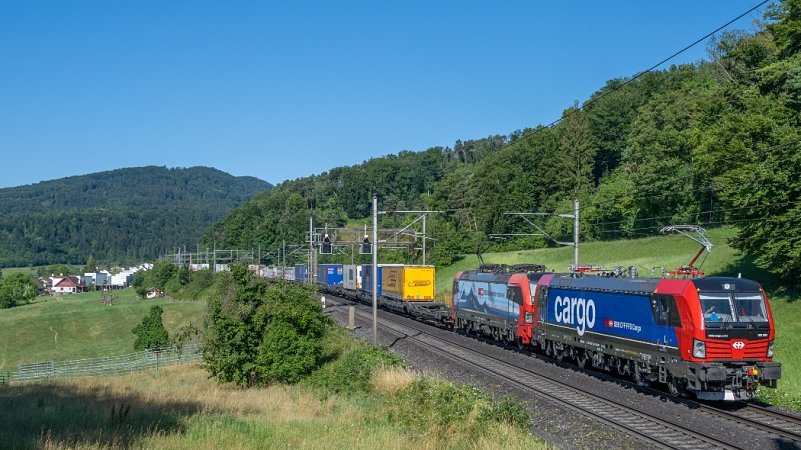
Rail Cargo Group has launched a new non-stop connection between Curtici in Romania and Budapest, with the aim of expanding intermodal transport opportunities in the region. The service initially offers one weekly departure, arriving at the Bilk terminal in the Hungarian capital. The company has indicated that the frequency may be doubled depending on demand. The Budapest–Curtici line is expected to become the main access route towards Turkey, with impacts on the Eurasian supply chain. Rail Cargo Group already operates rail services between Budapest and Istanbul, as well as links with Austria, Germany and Belgium. Curtici is also connected to the Turkish port of Tekirdağ, a key node for goods originating from Ukraine, Russia and southern Europe.
Ceccarelli Group expands in Verona
Ceccarelli Group has opened a new operational branch at the Quadrante Europa freight village in Verona, completing its direct coverage of the Veneto region and strengthening its network in the north-east. The opening follows the launch of the customs warehouse in Padua and allows the group to act as a single operator in the area, integrating activities with its sites in Padua and Belluno. The facility offers 2,000 square metres of dual-front warehouse space and 18 loading bays, enabling full supply-chain management without relying on subcontractors. Verona’s location improves links between the north-east and north-west, optimising flows towards Milan, Udine and Padua. The hub also helps shorten delivery times and increase the efficiency of national and international distribution. The group sees Verona as a platform for future expansion in Trentino-Alto Adige. Its strategy includes investments in infrastructure and innovation to consolidate its position in northern Italy.
New Sdc Marghera warehouse
Sdc Servizio Doganale Containers has opened a 2,000-square-metre warehouse at the port of Marghera for the storage and handling of goods at ambient temperature. The facility, leased from the Venice port authority, is located in the southern industrial area of Marghera within the former Montesyndial site and will hold customs-warehouse status. The area offers space for heavy-vehicle manoeuvring and sits close to the future quay included in the redevelopment project of the former Montesyndial site. The first phase of the project includes construction of the new quay and a 50-metre hinterland strip. The initiative forms part of the port’s development strategy and Sdc’s diversification efforts, which include the Venice Cold Stores & Logistics platform for refrigerated storage, participation in Euro Rijn Italia for ferroalloys, and drone-based services provided by Mds Maritime Drone Services.