



DHL opens new innovation centre
DHL Group has inaugurated its new European Innovation Centre in Troisdorf, near Bonn, replacing the previous facility and boosting the group’s capacity for applied research. Covering 5,360 square metres, the centre supports the development of advanced technologies for smarter, more sustainable and resilient supply chains. The initiative is part of DHL Group’s Strategy 2030, focused on smart growth, low-emission logistics and digital transformation. The new hub serves as a platform for collaboration with customers, start-ups, universities and industry partners. Integrated technologies include artificial intelligence, robotics, the Internet of Things and sustainability solutions. The centre also hosts the DHL Customer Solutions and Innovation team, which leads the group’s global innovation agenda. Built with cross-laminated timber and powered by renewable energy, the facility operates with net-zero greenhouse gas emissions. It meets the DGNB Platinum certification standards, among the highest in Europe for sustainable buildings. The structure can accommodate up to 400 visitors and features modular spaces for events and workshops, fostering cooperation across the logistics sector.
UPS acquires Andlauer Healthcare
US-based UPS has completed the acquisition of Canada’s Andlauer Healthcare Group, a logistics services provider for the healthcare sector. The deal, announced on 3 November, is valued at around 2.2 billion Canadian dollars (1.6 billion US dollars). Andlauer Healthcare Group shareholders received 55 Canadian dollars per share as purchase consideration. The acquisition strengthens UPS’s presence in the expanding North American healthcare logistics market, driven by the growing distribution of pharmaceuticals and medical devices. Andlauer’s operations include a dedicated temperature-controlled transport network and specialised warehousing solutions, which will be integrated into UPS Healthcare. Michael Andlauer, founder and CEO of the Canadian company, will lead UPS Canada Healthcare while continuing to head Andlauer Healthcare Group within the wider organisation.
Stena Line takes over Wasaline
Stena Line has announced the acquisition of ferry operator NLC Ferry Ab Oy/Wasaline, strengthening its presence in the Baltic Sea by managing the route between Umeå (Sweden) and Vaasa (Finland). The deal, signed with Kvarken Link – jointly owned by the two municipalities – foresees that Stena Line will take over operations, while the vessel Aurora Botnia will remain publicly owned. Wasaline, already active in environmental initiatives such as its biogas supply agreement with Gasum and participation in the FuelEU Maritime programme, will retain its staff and current service levels. The route will thus become part of the first international green maritime corridor. The transaction, pending approval from the city councils of Umeå and Vaasa by November 2025, is expected to be finalised in early 2026. With this acquisition, Stena Line will operate five routes in the Baltic Sea.
APM to expand Pipavav Port
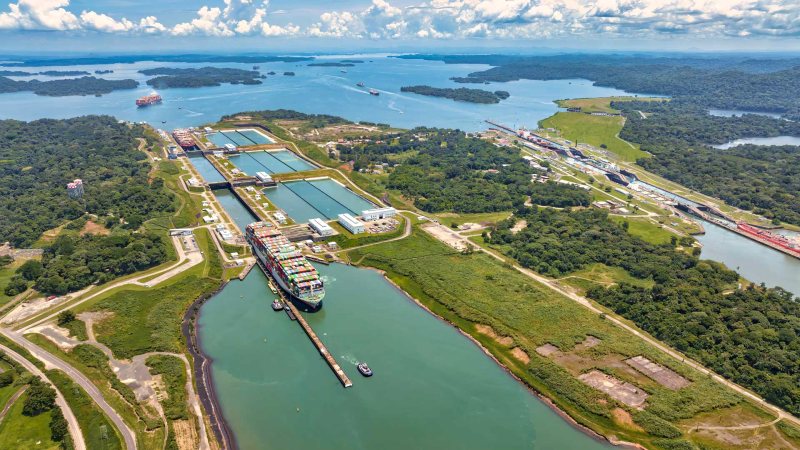
APM Terminals will invest around 2 billion US dollars to expand Pipavav Port in the Indian state of Gujarat. The initiative forms part of AP Moller–Maersk’s 5 billion dollar plan announced in February 2025 for the development of ports and maritime infrastructure in India. A memorandum of understanding signed with the Gujarat Maritime Board includes the definition of a long-term concession agreement. The goal is to increase operational capacity and enhance the sustainability of port activities, strengthening Pipavav’s role as a strategic hub for both domestic and international maritime trade. The plan includes new facilities for handling containers and liquid cargoes, and improved multimodal connectivity with the Dedicated Freight Corridor and key inland industrial zones. Currently, APM Terminals Pipavav — India’s first public-private partnership port — handles up to 1.35 million TEU and 4 million tonnes of dry bulk annually.
DP World and Cochin Port sign agreement
The International Container Transshipment Terminal (ICTT) in Cochin, operated by DP World, has signed a memorandum of understanding with the Cochin Port Authority to develop maritime infrastructure in Kerala. The agreement provides for cooperation to enhance the port’s cargo-handling facilities, in line with India’s national “Maritime Amrit Kaal Vision 2047” strategy. The initiative aims to boost the terminal’s operational capacity and develop marine infrastructure capable of accommodating next-generation vessels, with the support of the Indian government. According to the parties involved, the project reinforces Cochin Port’s position as a strategic gateway for international trade in southern India.
New electric trucks for Amazon
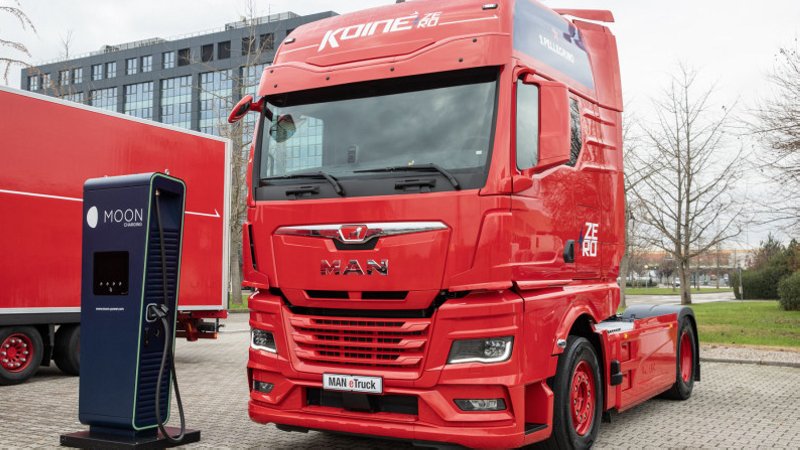
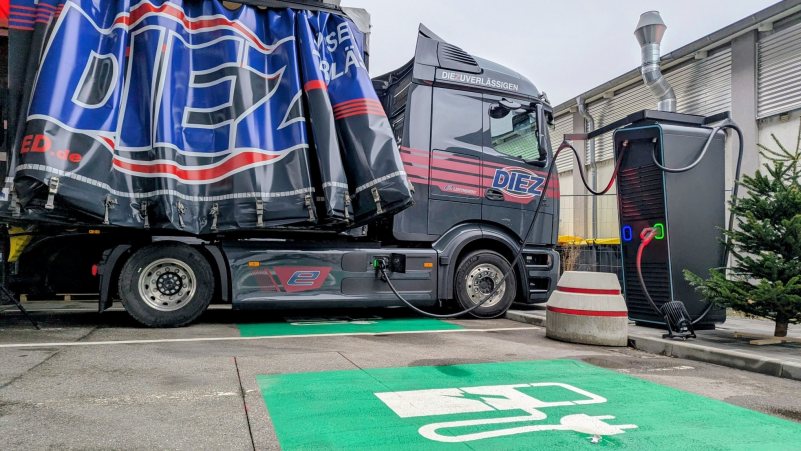
Amazon has begun operating the first Mercedes-Benz eActros 600 electric trucks in the United Kingdom, following an order placed earlier this year. Once deployment is complete, the British fleet will comprise 160 heavy-duty electric trucks — the company’s largest globally. The 40-tonne vehicles, managed by Amazon’s transport partners, will connect major logistics hubs with an average annual mileage of about 70,000 miles. Some of the trucks have been co-funded under the government’s Zero Emission HGV and Infrastructure (ZEHID) programme, coordinated by Innovate UK. To support the fleet, Amazon has installed 360 kW rapid chargers at its UK sites, capable of charging batteries from 20% to 80% in just over an hour. The company also plans to add 800 Mercedes-Benz eSprinter vans and expand pedestrian deliveries in London’s Camden district.
Electric container barge launched in the Netherlands
Inland Terminal Group (ITG), backed by M&G’s infrastructure investment team, has unveiled the MS Den Bosch Max Green, a fully electric container barge. The project marks a major step towards decarbonising Europe’s distribution networks and shifting freight from road to inland waterways. ITG collaborates with brands such as Heineken, Nike, Ikea and Toyota to cut emissions across their supply chains. The barge uses interchangeable battery containers developed with Zero Emission Services, supported by the Dutch National Growth Fund and the Province of South Holland. Each voyage replaces up to 132 lorries, saving around 800 tonnes of CO₂ annually. ITG, the leading terminal operator in the Benelux region, manages 17 terminals and handles one million containers per year.