



On the morning of 26 February 2025, the Milan Public Prosecutor's Office announced the urgent preventive seizure of €46.8 million from DHL Express Italy for alleged tax fraud and worker exploitation and placed a company executive under investigation for events that occurred between 2019 and 2023. Over the course of the day, further details of the investigation emerged in the press. According to Il Fatto Quotidiano, investigators also accused the company of the improper use of subsidies received under the Industry 4.0 programme, as stated in the seizure decree.
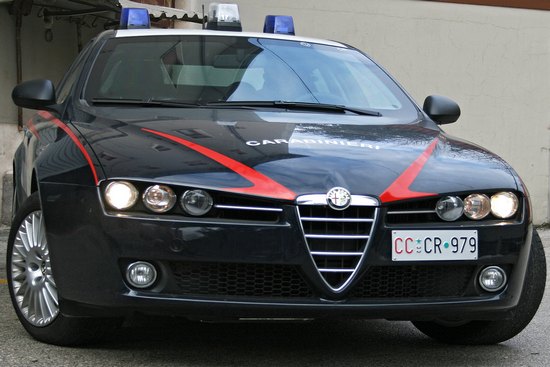
The newspaper reported that the Guardia di Finanza's investigation allegedly uncovered a pyramid structure within the labour subcontracting chain, with second-tier buffer companies recruited by first-tier firms that worked directly for DHL Express Italy. In one case cited by investigators, a first-tier company based in Campania allegedly received €61 million from DHL Express Italy, paying €19 million to a second-tier firm. Inspections by the Carabinieri revealed that both companies had abandoned warehouses and lacked an intercom and a mailbox.
The same first-tier buffer company from Campania also allegedly misused Industry 4.0 subsidies. It reportedly offset VAT payments between 2020 and 2022 with approximately €850,000 in tax credits obtained for technological innovation. According to investigators, freight transport activities would not justify such subsidies, which are intended for training in areas such as big data and data analysis, cloud and fog computing, cybersecurity, cyber-physical systems, rapid prototyping, visualisation systems and augmented reality, advanced and collaborative robotics, human-machine interfaces, additive manufacturing, the Internet of Things and machinery, and the digital integration of business processes.
One aspect of the investigation focuses on alleged illegal labour exploitation. In this context, the Carabinieri carried out inspections at various logistics platforms and supplier companies of DHL Express Italy, checking 918 workers, 538 vehicles and 51 contracting companies. Of these, 15 were found to be non-compliant with occupational health and safety regulations, failing to provide adequate worker training, information, and health surveillance. Eleven individuals, including company owners and legal representatives, were reported to the authorities.
A specific chapter of the investigation concerns the drivers responsible for last-mile deliveries. Although they were formally employed by subcontracting companies, the Prosecutor's Office claims they were effectively working directly for DHL Express Italy. This assertion is reportedly supported by an app provided to drivers, which tracked their location in real-time while on duty. In addition to geolocation, the app stored information on routes, breaks, stops, delivery times, and procedures.