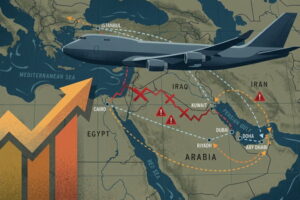





Difficult to assess, with effects still partial but already visible in operating costs and initial traffic flows. This is the picture outlined by Assiterminal, the association representing Italian terminal operators and port companies, following the outbreak of conflict in the Middle East and the resulting disruption to maritime transit between the Strait of Hormuz and the Red Sea. According to director Alessandro Ferrari, the initial signals mainly concern rising fuel and electricity costs, with direct repercussions on terminal operations.
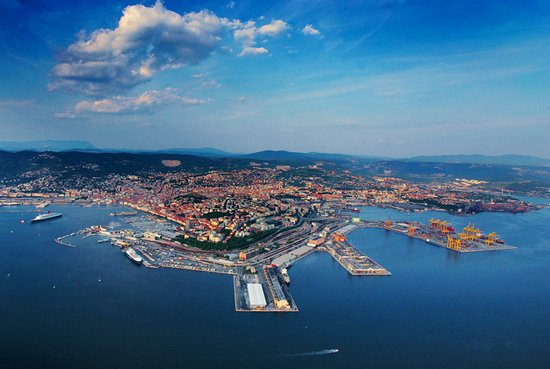
The impact on volumes, however, remains difficult to quantify for now. Nonetheless, as highlighted by Assiterminal, slowdowns in export flows are already emerging in the Adriatic area. The metallurgy, ceramics, processed goods and grain derivatives sectors are among the most exposed, with shipment difficulties. Ports such as Ravenna, Ancona and Venice, along with Trieste to some extent, are recording projected declines in both exports and imports, particularly of raw materials destined for local industrial systems.
This trend is driven by a renewed slowdown in maritime transport times compared with forecasts made just two weeks earlier. The effective blockage of the Red Sea is forcing a reorganisation of routes, with a return to circumnavigating Africa. This scenario, Assiterminal notes, favours ports closer to the Strait of Gibraltar and penalises Italian ports further from the western access to the Mediterranean, affecting their competitiveness in international trade.
The port system is therefore intervening with a reorganisation of space and operations to adapt to the new context. Tyrrhenian ports are also affected, albeit to a lesser extent than those in the Adriatic. In this basin, trade with the Americas helps mitigate the direct effects of the Middle East crisis. However, in the container segment, critical issues are emerging related to empty container management and, above all, a reallocation of transhipment shares towards Spanish and Moroccan ports closer to Gibraltar.
On the cost front, Assiterminal warns that if the conflict continues, the impact will not remain limited to operators. Rising energy costs could trigger a new inflationary phase, leading to reduced consumption and repercussions on both import and export volumes. In this context, the association also points to potential effects on the cruise sector, where bookings from the United States are slowing, and on the ferry segment, which faces the dual impact of higher bunker costs and mechanisms linked to the ETS system. According to Assiterminal, initiatives by the Government and Confindustria (General Confederation of Italian Industry) towards European institutions to obtain a temporary suspension of the ETS in maritime transport are therefore significant, pending a review of its application mechanisms.
Despite the complex scenario, the association highlights the logistics sector’s capacity to adapt. The system is responding through route redesign, the use of alternative intermodal solutions and optimisation of terminal operating capacity. According to Assiterminal, these dynamics confirm the need for faster decision-making processes and for governance, including at European level, capable of responding more swiftly to changes imposed by an increasingly unstable geopolitical context.