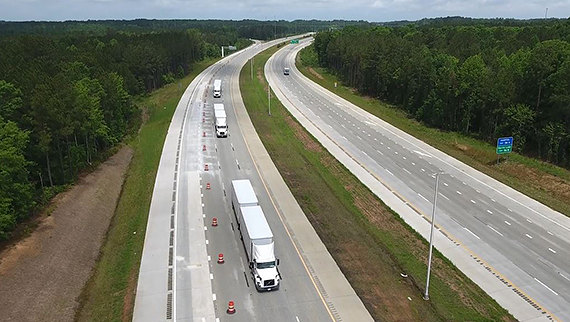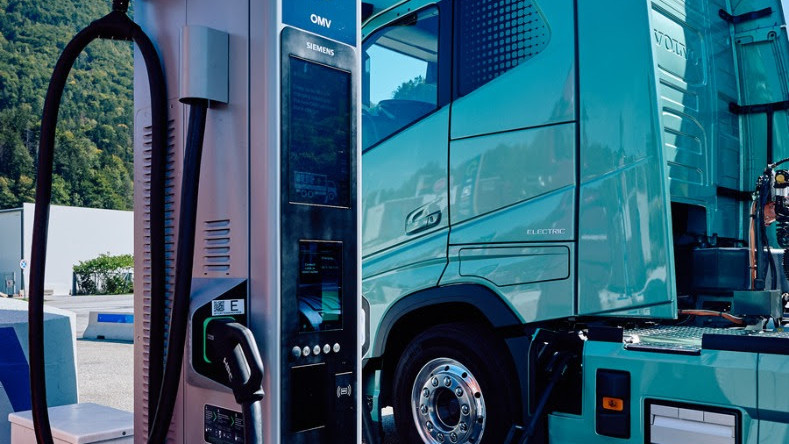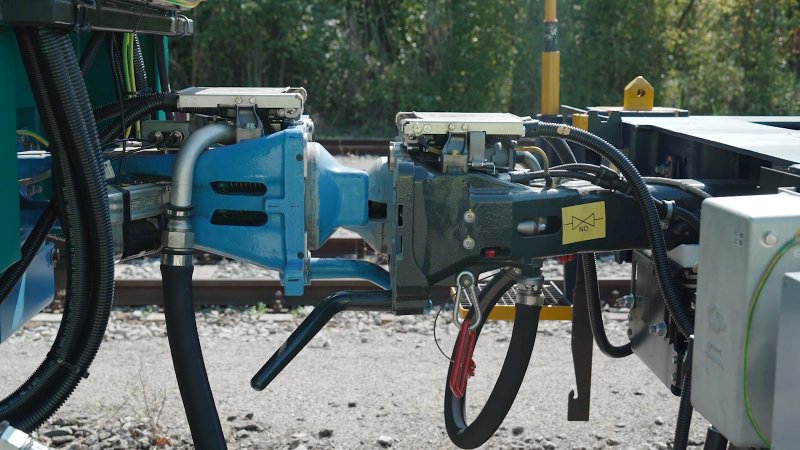
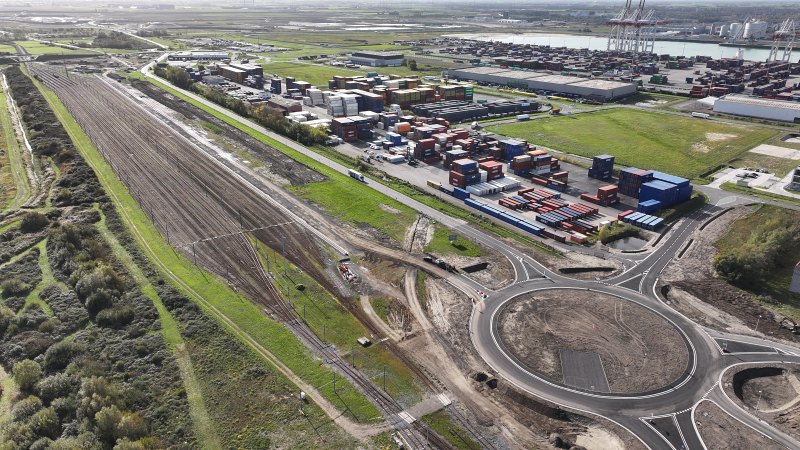








The Institute of Hyperloop Technology, affiliated with Germany's Emdem/Leer University of Applied Sciences, is collaborating with Nevomo to integrate Hyperloop technology into the MagRail Booster project. This partnership raises a pivotal question: Are these organizations uniting to conquer a monumental challenge, or simply seeking a technological partnership to maintain interest in an ambitious, perhaps visionary project?
For now, the spotlight is on the Polish company Nevomo, which in partnership with Gatx Rail Europe has developed the MagRail Booster. This innovation involves retrofitting a traditional freight car with a linear motor, a strategy that has shown promising results in recent tests and certifications. The first autonomous freight railcar is poised to hit the market, with a launch anticipated in 2024.
Initially met with a blend of curiosity and skepticism, the project reminds many of the audacious concept of Hyperloop: a futuristic technology for high-speed transport of goods and passengers using linear induction motors within low-pressure tubes, akin to a spacecraft. However, the serious intentions of Nevomo and especially Gatx Rail Europe—one of the largest freight car leasing companies operating across 20 European countries with a fleet exceeding 29,000 vehicles—stand to prove the critics wrong.
Testing of the system, conducted on Nevomo's trial track and certified by Germany's Tüv Rheinland and the Austrian railway approval company PJ Motion, suggests that the MagRail Booster, powered by linear motors, can operate autonomously, potentially eliminating the need for a locomotive. This could be particularly useful in shuttle transport services within industrial terminals and platforms.
While the concept holds promise theoretically, several practical commercial hurdles remain. Regulatory constraints are still undefined, and while adopting the MagRail Booster technology in a closed system might be relatively straightforward, deploying autonomous cars on standard rail lines, particularly those that interface with passenger stations, presents significant challenges, not to mention potential conflicts with road crossings.
Moreover, a specific infrastructure is required to facilitate the movement of these convoys, including a stator placed inside the tracks, functioning as a third rail, and a linear motor mounted beneath the car. These components are essential for the new technology, which seems best suited for dedicated shuttle networks rather than widespread rail applications. The potential of Hyperloop technology hangs in the balance—poised between being a revolutionary breakthrough akin to the wheel's invention or remaining confined to the realms of science fiction.
Piermario Curti Sacchi