




Array ( [0] => 8 [1] => 40 )

Podcast K44

Cronaca

  • Arrestato un camionista con documenti falsi sull’A2

    Arrestato un camionista con documenti falsi sull’A2

    Durante un controllo della Polizia Stradale nell’area di servizio Rosarno Est, un autotrasportatore di 44 anni è stato trovato con patente e carta d’identità ceche intestate a un’altra persona. Arrestato, è stato poi sottoposto all’obbligo di firma.

Normativa

Mare

  • Nel 2025 record di container per i porti liguri

    Nel 2025 record di container per i porti liguri

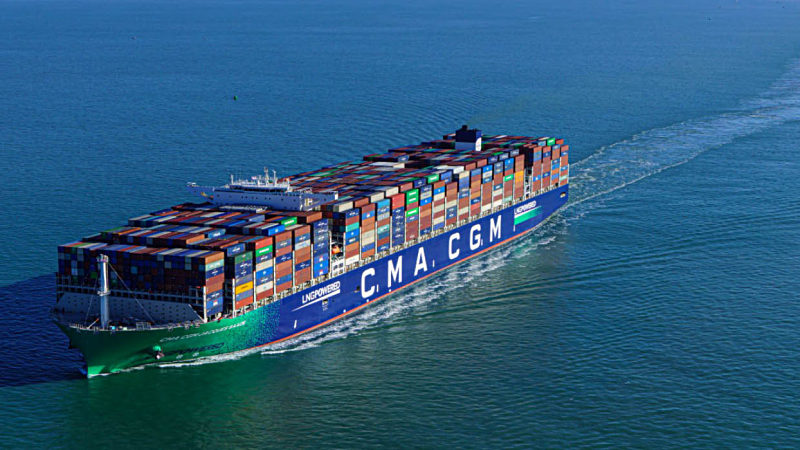
    Nel 2025 il sistema portuale del Mar Ligure Occidentale ha movimentato 2.999.486 teu , con un aumento del 6,3% sull’anno precedente. Crescono gateway e transhipment, in un contesto d’incertezza e tensione sulle principali rotte marittime.

Autotrasporto

  • Video | RevTruck non si ferma, su strada e in cava

    Video | RevTruck non si ferma, su strada e in cava

    Questo episodio della serie video K44 Storie su Ruote racconta la vicenda di RevTruck, azienda di autotrasporto veneta che ogni giorno opera in strada, in cantiere e in cava. Ha recentemente rinnovato la flotta con ribaltabili su autotelaio Daf.

    How agentic artificial intelligence is entering logistics

    Immagine: TrasportoEuropa IA

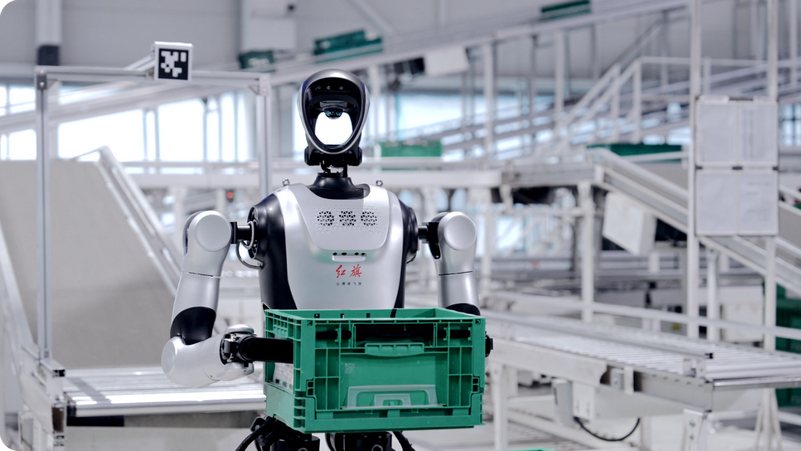
    For those involved in transport management and supply chain operations, growing complexity translates into an ever-increasing number of decisions that must be taken in ever shorter timeframes. Capacity constraints, volatile demand, unforeseen events along routes and cost pressures are making the operating environment increasingly challenging. In this context, artificial intelligence is moving beyond the boundaries of traditional automation to take on a more active role in decision-making processes.

    Philipp Pfister, Sector Vice President at Transporeon, describes this shift as an evolution that is already under way: “Artificial intelligence can ease the daily decision-making burden by handling repetitive operational choices, from carrier selection to route optimisation and the management of disruptions, leaving people more space for strategy and relationships.” According to Pfister, this is not a futuristic vision, but a concrete trajectory that the sector is already following.

    Transporeon believes that by 2030, 50% of supply chain solutions will integrate autonomous decision-making mechanisms. This figure highlights a structural change: systems are no longer designed solely to execute predefined instructions, but to contribute to the achievement of measurable operational objectives. The gap between potential and adoption, however, remains wide. Today, 36% of shippers state that they have basic or intermediate artificial intelligence capabilities in their transport management systems, while only 1% use advanced and autonomous decision-making solutions. At the same time, 23% of organisations are expanding the implementation of agentic artificial intelligence systems and a further 39% are experimenting with them, signalling a direction that is now clearly defined.

    The difference between traditional and agentic automation is one of the key points highlighted by Pfister. The former operates on the basis of rigid rules, following a deterministic logic: if a specific condition occurs, the system executes a predefined action. “Agentic AI, by contrast, is goal-oriented and capable of planning and executing multiple stages of an operational flow, observing the context, making decisions and acting within boundaries set by the company.” It is no longer about carrying out a single command, such as booking a carrier at a fixed rate, but about pursuing overall outcomes, such as optimising transport costs while maintaining high service levels.

    The first applications of these technologies are focusing on limited but highly decision-intensive areas: spot transport procurement, carrier evaluation and qualification, real-time monitoring of estimated times of arrival and the management of operational disruptions. Once effectiveness has been demonstrated in these contexts, the scope of use is set to expand, progressively involving the entire supply chain. According to Pfister, “limiting agentic artificial intelligence to a few use cases will become increasingly difficult as companies begin to understand its systemic value”.

    This change is also reflected in how artificial intelligence is perceived within companies. Whereas it was once considered primarily a tool, there is now growing discussion of “AI as a colleague”. Two thirds of shippers and more than half of carriers recognise artificial intelligence’s ability to automate repetitive tasks, freeing up time for higher value-added activities. “Agentic artificial intelligence systems are becoming an integral part of the workforce,” Pfister observes, stressing that the key issue is no longer whether AI can be useful, but whether it is capable of performing a specific task and how quickly it can deliver tangible results.

    Despite the rising level of autonomy, human involvement in decision-making remains central. Pfister emphasises that agentic artificial intelligence must be treated as a new resource, with clear objectives, continuous feedback and ongoing evaluation. This approach makes it possible to build reliable support over time, avoiding uncontrolled drift. Operational roles are already evolving: transport planners and managers are increasingly taking on the role of supervisors of intelligent agents, retaining responsibility for strategic decisions while execution is progressively delegated to systems.

    The infrastructure dimension represents one of the main enabling factors, but also one of the most significant barriers. Data quality continues to be cited as the primary obstacle to the adoption of artificial intelligence by more than half of shippers and carriers. However, as Pfister points out, the availability of accurate data is not sufficient if it remains confined within silos. Interoperability between systems and partners along the value chain amplifies the potential of AI, allowing agents to learn more quickly thanks to shared, real-time information.

    Alongside interoperability, the modularity of solutions plays a decisive role. Companies must be able to integrate agentic artificial intelligence into existing infrastructures without having to rebuild them from scratch. A gradual adoption path makes it possible to align the pace of implementation with available resources and the organisation’s level of technological maturity, reducing operational and financial risks.

    As decision-making autonomy increases, governance becomes an indispensable element. “It is essential to define clear boundaries around what artificial intelligence agents can do and what remains excluded,” Pfister underlines. Setting these limits before scaling up adoption makes it possible to monitor agent performance throughout all stages of the operational flow, not just the final outcome. This approach ensures visibility and enables potential errors to be identified promptly, allowing systems to be progressively refined once the pilot phase has been completed.

    Relying on platforms recognised by the market and on a network of trusted partners helps to keep implementations aligned with corporate objectives. Looking ahead, Pfister identifies 2030 as a key horizon, with the adoption of agentic artificial intelligence potentially reaching 50%. After a phase of experimentation in 2025, 2026 is set to mark an acceleration, supported by assessments of data maturity, the launch of controlled pilot projects, the adoption of already validated governance models and targeted investments in people’s skills. “Digital colleagues based on artificial intelligence will become a structural component of supply chain teams,” Pfister concludes.


    © TrasportoEuropa - Riproduzione riservata - Foto di repertorio
    Segnalazioni, informazioni, comunicati, nonché rettifiche o precisazioni sugli articoli pubblicati vanno inviate a: redazione@trasportoeuropa.it


      Puoi commentare questo articolo nella pagina Facebook di TrasportoEuropa

      bottone newsletter piccolo Vuoi rimanere aggiornato sulle ultime novità sul trasporto e la logistica e non perderti neanche una notizia di TrasportoEuropa? Iscriviti alla nostra Newsletter con l'elenco ed i link di tutti gli articoli pubblicati nei giorni precedenti l'invio. Gratuita e NO SPAM!


    CONTENUTI SPONSORIZZATI


Videocast K44

Aereo

  • Lufthansa Cargo amplia la rete su Roma e Algeri

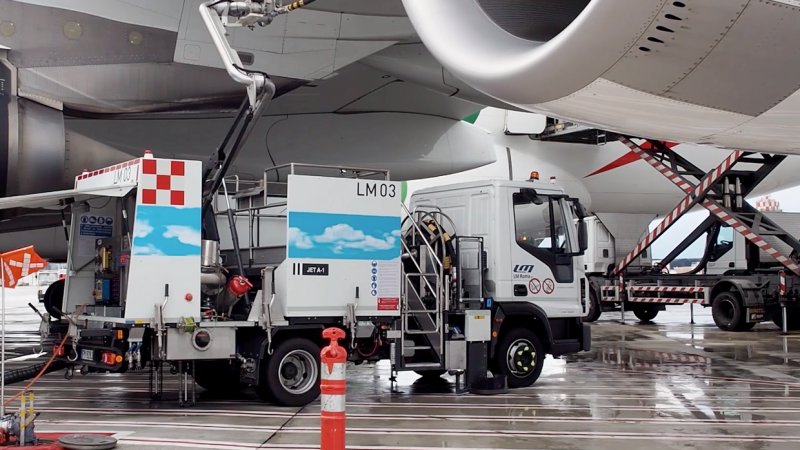
    Lufthansa Cargo amplia la rete su Roma e Algeri

    Lufthansa Cargo annuncia a gennaio 2026 una svolta sui trasporti aerei a corto e medio raggio, con al centro Roma e Algeri. Rafforza il ruolo degli hub e l’accesso ai mercati africani ed europei.

Ferrovia

  • Cambiano nel 2025 i flussi ferroviari dalla Cina

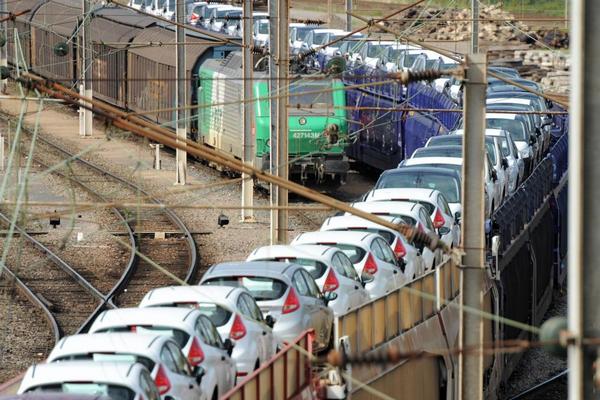
    Cambiano nel 2025 i flussi ferroviari dalla Cina

    Il trasporto ferroviario di container tra Cina ed Europa è diminuito nel 2025 del 14,1%, invertendo la ripresa del 2024. Nel sistema China Railway Express i treni superano quota 20mila, ma la crescita si sposta sull’Asia Centrale, che è aumentata a 27,7% toccando i 1,13 milioni teu.

Persone

  • Geodis Italia rinnova il vertice operativo della logistica

    Geodis Italia rinnova il vertice operativo della logistica

    Geodis rinnova il vertice operativo italiano per la logistica con la nomina di Sandro Cappiello alla guida della Contract logistics nel nuovo assetto voluto da Maurizio Bortolan. Riorganizzazione e integrazione dei servizi al centro della strategia per l’Italia.
Nuovo semirimorchio Schmitz, con uno sguardo all’America

TECNICA

Nuovo semirimorchio Schmitz, con uno sguardo all’America
Traton e PlusAI rafforzano l’alleanza sul camion autonomo

TECNICA

Traton e PlusAI rafforzano l’alleanza sul camion autonomo
Catl avvia produzione in serie di batterie a sodio per furgoni elettrici

TECNICA

Catl avvia produzione in serie di batterie a sodio per furgoni elettrici
Volvo FH conferma cinque stelle Euro Ncap nel 2026

TECNICA

Volvo FH conferma cinque stelle Euro Ncap nel 2026
Iveco avvia test per il Livello 4 di guida autonoma dei camion

TECNICA

Iveco avvia test per il Livello 4 di guida autonoma dei camion
previous arrow
next arrow
Come l’intelligenza artificiale agentica entra nella logistica

LOGISTICA

Come l’intelligenza artificiale agentica entra nella logistica
Dsv accelera l’integrazione di Schenker

LOGISTICA

Dsv accelera l’integrazione di Schenker
FS distribuisce con bici cargo a Roma

LOGISTICA

FS distribuisce con bici cargo a Roma
Ceva apre in Europa nuovi hub di prossimità per veicoli

LOGISTICA

Ceva apre in Europa nuovi hub di prossimità per veicoli
LC3 serve logistica Ikea con camion elettrici

LOGISTICA

LC3 serve logistica Ikea con camion elettrici
previous arrow
next arrow
Il 2026 sarà l’anno delle batterie al sodio per i veicoli elettrici

ENERGIE

Il 2026 sarà l’anno delle batterie al sodio per i veicoli elettrici
Sequestrati 260 milioni per maxi frode Iva nei carburanti

ENERGIE

Sequestrati 260 milioni per maxi frode Iva nei carburanti
Petrolio in rialzo dopo le sanzioni Usa alla Russia

ENERGIE

Petrolio in rialzo dopo le sanzioni Usa alla Russia
Antitrust multa sei compagnie petrolifere italiane con 936 milioni

ENERGIE

Antitrust multa sei compagnie petrolifere italiane con 936 milioni
A Trieste i lavori per produrre idrogeno verde

ENERGIE

A Trieste i lavori per produrre idrogeno verde
previous arrow
next arrow
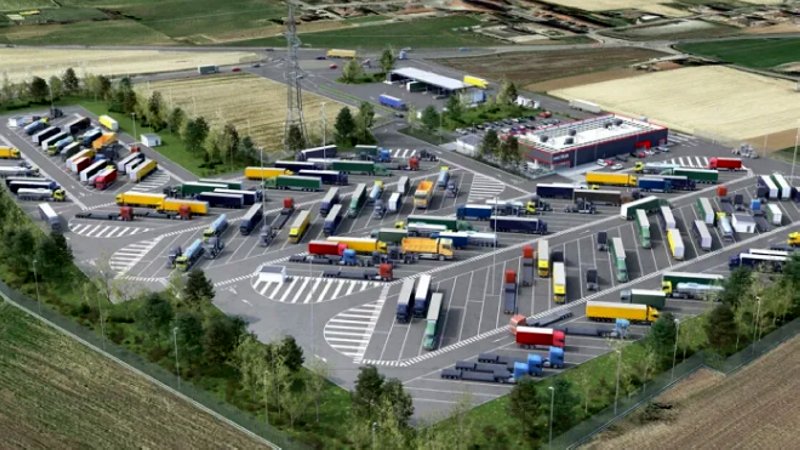
Padrosa realizzerà un parcheggio per camion ad Alessandria

SERVIZI

Padrosa realizzerà un parcheggio per camion ad Alessandria
Leviahub e Pionira accelerano sull’adozione dell’eCmr

SERVIZI

Leviahub e Pionira accelerano sull’adozione dell’eCmr
Trans.eu avvia il pagamento sicuro per l’autotrasporto europeo

SERVIZI

Trans.eu avvia il pagamento sicuro per l’autotrasporto europeo
Sanilog rinnova nel 2026 il piano sanitario per lavoratori della logistica

SERVIZI

Sanilog rinnova nel 2026 il piano sanitario per lavoratori della logistica
L’IA si sta sempre più integrando nel trasporto

SERVIZI

L’IA si sta sempre più integrando nel trasporto
Scania amplia la rete di assistenza nel Lazio

SERVIZI

Scania amplia la rete di assistenza nel Lazio
Nuovi contributi per cibersicurezza alle Pmi e autonomi

SERVIZI

Nuovi contributi per cibersicurezza alle Pmi e autonomi
Dkv Mobility presenta un nuovo software per gestione trasporti

SERVIZI

Dkv Mobility presenta un nuovo software per gestione trasporti
Forto nomina Matteo Caiti Country Manager Italia

SERVIZI

Forto nomina Matteo Caiti Country Manager Italia
Nuove tecnologie Geotab per il trasporto refrigerato

SERVIZI

Nuove tecnologie Geotab per il trasporto refrigerato
Sanzione antitrust di 5 milioni sul noleggio veicoli per Ald

SERVIZI

Sanzione antitrust di 5 milioni sul noleggio veicoli per Ald
Circle Group potenzia software per porti e interporti

SERVIZI

Circle Group potenzia software per porti e interporti
Scania realizza una struttura per i camion a Milano

SERVIZI

Scania realizza una struttura per i camion a Milano
Transporeon introduce nuove soluzioni TMS con l’intelligenza artificiale

SERVIZI

Transporeon introduce nuove soluzioni TMS con l’intelligenza artificiale
Pietro Lanza è direttore generale di SB Italia

SERVIZI

Pietro Lanza è direttore generale di SB Italia
previous arrow
next arrow