









The logistics sector has spent much of 2025 navigating uncertainty triggered by trade tariff policies and volatility under the Trump administration, conflicts in Ukraine and the Middle East, political paralysis and stagnation in Europe, slowing growth in China and Asia, and the repeal of the US de minimis customs exemption. Yet overall performance has proved stronger than sentiment suggested: robust US consumer demand has supported the global economy, and much of the downturn appears rooted more in fear than fundamentals. Signs of renewed confidence could now unlock new orders and volumes, according to the Transport Intelligence report authored by John Manners-Bell and released in October 2025.
As the industry transitions into what can be called a “new normal”, it is shifting towards more localised production models and increasing logistics intensity across supply chains. This structural change is boosting short sea shipping, intermodal transport and road freight. The reorganisation of Asian production, with supply chains moving towards Southeast Asian countries to meet US demand for alternatives to China, is stimulating intra-regional maritime trade. The global logistics market was worth €5,321.614 billion in 2024 and is forecast to expand by an average of 3.80% per year to 2029. The Asia-Pacific region remains the key growth driver, with a 5.90% increase expected in 2025. In the Middle East and North Africa, despite disruptions along Red Sea routes, expansion of 4.8% is projected by 2029.
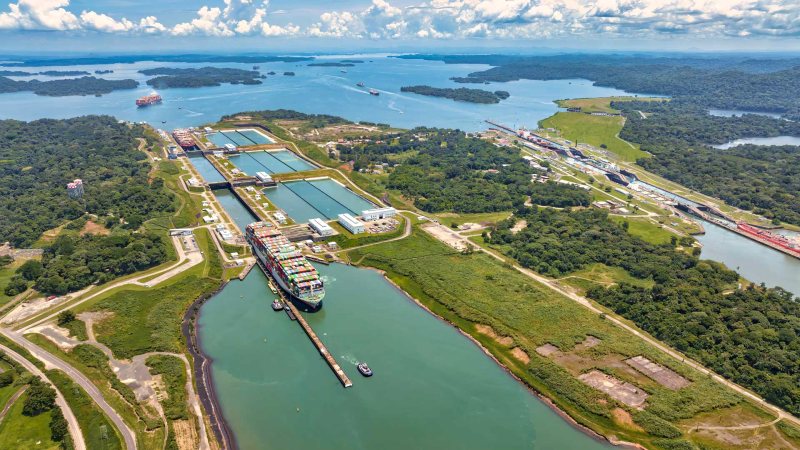
In the air and ocean freight sector, US tariffs have created significant volatility and prompted “stop-start procurement” by importers trying to anticipate potential price rises. Ocean freight profitability has been supported by capacity reductions linked to rerouting around the Cape of Good Hope to avoid the Red Sea. China’s manufacturing overcapacity has fuelled exports to markets beyond the United States. Overall, the global freight forwarding market grew by 6.1% in real terms in 2024, reaching €207.613 billion.
In the parcels sector, the US withdrawal of the de minimis exemption—which previously allowed duty-free entry for shipments under $800 (around €750)—has sharply impacted international flows, forcing some couriers and postal operators to suspend services to the United States. At the same time, domestic B2C volumes have held up well outside the US, with the Asia-Pacific region, led by China, remaining the main growth engine. The Express & Small Parcels market is projected to grow by 7.9% by 2029.
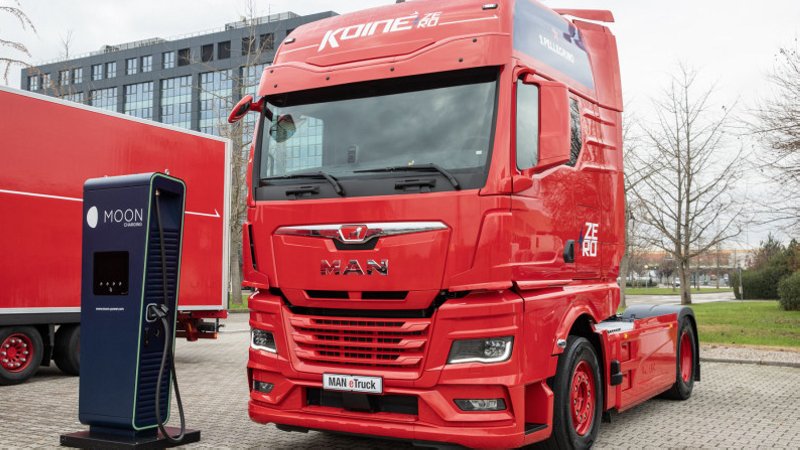
European road transport demand has been hit by economic stagnation, although signs of recovery are emerging in manufacturing, particularly in Spain and Italy. Germany’s rebound will be crucial, underpinned by major defence and infrastructure spending. The report forecasts average growth of 2.0% through to 2029. In North America, freight transport remains in recession, with erratic trade flows and weak consumer confidence due to tariffs. Despite an extended period of weakness, signs point to the end of the downturn and improved profitability among large operators, supported by downsizing and cost-cutting. The North American market was worth €465.164 billion in 2024, growing 1.2% annually.
E-commerce logistics continues its expansion, fuelled by retailers’ shift online and the rise of platforms such as Shein and Temu. In 2024 the market grew 14.1% year-on-year to €521.937 billion, double its 2019 value. In contrast, third-party logistics growth is expected to slow to 3.3% in 2025, down from 3.6% in 2024, amid trade tensions and political uncertainty that are disrupting cross-border supply chains and delaying investment decisions.
Looking at growth drivers, the report notes that the sector is moving towards a context of greater confidence and adaptability. The main boost will come from public investment: billions allocated to defence in Europe and the US, a new wave of infrastructure projects in Europe to counter Russian threats, and reconstruction cycles in Ukraine, Syria and Gaza. Additional capital is flowing from Middle Eastern investors into major projects across Africa, Asia and Europe, alongside development plans launched by India, China and other BRICS countries. On the corporate side, accelerated digitalisation is enabling faster, more accurate decision-making and enhancing resilience. The report suggests that this new phase will favour companies able to combine strong management skills, market intelligence and flexible organisational structures.
Overall, the study concludes that 2025 marks a shift from the more linear pre-pandemic environment to a complex and ambiguous one, in which production regionalisation, logistics intensity and intermodality have become operational responses. The sector’s adaptation involves anticipating tariff shocks through more dynamic procurement, redesigning networks to bypass bottlenecks such as the Red Sea, diversifying sourcing markets across Asia and reallocating capacity between air, sea and road. On this foundation, the gradual return of confidence could translate into real growth—provided companies execute with discipline and leverage data and technology throughout their supply chains.