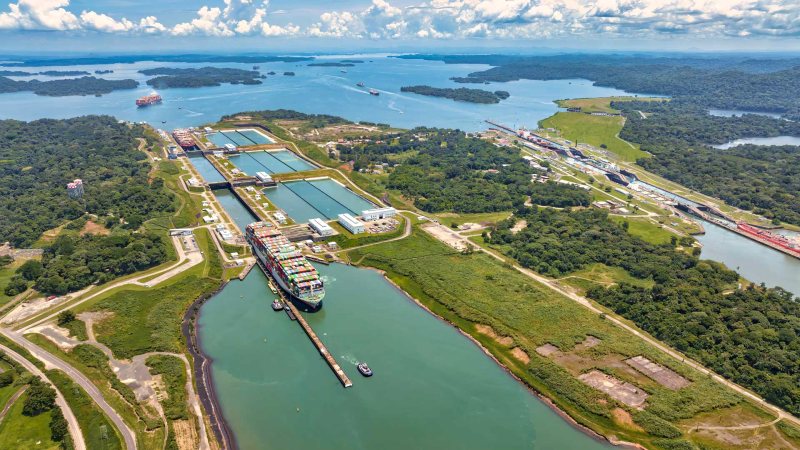






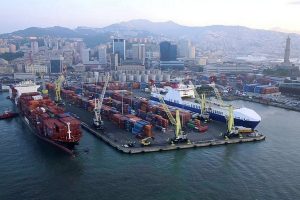
After almost a year, and on the eve of the expiry of its provisional extension, the Management Committee of the Italian Autorità di Sistema Portuale del Mar Ligure Occidentale (Western Ligurian Sea Port Authority) on 30 September 2025 settled one of the most complex disputes in Italian port governance in recent years, approving the renewal of the Genoa Port Terminal concession to the Spinelli–Hapag-Lloyd group until the end of 2054. The decision marks the conclusion of a lengthy legal and administrative process characterised by regulatory uncertainty, competitive tensions and employment concerns affecting the entire Genoese port community.
To navigate this regulatory maze, the Port Authority devised an innovative solution to comply with a 2024 ruling by the Council of State, which had annulled Spinelli’s 2018 concession on the grounds that it did not meet multipurpose criteria, while keeping the terminal operational. The turning point came with a shift in how the concept of functional prevalence was assessed: rather than measuring cargo handled (tonnes), the authority adopted a spatial criterion, based on square metres allocated to different cargo types.
Before granting definitive renewal, the Port Authority sought legal advice from the State Attorney General, which defined a strategy that could both respect the annulment ruling and establish a basis for a new concession title. The Attorney General concluded that the Council of State’s decision obliged the Authority to issue a new determination by revisiting Spinelli’s original 2015 application, but did not require a new tender procedure.
A decisive point in the matter lies in the multipurpose designation of the terminal under the port master plan. Spinelli had been accused of focusing predominantly on container handling, contrary to the plan. The Authority clarified that the Council of State ruling did not specify the criteria for assessing “prevalence” of multipurpose activity. The interpretation and redefinition of this concept were therefore left to the Authority’s technical discretion.
The Attorney General also deemed legitimate the provisional concession, noting that given its interim nature and urgency, a detailed technical review was not required. Article 10 of the implementing regulation of the Navigation Code was cited, which ensures continuity of port traffic, operations on public land and employment stability.
On this basis, the Authority set out new criteria for functional prevalence to underpin the definitive concession. It adopted a dual approach designed to ensure that the terminal remains multipurpose and does not evolve into a specialised full container terminal. The first criterion is organisational, focusing on the type of activity and the concessionaire’s operational structure.
According to the Authority, prevalence cannot be dictated by market demand, as this would breach EU internal market law by imposing constraints beyond the concessionaire’s entrepreneurial control. Instead, the emphasis is on the supply side, ensuring that activity is primarily multipurpose – serving flexible traffic such as ro-ro, containers and general cargo. A multipurpose terminal, it stressed, is an infrastructure, equipment and service complex designed to flexibly accommodate different vessel types and cargo categories.
To safeguard this flexibility and prevent excessive container specialisation, the Authority has imposed restrictions on investments and equipment. Specifically, automated operations typical of full container terminals are banned, and specialised container-only equipment is excluded. Equipment must remain multipurpose, such as mobile cranes, reach stackers, forklifts and tractors. Infrastructure restrictions also apply, including a ban on investing in fixed gantry cranes, structural changes to the quay line, or alterations reducing the ratio of quay to yard space. The comb-type quay layout must be preserved, and ro-ro facilities must not be reduced or removed.
The second criterion is spatial, replacing throughput-based measurement. Container handling, though permitted as part of multipurpose activity, must be confined to a minority of the allocated area. The terminal layout must therefore be redefined and updated to allow closer monitoring by the Authority. The concessionaire will be obliged to respect spatial boundaries assigned to each category of operation, with activities restricted to their designated areas.
Matteo Paroli, president of the Western Ligurian Sea Port Authority, described the renewal as “the result of intense work carried out in full compliance with the Council of State’s ruling”. He thanked the advisory commission and the management committee “for their professionalism and commitment” and praised “the extraordinary work of our staff, who have been able to redefine operational conditions in a precise way”. He added that the resolution “not only ensures the best conditions for increasing port traffic, but also represents a decisive step in strengthening the credibility of port governance”.
Trade unions unanimously welcomed the decision, citing the protection of 650 direct jobs. Mauro Scognamillo of Fit-Cisl called it “a solution in the name of common sense, respect for the law and for the ruling, but above all for safeguarding employment”. Roberto Gulli of Uiltrasporti stressed that “workers and the Genoa port system can now look forward with peace of mind”, while Marco Pietrasanta of Filt-Cgil noted that “a solution has been provided after the risk of negative consequences for the entire area”.
However, the issue may not yet be fully resolved, with several legal fronts still open. The Council of State has yet to rule on a request to revoke its annulment decision, and new appeals remain possible, notably from PSA Sech, the party that originally triggered the annulment.
Another critical matter concerns Genoa’s Port Master Plan, which has not been updated since 2001. The Port Authority launched work in 2025 on a new Port System Master Plan “to provide planning tools capable of combining growth with sustainability”. Public consultations with stakeholders were held during summer 2025.
This case could also have wider implications across the national port system. Deputy Transport Minister Edoardo Rixi, commenting on the Council of State’s annulment ruling, warned that it “could open the door to endless disputes at ports across Italy”. A planned legislative change limiting master plan forecasts to “areas” rather than individual terminals could influence how the current solution is applied.