





On 4 December 2025 the Council of EU Transport Ministers approved the general approach on the revision of Directive 96/53/EC on the maximum authorised weights and dimensions for road freight vehicles in the Union. The decision marks a pivotal step in a process that had remained stalled for over a year due to divisions among Member States and the competing pressures of road transport and railway stakeholders.
The European Commission’s proposal, listed as COM(2023) 445, was presented on 11 July 2023 as part of the Greening Freight Transport Package. According to its promoters, the initiative aims to ensure the free movement of goods and fair competition, encourage investment in zero-emission technologies and improve the enforcement of weight and dimension rules. The European Parliament adopted its first-reading position on 12 March 2024 with 330 votes in favour, 207 against and 74 abstentions.
Talks in the Council had long remained at a standstill, particularly on European Modular Systems, or EMS – combinations that exceed current weight and dimension limits – as well as on weight thresholds and the impact of new configurations on infrastructure. The Hungarian Presidency in 2024 was unable to bring the positions closer together, leaving the file first to the Polish Presidency in the first half of 2025 and then to the Danish Presidency in the second half of the year. It was the latter that conducted the negotiations leading to a compromise endorsed by Coreper on 20 November 2025 and formalised by ministers on 4 December.
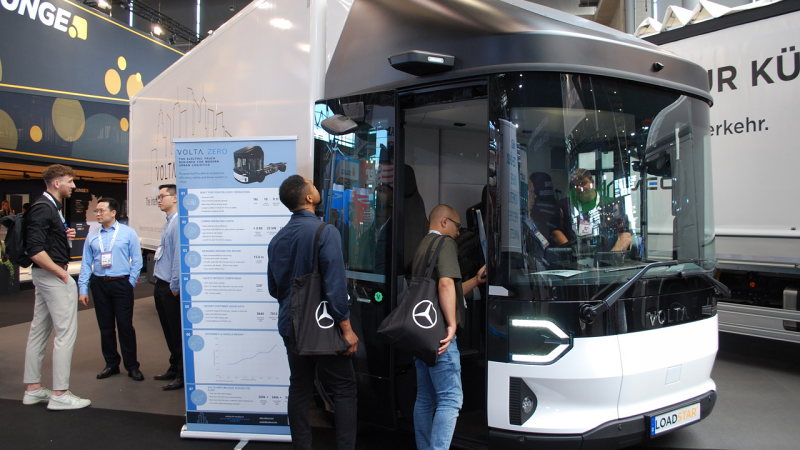
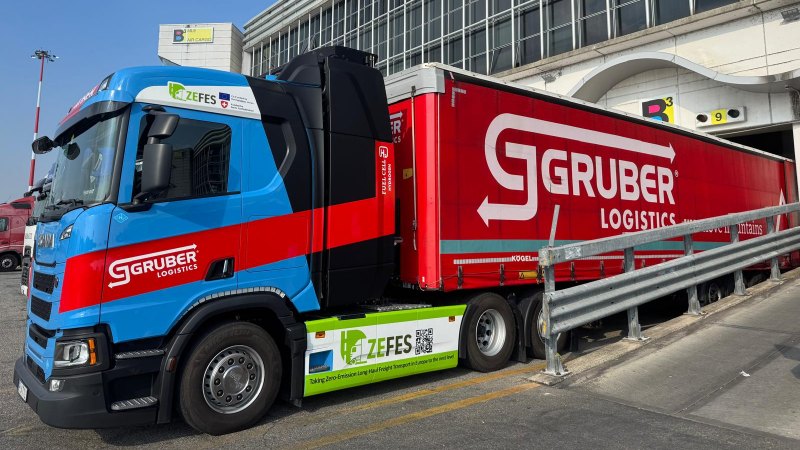
The text focuses first on zero-emission vehicles, increasing their maximum mass from 42 to 44 tonnes to compensate for the higher weight of batteries and fuel cells. Articulated trucks may be up to 0.90 metres longer to accommodate zero-emission technologies. The compromise differentiates weight allowances between five- and six-axle vehicles, at 2 and 4 tonnes respectively. The proposal to raise the maximum drive-axle weight for zero-emission vehicles from 11.5 to 12.5 tonnes was dropped, as most Member States consider that heavier drive axles would negatively affect infrastructure.
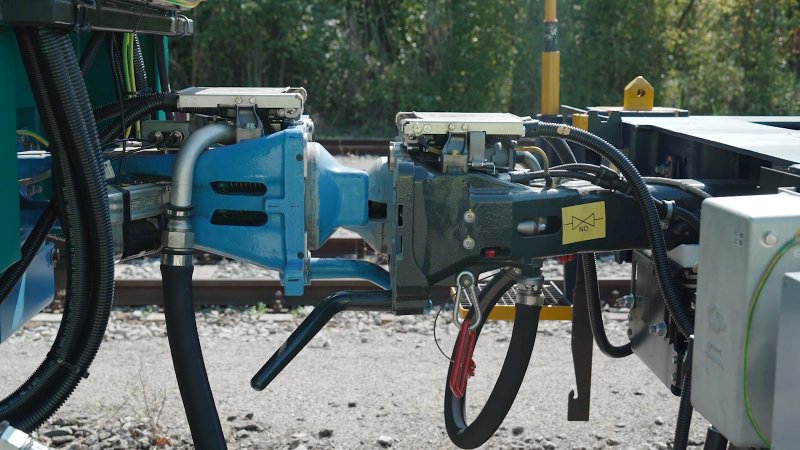
On intermodal transport, the agreement confirms dedicated tolerances for road–rail combinations to support modal shift towards lower-impact solutions. Zero-emission and intermodal vehicles may cross borders even when exceeding the maximum weights set out in the annex, provided the limits authorised by both Member States concerned are not surpassed.
The directive also extends the possibility of using European Modular Systems in international traffic between neighbouring countries that already authorise these configurations, eliminating the bilateral agreements required until now. The maximum trial period for EMS is increased to seven years.
The package includes a crisis-response clause allowing temporary exemptions from weight and dimension limits to ensure continuity of essential supplies. Regarding enforcement, from 1 December 2029 zero-emission vehicles will need to transmit reliable weight data remotely through on-board mass monitoring equipment. Member States may use automatic systems installed on the TEN-T network or on-board devices for checks.
Initial reactions followed swiftly. IRU, representing road hauliers, welcomed the deal and described the Danish Presidency’s leadership as decisive. EU Director Raluca Marian stressed that authorising 44 tonnes for zero-emission vehicles offers predictability to operators interested in adopting them without losing competitiveness. ACEA, representing vehicle manufacturers, acknowledged the political effort required to conclude the Council negotiations, but argued that the text is still insufficient to accelerate the decarbonisation of road transport and requires further improvements during trilogues, especially on weight tolerances for the most common configurations and on implementation timelines.
Rail and intermodal associations CER, ERFA, UIC, UIP and UIRR voiced stronger criticism, warning of the consequences of the compromise. Citing a 2024 study, they argued that extending cross-border circulation of EMS could trigger a reverse modal shift of up to 21% from rail to road, equivalent to 10.5 million additional truck journeys per year and 6.6 million tonnes of extra carbon dioxide emissions. The associations call for the directive’s incentives to be reserved exclusively for zero-emission vehicles and intermodal transport.
Environmental organisations have also raised concerns. Transport & Environment argues that weight increases must be limited to reduce the impact on the road network and maintain balance between diesel and zero-emission vehicles, proposing a maximum increase of three tonnes for five-axle combinations.
Some Member States highlighted the potential impact on infrastructure and modal balance. Austria, together with other countries, reiterated the risk of undermining modal-shift objectives towards rail. The decision to remove the extra height allowance for transporting high-cube containers was motivated by restrictions linked to low overpasses in many countries.
A further sensitive point concerns the withdrawal of the proposed revision of the Combined Transport Directive, part of the same legislative package. According to the rail associations, the withdrawal announced by the Commission in the 2026 work programme sends a negative signal and must be considered within the overall balance of the weights and dimensions revision.
With the adoption of the general approach, the Council is ready to launch trilogue negotiations with the European Parliament and the Commission. Parliament had already expressed its readiness to start talks immediately. Once a final agreement is reached, Member States will have two years to transpose the new rules, while some provisions, such as the single permit window, will apply four years after transposition.
Pietro Rossoni