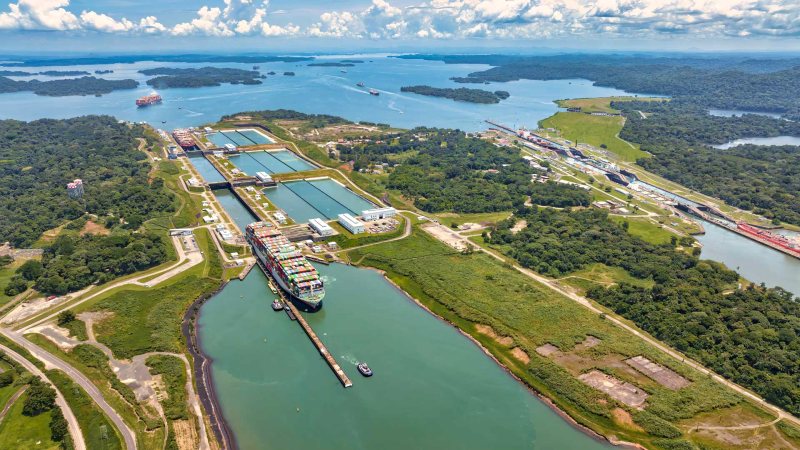









The update of the Containers Lost at Sea report, published in June 2025 by the World Shipping Council, provides a nuanced overview of safety in maritime container transport. While the data for 2024 show an increase in containers lost at sea compared to the previous year, the overall trend in the sector continues to point towards a steady reduction in risk. According to the report, container ships lost 576 containers out of approximately 250 million transported in 2024. This marks a rise from the historic low recorded in 2023, when only 221 containers were lost. However, the number remains well below the average for the past ten years, which stands at 1,274 units annually. In relative terms, losses accounted for just 0.0002% of the total volume shipped, a very low figure.
The slight increase observed last year is mainly attributed to external factors. Attacks on merchant ships in the Red Sea forced many companies to avoid this crucial route, redirecting traffic around the Cape of Good Hope. This shift led to a 191% increase in shipping activity in the region, which is known for severe ocean conditions and unpredictable waves caused by converging weather systems. That area alone accounted for 35% of total losses in 2024: around 200 containers ended up in the sea, with three separate incidents, documented by the South African Maritime Safety Authority, causing the loss of 44, 46 and 99 containers respectively.
The WSC report nonetheless highlights an encouraging long-term trend. Over the past seventeen years, the number of containers lost has fluctuated significantly, with dramatic spikes such as in 2013, when 5,578 containers were lost, largely due to the sinking of an entire vessel. The 2020–2021 period also saw high numbers, with 3,924 and 2,301 containers lost respectively, but a clear downward trend has emerged since then. The three-year moving average for the 2022–2024 period stands at 489 containers per year, a sharp decrease from the 1,061 average in the previous three years. For the second time, the report also includes data on recovery: in 2024, two containers were retrieved from the sea.
The WSC continues to stress a fundamental principle: container safety cannot be left to a single party but is a shared responsibility throughout the entire logistics chain. Every stakeholder involved – from the container operator to the shipper, from the port terminal to the vessel operator – has specific obligations regarding inspection, stowage, verified gross mass declaration and compliance with technical and regulatory protocols. Only timely and coordinated cooperation can further reduce the risk of accidents.
In this context, several international initiatives are being implemented. From 1 January 2026, it will be mandatory to report all container losses to the International Maritime Organization. This amendment to the Solas regulation aims to enhance navigational safety and protect the marine environment. Meanwhile, the TopTier research project, launched in 2021 and developed with the involvement of more than forty industry stakeholders, is nearing completion and will present concrete proposals to improve regulations and international standards.
The year 2025 also marks the launch of a new cargo safety programme promoted by the WSC. The initiative involves the use of digital tools and artificial intelligence systems to detect undeclared or misclassified dangerous goods, which are among the main causes of onboard fires and often lead to container losses. Another critical issue is coal transport: following several serious fires caused by poor handling, the industry is already adopting stricter rules, ahead of IMO regulations coming into force in 2026. All coal shipments will have to be treated as dangerous goods in accordance with the IMDG Code.
The data underpinning the report are based on an annual survey conducted among WSC member companies, which account for around 90% of global container shipping capacity. The information is then extrapolated to include the remaining 10%, providing a representative estimate for the entire sector.