


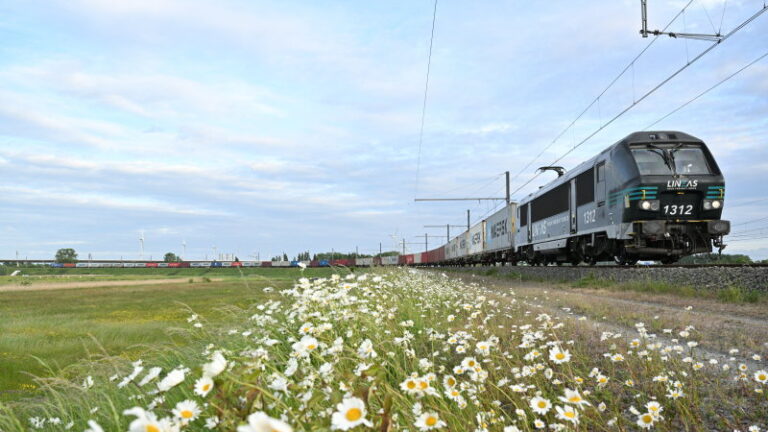
The European Commission authorised the Belgian federal government in December 2025 to grant a €61 million rescue loan to Lineas Group, the country’s leading private rail freight operator. The measure, classified as rescue aid under EU State aid guidelines for companies in difficulty, is temporary in nature and intended to cover liquidity needs for a maximum period of six months. At the end of this period, the loan must be repaid in full, or Belgium will be required to notify Brussels of a credible restructuring plan capable of ensuring the company’s long-term economic viability.
According to the Commission, the authorisation complies with the so-called “repay or restructure” clause, a core element of the EU regulatory framework. The EU executive stressed that the loan cannot become a permanent form of support and that any further intervention would have to be assessed on the basis of a detailed industrial plan, including appropriate compensatory measures to limit distortions of competition.
At the same time, the Commission closed an in-depth investigation into previous capital injections carried out by Sfpi/Fpim, Belgium’s federal holding and investment company, together with other private investors. The decision concluded that these operations did not constitute illegal State aid, as they were conducted on market terms and in line with the behaviour of a private investor. The end of the investigation removed a long-standing source of uncertainty over the group and politically unlocked the new emergency intervention.
The request for aid arose against a backdrop of acute financial strain. Lineas, formerly the freight division of the Belgian railways and now largely controlled by Argos Wityu alongside management, suffered a sudden deterioration in liquidity in 2025. The trigger was an unexpected and sharp drop in demand in three industrial sectors central to the group’s customer base: steel, chemicals and automotive. The slowdown in European industrial output reduced transported volumes, particularly along corridors linked to flows of raw materials and semi-finished products, putting pressure on an operating model already burdened by high fixed costs.
Financial data from recent years show an interrupted recovery path. After a loss of €82 million in 2022, considered the low point of the operational crisis, the net result improved to –€40.3 million in 2023 thanks to the initial effects of the transformation plan launched by the group. In the first half of 2024, the loss narrowed further to €5.1 million, fuelling expectations of a move towards break-even. The collapse in volumes in 2025, however, rapidly eroded available cash, making recourse to a bridge loan unavoidable. Cumulative losses over the years have exceeded €400 million, significantly impacting equity and requiring repeated recapitalisations.
The shareholding structure played a significant role in the dialogue with Brussels. Argos Wityu holds around 90% of the capital together with management, while Sfpi/Fpim retains a minority stake of about 10%. The presence of the Belgian state in the share capital had prompted a complaint from a competitor, leading to the opening of the State aid investigation. The Commission’s decision, recognising the market-based nature of past investments, clarified the regulatory framework and strengthened Belgium’s negotiating position.
In justifying approval of the loan, the Commission also referred to the systemic importance of Lineas for European modal shift objectives. The group is a key player in international rail freight links and in flows to and from the major ports of Northern Europe. An exit from the market would, according to Brussels, have entailed a concrete risk of a significant shift of volumes from rail to road, with negative effects on emissions and competition within the single market.
During the six months covered by the financing, management will have to implement containment and refocusing measures. Sources point to a gradual withdrawal from unprofitable single-wagon services, greater concentration on block trains and high-volume intermodal routes, as well as the possible sale of non-strategic assets. The search for new industrial or financial partners also remains open, aimed at strengthening the balance sheet and supporting a longer-term restructuring plan should repayment of the loan prove impossible.
Antonio Illariuzzi