


The abrupt fall of Syrian President Bashar al-Assad, who was ousted by a revolution and forced into exile in December 2024, has not only reshaped the country’s political landscape but also opened new opportunities in areas such as transportation. At the forefront of this transformation is Turkey, which has consistently played a prominent—sometimes overt, sometimes covert—role in the Middle Eastern arena. Ankara now aims to rapidly restore rail links, particularly for freight transport.
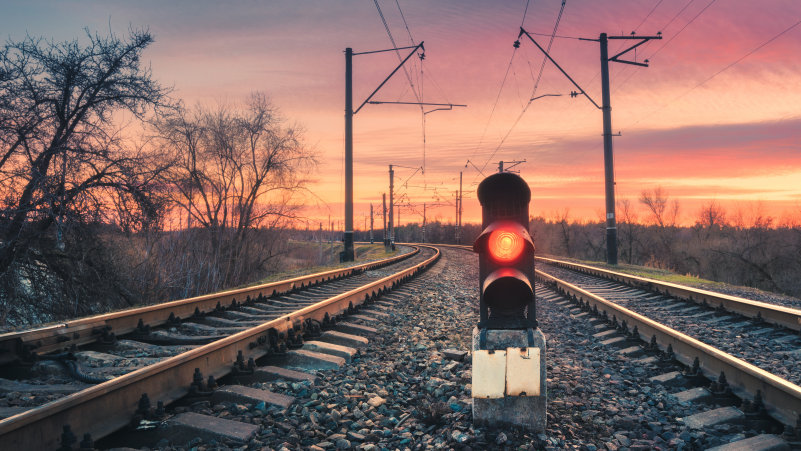
Just a year before Syria’s civil war erupted in 2011, the railway between Aleppo, a vital city in northern Syria often referred to as the "capital of the north," and the Turkish port of Mersin, one of Anatolia’s key hubs, had been inaugurated for commercial use. However, with the onset of the internal conflict, the railway was shut down and has remained closed ever since. Now, Turkish authorities are eager to swiftly revive this cross-border route. Reports indicate that technical inspections have already commenced on the Turkish section, which accounts for about two-thirds of the entire corridor, to assess the work required to reopen it for operations. In addition to enhancing links with Mersin’s port, the Turkish seaport of İskenderun (Alexandretta) could also benefit from the rail connection. However, the plans don’t end there. From Aleppo, there is speculation about the possibility of restoring the railway all the way to Damascus, thereby establishing a network that could integrate the entire eastern Mediterranean.
Turkey’s active role in cross-border transport development is far from new. Ankara’s railways have long been involved in the "Silk Railway in Türkiye" project, aimed at connecting Turkey to Bulgaria’s border. The future high-capacity railway, spanning 229 kilometres, will link Halkalı, near Istanbul, to Kapıkule, Turkey’s final rail junction before Bulgaria.
The construction of this new railway line will take place in three phases, with the first expected to be completed by late 2025. Notably, the first section is also the longest, covering over 150 kilometres from the border to the Çerkezköy junction. The entire route, including the second and third sections, is projected to be finished by 2028. Once completed, it will serve as a critical connection between Europe and Asia, forming part of the Middle Corridor. Plans include a direct interconnection with Ankara and the Baku-Tbilisi-Kars railway, which links Azerbaijan, Georgia, and Turkey and has been partially operational since 2017. Estimates suggest that rail freight traffic between Bulgaria and Turkey could soar to nearly 10 million tonnes annually, highlighting the potential of this ambitious transcontinental infrastructure.
Piermario Curti Sacchi