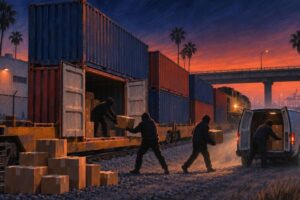


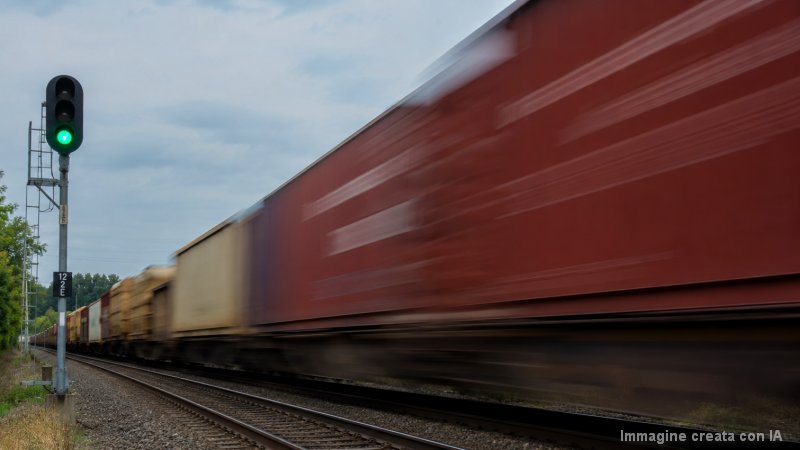




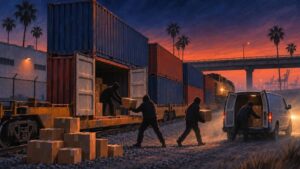
According to prosecutors, stopping a freight train was as simple as cutting the compressed-air hoses in its braking system. This triggered an emergency stop, giving accomplices waiting beside the tracks time to empty the containers. Using this method, a group of fourteen people from the Los Angeles area allegedly targeted at least 36 trains in Southern California between February 2024 and August 2026. The stolen goods were worth more than $22.5 million (approximately €20.5 million). The US Attorney's Office for the Central District of California charged the defendants in a 17-count indictment, with arrests carried out on Thursday 19 November 2026.
According to investigators, the group planned the thefts by selecting railway locations in advance, including stretches of track in Pico Rivera, Fullerton and Los Angeles. Some suspects drove accomplices to the trains, acted as lookouts and helped load stolen goods onto vans and trucks. Prosecutors allege that the gang's suspected leader selected the trains to target, directed operations and sent photographs of the stolen goods to other members, often while the thefts were still under way. The group allegedly coordinated its activities through Instagram. The targets were high-value shipments originating from the ports of Los Angeles and Long Beach and destined for distribution across the country: Nike shoes, Milwaukee tools, electronics, Hoka footwear and JBL products. The stolen goods were resold through several channels. Two suspects allegedly sold thousands of pairs of Nike shoes to a Los Angeles sportswear and clothing retailer not authorised by the brand, receiving more than $1 million (€986,000) between May and October 2025. Another suspect allegedly stored some of the stolen goods, advertising and selling them online.
The investigation lasted fourteen months and was conducted by the Los Angeles Police Department's cargo theft unit, together with Homeland Security Investigations, the Union Pacific Railroad Police and the California Highway Patrol's cargo theft programme, with support from the criminal investigation division of the Internal Revenue Service (IRS). All fourteen defendants face conspiracy charges. The remaining counts concern fourteen instances of theft or receipt of stolen goods from interstate rail shipments and two counts of violence against railway carriers. The maximum sentence is five years for conspiracy and ten years for each theft count.
Antonio Illariuzzi