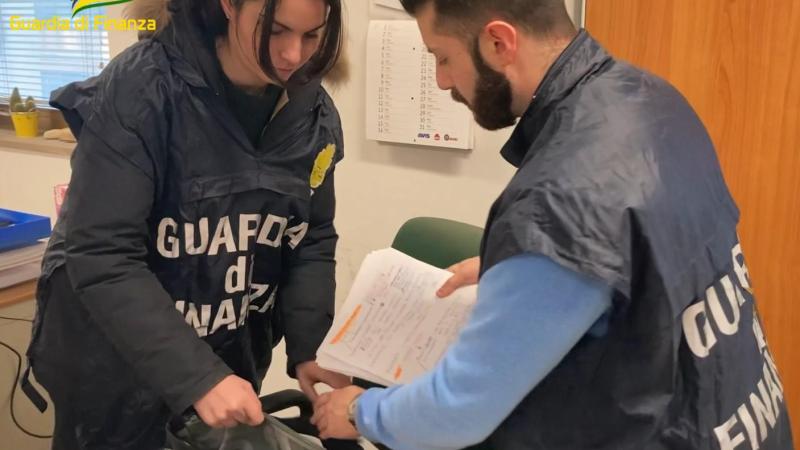
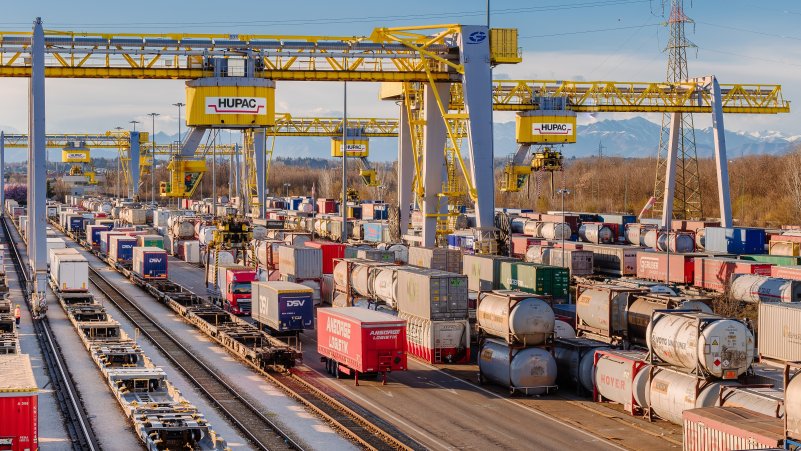










The Prevention Measures section of the Court of Catania has ordered one year of judicial administration for Europea Servizi Terminalistici, a port logistics company operating in five Sicilian ports, considered vulnerable to interference from the Strano and Cappello mafia clans in international cocaine trafficking via containers. The measure — carried out by the Guardia di Finanza of Catania under the coordination of the local Public Prosecutor’s Office — does not halt the company’s operations but places it under managers appointed by the Court, tasked with restoring full legality. The order covers the ports of Catania, Palermo, Augusta, Trapani and Termini Imerese, as well as related offices in the provinces of Siracusa and Parma. Europea Servizi Terminalistici is a private operator handling container and cargo movement, storage, transport and forwarding. In the port of Catania in particular, the company occupies a node regarded by investigators themselves as strategic for container logistics at the Sicilian port.
The Court’s intervention follows the “Lost & Found” operation conducted by the Economic and Financial Police Unit of the Guardia di Finanza of Catania, which in early 2025 led to the arrest of six individuals for international drug trafficking. Investigations uncovered a cocaine import system exploiting commercial container flows arriving from South America. According to documents cited in the local press, at least three instances of drug importation were documented, totalling more than 215 kilograms, along with a failed attempt to bring in a further shipment estimated at around 300 kilograms.
The mechanism described by investigators revolved around so-called “contamination” of containers: cocaine was concealed among legitimate goods during maritime transport and, once in port, had to be located, accessed and removed from regular cargo without triggering inspections. To carry out this operation, access to terminal operating areas was required, along with precise knowledge of the location of targeted containers and the ability to manage handling and dwell times to conceal the extraction of the drugs. According to the judicial reconstruction, EST’s facilities and operational areas played a role in this illicit logistics chain.
The Court of Catania found that the company did not remain extraneous to the criminal context, but had “become part, also through the inertia and tolerance of its management structures, of a stable mechanism facilitating mafia activities”. Among the elements highlighted by the judges were the ability of individuals within the port area to locate and handle contaminated containers, operational interaction between terminal staff and figures linked to the clans, and certain forms of financial support for individuals close to organised crime — such as the payment of legal expenses unrelated to employment — considered indicators of proximity to mafia groups.
Judicial administration differs from seizure in that it does not suspend business activity: the company continues to operate, but management is entrusted to a court-appointed administrator who intervenes in governance, internal control procedures and external relations to eliminate the conditions that made the company functional to drug trafficking. The Public Prosecutor’s Office and the Guardia di Finanza stressed this point during a press conference: EST is regarded as a strategic operator for the port of Catania and the other Sicilian ports in which it operates, and the stated aim of the measure is “to restore it to legality”, not to force it out of the market.