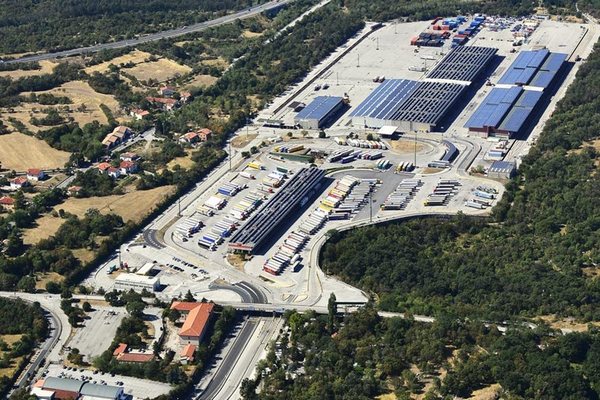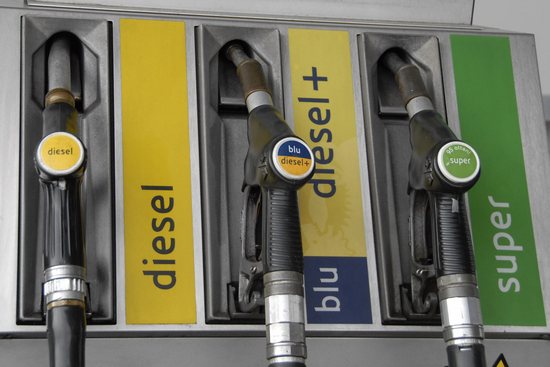





While the average price of diesel in Italy – according to daily surveys by the Ministry of Enterprises and Made in Italy – reached €2.072 per litre on 16 March 2026 for self-service on ordinary roads (rising to €2.134 on motorways), thousands of Italian, Austrian and Croatian trucks cross the border into Slovenia every day to refuel, taking advantage of a price differential that has reached 50 cents per litre compared with Italy, with documented peaks of more than 60 cents between filling stations located just a few kilometres apart on the two sides of the border. The phenomenon, not new but now expanding to unprecedented levels, is putting pressure on Italian haulage companies that do not operate along cross-border corridors and therefore cannot exploit the same competitive advantage. The flows involve both motorway corridors and ordinary roads, with trucks planning their routes so as to arrive in Slovenia “with the tank low” in order to maximise the quantity of diesel purchased at the lower price. Austrian and Croatian vehicles are also part of the trend, as they find average prices in Slovenia lower than in their home countries.
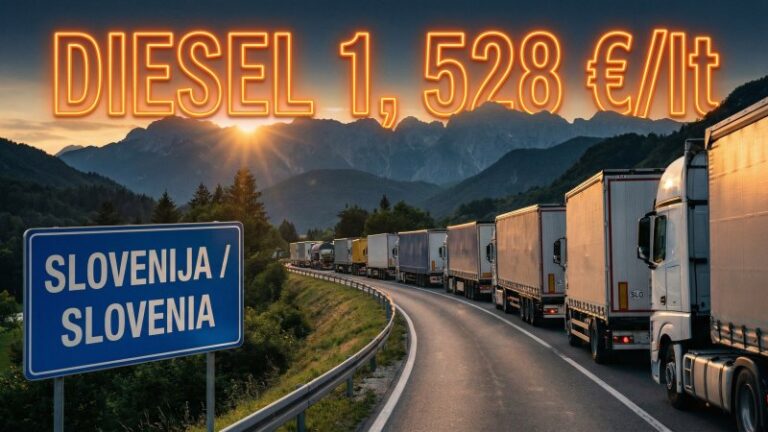
The turning point came on 10 March 2026, when the Slovenian government intervened with an excise duty cut that fixed the maximum diesel price at €1.528 per litre, while the Italian price had already broken through the €2 per litre threshold. The result was immediate: between 6 and 12 March queues first appeared and then lengthened at filling stations across the border, with images showing long lines of heavy goods vehicles waiting to refuel in the areas around Gorizia and Nova Gorica and along the routes linking Trieste, Gorizia and Udine with the Slovenian road network.
The economic advantage for a haulage company is substantial. On a 600–800 litre tank, savings per refuelling range between €240 and €400 at current price differentials, and can be even higher in the case of trucks equipped with dual tanks. Even Italy’s system for reimbursing excise duties to the road haulage sector is not sufficient to offset this gap, particularly as the reimbursement is paid quarterly.
At the root of this difference is also a radically different model for how pump prices are formed in the two countries. In Italy, the final price of diesel incorporates excise duties and VAT above the EU average, and pricing is linked to market dynamics, with margins distributed along the logistics and retail chain and limited direct control by the state. In Slovenia, by contrast, the government applies a regulatory system updated every two weeks, setting a maximum margin for distributors and intervening on excise duties to contain price increases. This combination of lower excise duties and periodic price caps creates a structural differential in Slovenia’s favour and makes its filling stations particularly competitive for international freight and passenger traffic.
For Italy, refuelling abroad implies a loss of tax revenue — less VAT and fewer excise duties paid on litres that would otherwise be purchased domestically — and reduced volumes for filling station operators in border areas, already penalised by cross-border competition. Several Italian operators report declining sales at stations near the frontier. For Slovenia, however, competitive prices mean increased sales and higher tax revenues linked to the heavy international traffic that crosses the country along the corridors between Italy, Austria, Croatia and the Balkans: maintaining lower prices is described as both an economic and social choice. The paradox is that the Slovenian state can increase its revenues even while reducing excise duties.
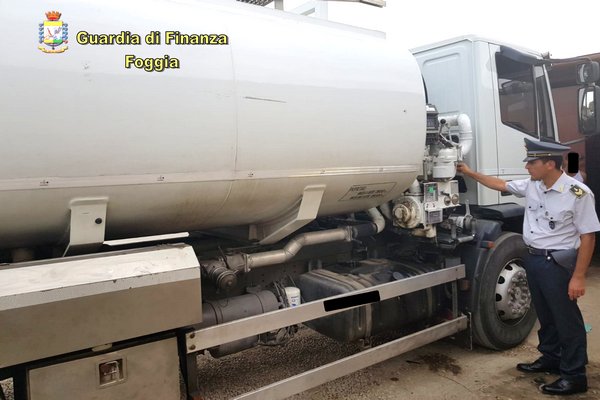
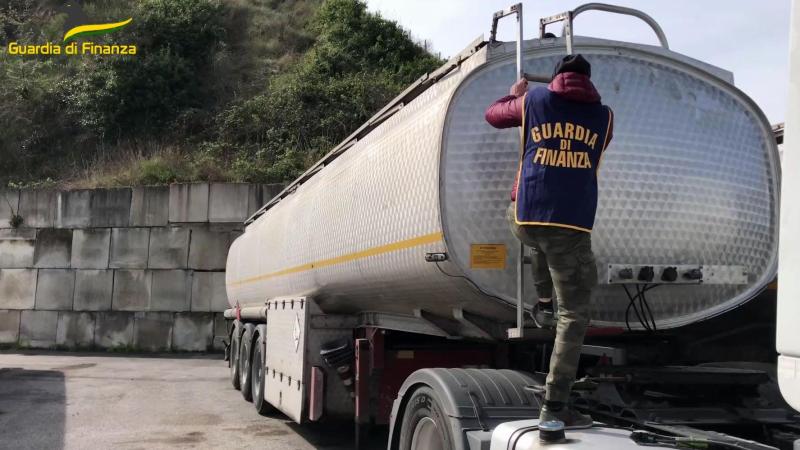
However, attention must be paid to controls. Slovenian authorities remind operators of the strict rules governing the export of fuel: beyond the fuel contained in the vehicle’s tank, it is permitted to transport only ten additional litres in approved removable containers, and anyone exceeding this limit risks fines of up to €5,000. Slovenian sources also report cases of attempts to fill tanks or agricultural machinery, with episodes in some localities where diesel supplies have run out due to the exceptional influx of vehicles. On the Italian side, previous cases show that the Guardia di Finanza may challenge industrial vehicles fitted with tanks exceeding their approved capacity on the grounds of excise duty evasion.
Italian road haulage associations — Unatras, Fai-Conftrasporto and Confartigianato Trasporti — link the phenomenon to high diesel prices and the loss of competitiveness among companies refuelling in Italy, and are calling for urgent measures: fuel tax credits, updates to reference costs for freight rates and anti-speculation measures along the supply chain. In the medium term, European alignment of energy taxation and the goals of the ecological transition could reshape price structures and reduce the scope for so-called “fuel tourism”. For now, however, short-term incentives remain strongly tilted in Slovenia’s favour. And they are likely to remain so indefinitely, as today no one can predict a return to normality in the Persian Gulf area.
Antonio Illariuzzi