







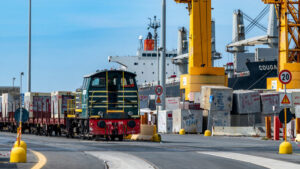
According to a joint position paper drawn up by Cer (Community of European Railway and Infrastructure Companies) and Espo (European Sea Ports Organisation), the interface between ports and the rail system represents a strategic hub for Europe’s logistics competitiveness, the resilience of supply chains and the European Union’s sustainability objectives. The document therefore calls on European institutions to treat the port–rail system as an integrated infrastructure that should be strengthened from regulatory, operational and financial perspectives.
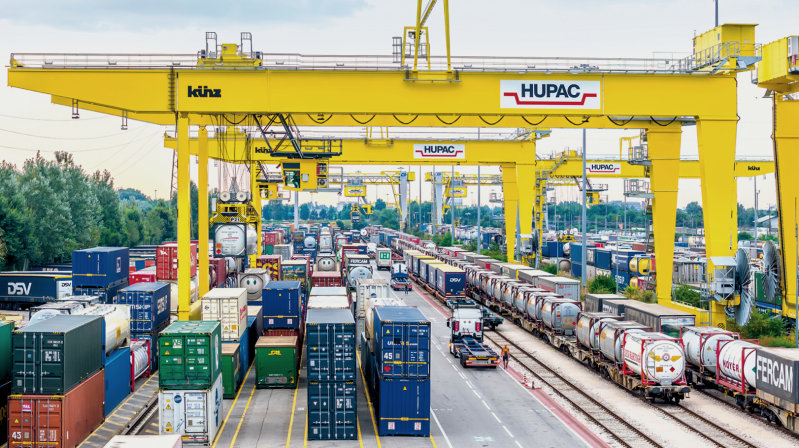
One of the main issues raised concerns the need to simplify the railway regulatory framework applied in port areas. In the document, Cer and Espo note that the operating environment of ports differs significantly from that of the national rail network. Train speeds are lower, traffic is almost entirely freight and a large share of activities involves shunting operations within port yards. For this reason, the two organisations are asking European legislators to consider revising the railway rules applicable to these areas, with the aim of improving operational effectiveness without compromising safety and interoperability and without introducing additional administrative burdens.
A second issue concerns coordination among the various stakeholders involved in the port logistics ecosystem. The document highlights how many inefficiencies stem from fragmented infrastructure planning and from information systems that are not fully compatible with one another. Cer and Espo therefore stress the need to strengthen cooperation between port authorities, railway infrastructure managers, freight railway undertakings and terminal operators. A central role is assigned to digitalisation, with the aim of developing standardised information systems and encouraging the sharing of operational data in order to improve traffic planning and the predictability of operations.
The document also devotes significant attention to infrastructure investment. According to Cer and Espo, strengthening rail connections between ports and their hinterland requires a coherent policy framework and adequate financial resources. In particular, the two organisations are calling for the next Connecting Europe Facility programme to have a budget of at least €100 billion, aimed at supporting projects linked to the Ten-T network and to strategic connections between ports and European logistics corridors.
The paper also underlines the importance of strengthening network capacity from the perspective of resilience and security. In this context it refers to the concept of “dual-use readiness”, meaning the ability to use infrastructure for both civilian purposes and military needs. According to Cer and Espo, coordination between European programmes such as Ten-T, Cef and initiatives linked to military mobility can help close infrastructure gaps and support projects with high European added value.
The two organisations represent a significant part of the European logistics ecosystem. Cer brings together around 70 railway undertakings and infrastructure managers, which together account for roughly 78% of the length of the European rail network and 81% of rail freight traffic. Espo, meanwhile, represents the port authorities of 22 European Union member states and Norway and acts as the main interlocutor for European ports with EU institutions.