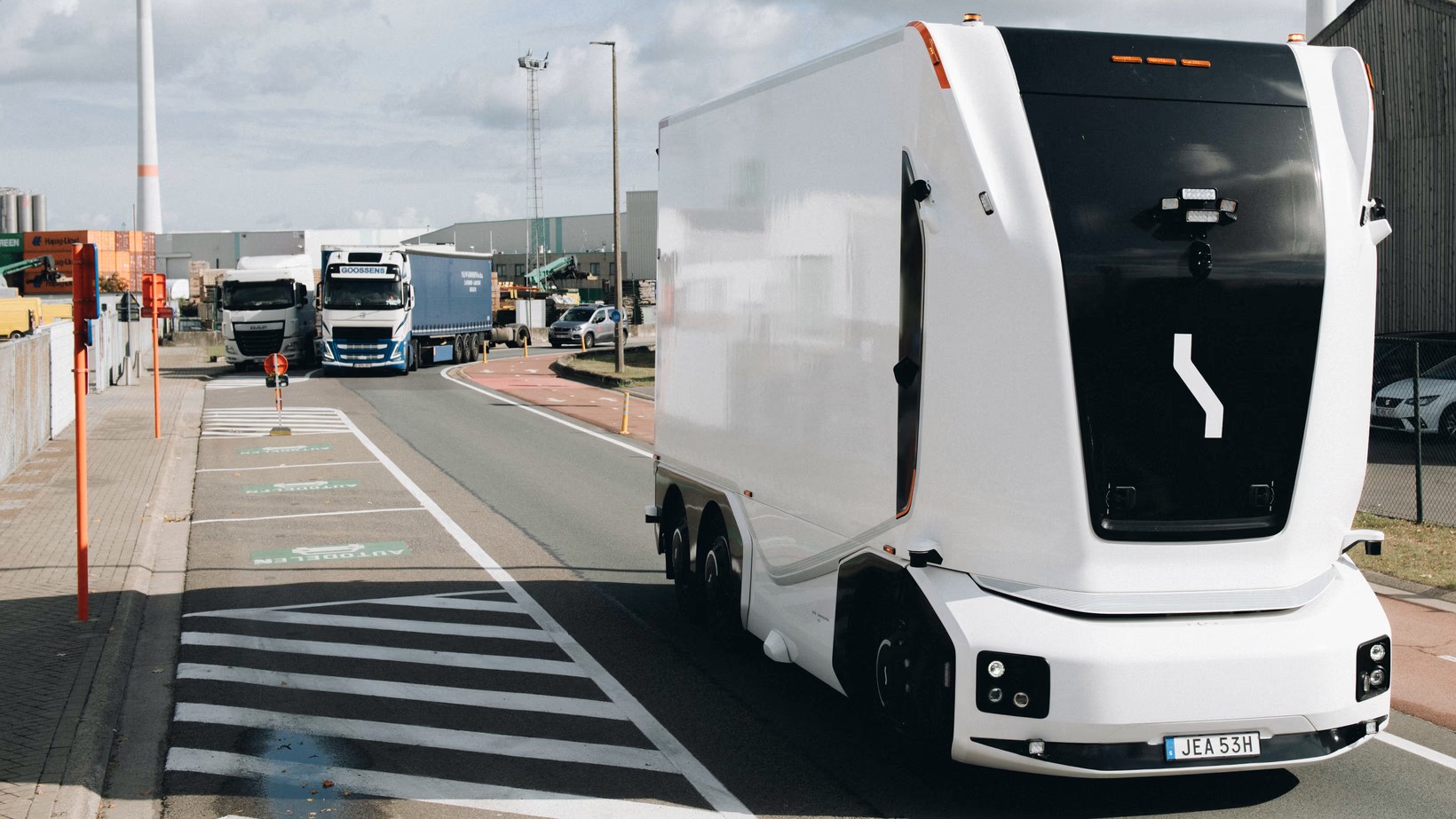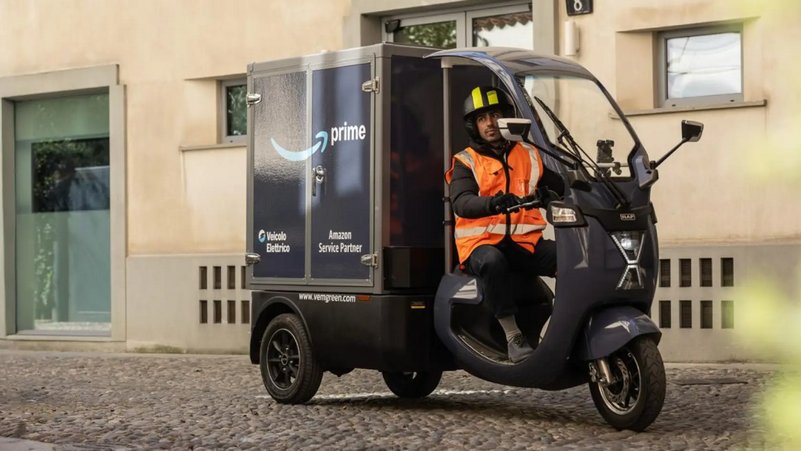








Parcel delivery has become the main strategic activity for Poste Italiane and, within this context, the company is developing a number of innovations that are currently at prototype stage. The most striking is BOXi, an autonomous mini-van described as a “postman-robot”, designed for urban deliveries. It is an electric quadricycle with four-wheel drive and four-wheel steering, with no driving position. The vehicle can travel at a maximum speed of 25 km/h and has a declared range of up to 60 km per charging cycle. The cargo compartment has two access points, one for loading and the other for recipients. Customers can collect their parcels from a structure made up of eleven automatic lockers, operating according to the fixed locker logistics model. The cargo bay has a volume of one cubic metre and a payload capacity of 500 kg.
Autonomous driving is enabled by stereo cameras, 360-degree Lidar sensors and radar. Positioning and control are managed through GNSS and inertial units. The vehicle operates at low speed along pre-mapped routes. BOXi testing will take place in two phases. The first will be conducted in a controlled environment at the Modena Innovation Hub, where the vehicle will carry out manoeuvres, sensor calibration and basic safety validation. The second phase will involve an urban route of around 600 metres, to assess reliability in a real-world setting.
The second prototype is a high-capacity cargo bike with a 700-litre load compartment and a maximum payload of 100 kg. It features a three-wheel architecture, allowing it to operate safely even on uneven surfaces. The maximum speed is limited to 25 km/h, in line with regulations for light pedal-assisted vehicles. The rider is supported by a network of sensors, radar and onboard computing systems integrated into the vehicle, which can detect obstacles along the route, monitor tyre condition and wear, and provide assistance to improve riding style, contributing to accident prevention and operational efficiency.
To ensure the safety of both driver and cargo, the cargo bike is equipped with an anti-lock braking system and NFC communication for opening and closing the load compartment. It also includes sensors capable of detecting data such as air quality, temperature and humidity, while an alert system notifies the rider in the event of sudden obstacles. Recharging is also supported by an energy regeneration system that harnesses both braking energy and solar power through integrated photovoltaic panels.