





Array ( [0] => 8 [1] => 39 )

Podcast K44

Cronaca

  • Camionista spara a un collega con pistola scacciacani

    Camionista spara a un collega con pistola scacciacani

    Un camionista di 42 anni è stato denunciato dalla Polizia Stradale di Modena per minaccia aggravata dopo aver esploso un colpo con una pistola scacciacani contro un collega lungo l'A1, al culmine di una lite tra autotrasportatori nei pressi di Modena Nord.

Transpotalk

Normativa

Mare

  • Lo sciopero d’agosto ha rallentato sei porti tedeschi

    Lo sciopero d’agosto ha rallentato sei porti tedeschi

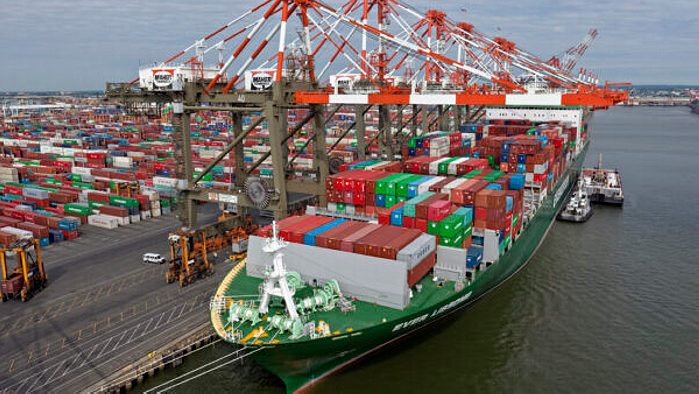
    Le 24 ore di astensione nei sei principali scali marittimi tedeschi si sono chiuse il 18 agosto 2026 con circa cinquemila adesioni, quai la metà dei lavoratori interessati. L'associazione datoriale Zds definisce l'azione sproporzionata e convoca la terza tornata negoziale ad Amburgo per il 24 e 25 agosto.

Autotrasporto

  • Un Volvo FH speciale per i cent’anni della Casa svedese

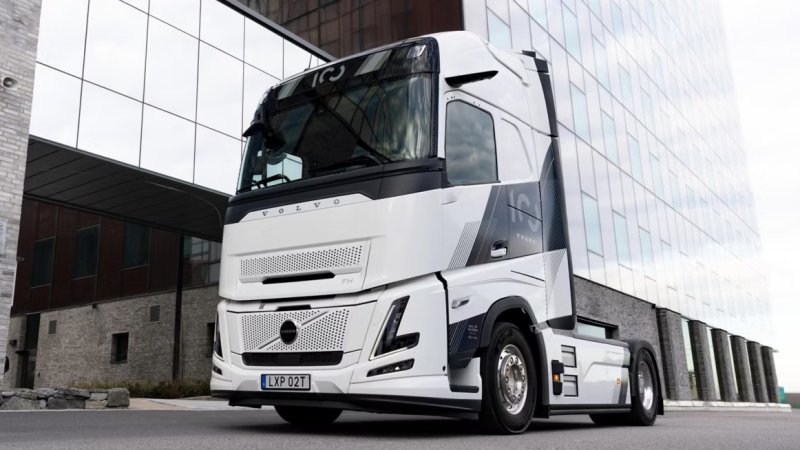
    Un Volvo FH speciale per i cent’anni della Casa svedese

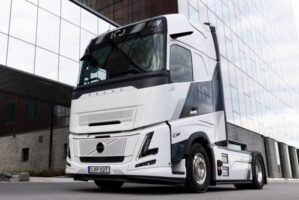
    Volvo Trucks ha annunciato ad agosto 2026 l'edizione speciale 100 Year per i modelli FH Aero, FH, FH16 Aero e FH16, con interni ridisegnati e dettagli esclusivi dedicati al centenario dell'azienda. Si potrà ordinare da settembre 2026 in gran parte delle configurazioni disponibili.

    Gts strengthens its national rail offering

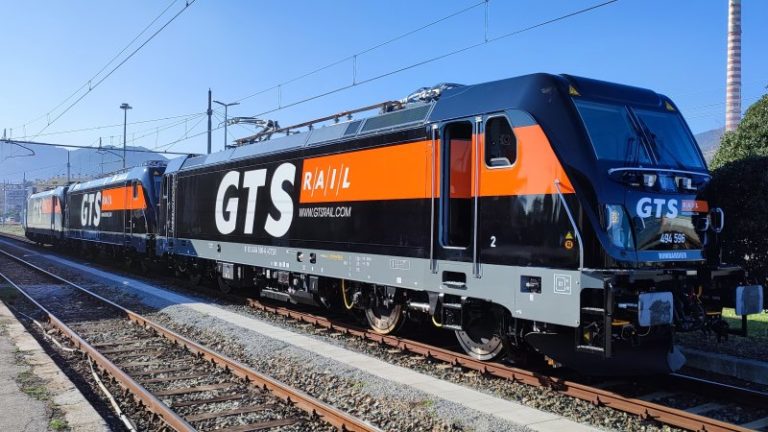
    The Italian company Gts has announced an upgrade of its Bari–Verona and Piacenza–Nola rail services, with an increase in frequencies that will result in the movement of more than one million tonnes of freight by rail. The intermodal operator owned by the Muciaccia family is thus strengthening its network along the north–south axis, consolidating the transfer of logistics flows from road to rail.

    On the Bari–Verona route, weekly round trips will increase from three to six by the beginning of the new year. The service will allow the movement of 360 containers per week, with departures from the Bari Ferruccio intermodal terminal and arrivals at the Terminal Italia facility in Verona’s Quadrante Europa. From there, trains will continue through the Brenner corridor towards Germany and eastern European countries, reinforcing integration between southern Italy and the main continental markets. According to figures released by the company, the increase in frequencies will remove more than 18,000 heavy goods vehicles a year from the Adriatic corridor, with direct effects on traffic reduction and freight-related emissions.

    The Piacenza–Nola service is also being further developed and will become daily, with departures operating seven days a week, including Sundays. Flows to and from Campania will reach 420 containers per week, equivalent to more than 21,000 shipments a year. The higher volumes will make it possible to remove more than 400 lorries a week from the Milan–Rome motorway corridor. From the Piacenza hub, goods will continue on to Belgium, the United Kingdom, Ireland and Poland, strengthening the role of the Emilia-based platform as a connection point between domestic and international traffic.

    The operation forms part of the Group’s broader growth strategy. As highlighted by commercial director Fabio Piliego, despite the high number of worksites currently active on the Italian and European rail networks – projects intended to structurally enhance rail transport – Gts continues to expand its intermodal network.

    From January 2026, the Group expects to reach 120 trains per week, more than 80 of which will be dedicated daily to connections between southern and northern Italy, alongside spot services designed to respond to exceptional market needs. This positioning makes Gts the leading national operator by frequency and number of intermodal trains along the north–south axis, according to the company.

    A central role is played by Gts Rail, the Group company responsible for rail traction. Thanks to safety certifications obtained for Switzerland, Germany and the Netherlands, and the purchase of new rolling stock authorised to operate on different international rail networks, the Group aims to reduce transit times and increase the reliability of cross-border services. The extension of operations across multiple European corridors strengthens the competitiveness of the intermodal offer, at a time of growing attention to transport sustainability.

    The goods transported on the new and upgraded services will cover a range of industrial sectors. On the export side, the main flows will be linked to agri-food products and packaging, sectors in which southern Italy accounts for a significant share of national output. For imports, trains will carry raw materials for the food industry, machinery and solar panels, confirming the diversification of traffic and the role of rail intermodality as supporting infrastructure for production supply chains.


    © TrasportoEuropa - Riproduzione riservata - Foto di repertorio
    Segnalazioni, informazioni, comunicati, nonché rettifiche o precisazioni sugli articoli pubblicati vanno inviate a: redazione@trasportoeuropa.it


      Puoi commentare questo articolo nella pagina Facebook di TrasportoEuropa

      bottone newsletter piccolo Vuoi rimanere aggiornato sulle ultime novità sul trasporto e la logistica e non perderti neanche una notizia di TrasportoEuropa? Iscriviti alla nostra Newsletter con l'elenco ed i link di tutti gli articoli pubblicati nei giorni precedenti l'invio. Gratuita e NO SPAM!


    CONTENUTI SPONSORIZZATI


Videocast K44

Aereo

  • Rallenta la crescita a luglio 2026 dei noli aerei

    Rallenta la crescita a luglio 2026 dei noli aerei

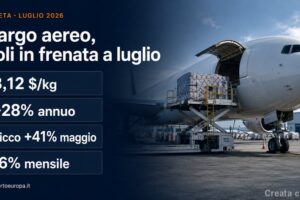
    I noli spot del trasporto aereo delle merci sono saliti del 28% su base annua a luglio, a 3,12 dollari per kg, ma il ritmo di crescita rallenta per il secondo mese consecutivo. Secondo Xeneta il mercato affronta una seconda metà del 2026 più debole, con pochi segnali di stagione …

Ferrovia

  • FS Logistix avvia la sperimentazione dell’Hvo

    FS Logistix avvia la sperimentazione dell’Hvo

    Il biocarburante Hvo alimenta due locomotive in prova in Mercitalia Rail, i locomotori di manovra di Santo Stefano Magra e Valdellora e ventuno veicoli industriali Euro VI. Nel 2025 ne sono stati consumati 19mila litri, con circa 40 tonnellate di anidride carbonica evitate rispetto al gasolio fossile.

Persone

  • L’autotrasporto perde Maurizio Longo

    L’autotrasporto perde Maurizio Longo

    Dopo una lunga malattia, il 11 agosto 2026 è morto Maurizio Longo, segretario generale di Trasportounito, associazione dell’autotrasporto di cui è stato anche tra i fondatori dopo anni di lavoro nella Fita Cna.
Un Volvo FH speciale per i cent’anni della Casa svedese

TECNICA

Un Volvo FH speciale per i cent’anni della Casa svedese
previous arrow
next arrow
Bruxelles approva l’acquisizione del gruppo InPost

LOGISTICA

Bruxelles approva l’acquisizione del gruppo InPost
previous arrow
next arrow
Perché il gasolio corre mentre il greggio frena

ENERGIE

Perché il gasolio corre mentre il greggio frena
previous arrow
next arrow
Un agente IA di Trimble dedicato alla logistica

SERVIZI

Un agente IA di Trimble dedicato alla logistica
previous arrow
next arrow