





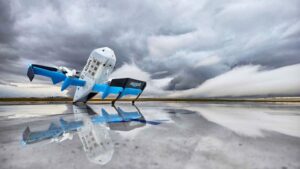
Two Amazon MK30 drones collided with a construction crane in Tolleson, Arizona, on 1 October 2025. The crash, which caused a fire and left one person slightly injured, prompted the e-commerce giant to temporarily halt its drone delivery operations in the West Valley of Phoenix, as the FAA and NTSB launched a joint investigation into the causes of the accident. The incident occurred at around 10 a.m., when the two autonomous Prime Air aircraft, having taken off from a nearby distribution centre, struck the arm of a crane at a construction site. The drones, each weighing over 80 kilos, crashed in separate car parks a few hundred metres apart, sustaining severe damage. A fire broke out at the impact site and one person was treated for smoke inhalation.
Amazon immediately suspended Prime Air operations in the area, which will resume only after the introduction of corrective measures, including additional visual checks to identify temporary hazards such as cranes or scaffolding. The severity of the event led the Federal Aviation Administration and the National Transportation Safety Board to intervene jointly, marking the first investigation of its kind involving Amazon drones used in real-world commercial operations.
The Prime Air programme is no stranger to technical setbacks. In December 2024, two MK30 drones crashed during test flights in Pendleton, Oregon, following a software update that compromised Lidar sensors and caused the aircraft to shut down their engines mid-flight. The NTSB’s investigation highlighted Amazon’s decision to remove the physical landing sensors present in earlier models, increasing reliance on software-only systems.
In 2021 and 2022, the programme also suffered repeated failures, with at least eight incidents in thirteen months. The most serious, in June 2022, involved an MK27 drone that crashed after a motor failure, sparking a wildfire when its lithium batteries ignited. FAA reports repeatedly linked these incidents to propulsion faults and onboard system malfunctions.
With the introduction of the MK30 model in October 2024, Amazon aimed for a significant technological leap from the previous MK27. The new drone features advanced sense-and-avoid systems, quieter propellers, improved weather resistance, and a 7.5-mile operating range with a maximum payload of 2.3 kilograms. Redundant safety systems, including an independent monitoring computer, underwent over a thousand hours of flight testing and received FAA-supervised certification in Pendleton.
Despite substantial investment, the programme remains limited. Prime Air currently operates only in Tolleson, Arizona, and College Station, Texas, the latter set to close by the end of summer 2025. The Lockeford, California site was shut down in April 2024. The target of achieving 500 million annual drone deliveries within the decade still appears distant, though Amazon has confirmed expansion plans in other US cities such as San Antonio, Kansas City and Detroit, as well as projects in the United Kingdom and Italy.
The Tolleson incident, however, underscores structural challenges facing the entire sector. Sense-and-avoid systems still struggle with dynamic obstacles such as moving cranes, urban air traffic management remains unresolved, and environmental factors—from rain to dust—continue to expose weaknesses. Social concerns over noise, safety and privacy also persist, affecting public acceptance of the service.