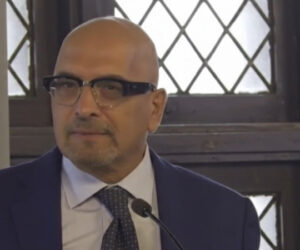









On 26 May, the family of Umberto Costa announced his death at the age of 94. In the world of Italian maritime transport, few names have left such a lasting mark, despite his reserved nature. Costa founded Banchero Costa & C in Genoa in 1968, alongside Lorenzo Banchero, establishing what would become the most important Italian firm in the field of maritime brokerage. His professional journey coincided with a period of growth and transformation for the entire shipping sector.
Indeed, the creation of Banchero Costa marked a turning point in the Italian shipping market. Initially focused on chartering dry cargo vessels, the company quickly distinguished itself through an approach grounded in professionalism, discretion and entrepreneurial vision. Most of its early clients were Italian, yet from the outset the ambition to move beyond national borders was already evident.
In 1969, just one year after its founding, the company broadened its scope by becoming a shipping agency and launching representation activities for shipyards, in addition to brokering services for tugs and salvage operations. The expansion continued in 1972 with the creation of departments dedicated to liquid cargo and to research and analysis, anticipating the strategic importance of market studies in the shipping industry. Three years later, in 1975, the company launched its marine insurance brokerage division, completing a now extensive and integrated service offering.
Under the leadership of Umberto Costa and Lorenzo Banchero, Banchero Costa’s network expanded rapidly, with offices opening in the world’s key maritime capitals, a clear sign of its established international outlook. This was no small achievement for a company born in the heart of the Genoa port, in an Italy still anchored to traditional industrial models. Growth was not only quantitative but also cultural: the Banchero Costa method became a benchmark for generations of brokers. Its approach, based on technical expertise, market research, personal relationships and ethical rigour, helped shape a true school of thought, whose influence today extends well beyond the company itself.
Umberto Costa left the firm in 1999, after more than thirty years of activity, selling his stake to Lorenzo Banchero. Despite his withdrawal from operations, Costa’s legacy remained clearly visible. The company has continued to grow while upholding the founding principles on which it was built: independence, seriousness and openness to the world. Costa’s professional legacy is evident in the continued success of Banchero Costa, now one of the leading groups in international maritime brokerage. But above all, it lives on in the work culture he helped to instil, based on a blend of technical skill and human relationships, in a sector often marked by market volatility and the complexity of global routes.