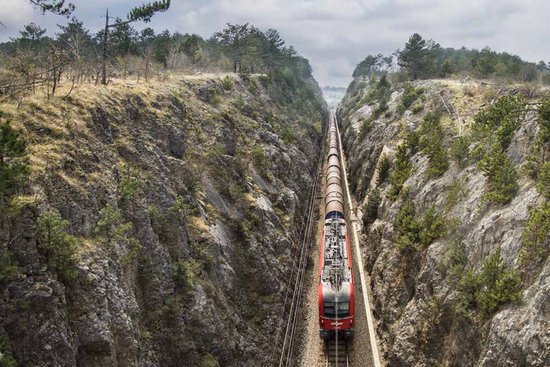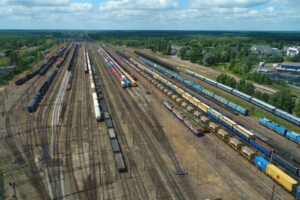







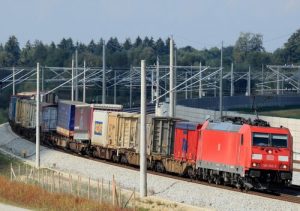
After years of fluctuating growth and a post-pandemic recovery that never fully took hold, 2023 marked a setback for rail freight transport in Europe. This is revealed by data from the thirteenth Market Monitoring Report published by IRG-Rail, the body that brings together railway regulators from 31 countries across the continent. Overall, freight trains covered approximately 800 million kilometres, representing a 6 percent decrease compared to 2022. Even more significant was the drop in tonne-kilometres moved, which stood at 435 billion, marking an 8 percent contraction year-on-year. Compared to 2019, the pre-Covid year, the figure is identical at minus 8 percent.
International traffic was the hardest hit, falling by 13 percent in just one year, to the extent that, for the first time since 2010, its share dropped below 50 percent of the total. This trend reflects the performance of the European economy, affected by widespread slowdown, persistently high inflation averaging 7 percent across IRG-Rail countries, and restrictive monetary policies that have dampened production and consumption.
Despite the decline in demand, railway companies recorded an increase in average revenues. For each kilometre travelled by a freight train, operators earned an average of 5.57 euros, a rise of 12 percent compared to 2022. The average revenue per tonne-kilometre also increased, reaching 4.55 euro cents, up by 15 percent. This tariff adjustment was necessitated by strong pressure on operating costs, particularly energy costs. Countries such as Poland, Germany and France experienced significant increases due to inflation.
Another striking figure concerns competition. Despite the drop in volumes, the rail freight market remains open and dynamic. In 2023, operators other than the historical incumbents – the former state railways – captured 55 percent of the market in terms of tonne-kilometres transported. National incumbents fell to 45 percent, while foreign operators remained stable at 15 percent. This is a clear sign of the progress of sector liberalisation, with significant competitor presence now established in 26 out of 31 countries.
There are also changes on the infrastructure front. The total number of freight terminals has slightly decreased, particularly in Germany, but 22 percent of active facilities are now classified as intermodal, meaning they can integrate rail with road or maritime transport. This share has remained stable over the past five years, reflecting the growing importance of integrated logistics.
Punctuality, however, remains a critical issue. The data show wide disparities between countries, ranging from excellent performance, with over 90 percent of trains on time at their final stop, to contexts where punctuality drops to as low as 30 percent. Reported problems include line congestion, unplanned deviations, prioritisation of passenger traffic and staff shortages. Nevertheless, twelve countries improved their punctuality compared to 2022, while seven reported a deterioration.
Regarding track access charges, 2023 saw a decline in line with the reduction in volumes. Track access charges related to freight services fell by 6 percent, amounting to around 2.34 billion euros, equivalent to 10 percent of all charges collected by infrastructure managers. Many challenges remain: reviving international traffic, supporting intermodality, improving punctuality, and at the same time keeping network access sustainable. IRG-Rail urges a forward-looking approach, as in a Europe aiming for decarbonisation, rail freight transport can play a strategic role.