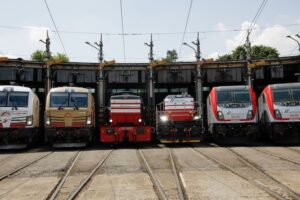







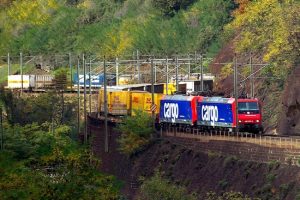
The Swiss freight rail company FFS Cargo plans to cut its workforce by eighty positions by the end of 2025. To avoid or minimise layoffs, it is negotiating with trade unions. The reduction, affecting full-time administrative and operational staff, could be managed through internal redeployment or by not replacing employees who retire. Currently, the Swiss company employs 2,250 full-time staff.
The transport union SEV is concerned not only about the staff reduction, which is marginal relative to FFS Cargo's total workforce, but also about the restructuring programme G-enesis, which aims to reduce single wagonload transport activities and increase tariffs. These measures could hinder the process of shifting freight from road to rail. The union is therefore calling for a secure and long-term funding plan to support single wagonload transport.
Over a longer period, by 2030, the entire FFS company aims to reduce costs by six billion francs, which includes a planned reduction of FFS Cargo's workforce by about a fifth from the current number. The Swiss rail freight division has been experiencing an economic crisis that began in 2022, when the financial year ended with a loss of 187 million francs, compared to a profit of one million francs the previous year. For 2024, data from the first half of the year shows FFS Cargo recorded a loss of 42.6 million francs, compared to 18 million francs in the same period of 2023.
The company explains this result by stating that "specific sectors, such as construction, have caused a decline in domestic traffic. Regarding international traffic, the lower result was due to the economic situation in Germany and Italy in particular, restrictions in the Gotthard Base Tunnel, and increased construction activity on certain routes in Germany."