






The European Commission has formally outlined the deadlines for the new Turin-Lyon railway, establishing a detailed schedule for each element of the high-capacity cross-border route linking Italy and France. The EU document, adopted on 30 July 2025, bears a telling title: "implementing decision". Its introduction is clear: "The clear identification of the actions necessary to complete the project and the definition of the corresponding implementation schedule are important in order to fully plan and optimise the availability of funding at European and national level."
The meaning is unambiguous: follow the timeline if you want to count on EU contributions. After all, the European Union is directly supporting the construction of the cross-border railway corridor with funding that is far from guaranteed for other projects, covering 55 per cent of the base tunnel costs and 50 per cent for the access lines in both countries. The most significant takeaway from the decision, which encapsulates the essence of the entire undertaking, is the definitive deadline for the completion of the works: 31 December 2032. Rail operators will then have an additional year to install the European-standard Ertms signalling system along the entire route. This target is only achievable if all intermediate milestones are met, and the European decision sets them out one by one.
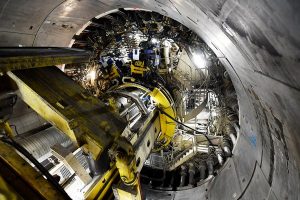
This is the EU's timetable. In 2025, mechanical excavation will begin on the first French lot, while between 2026 and 2027 tunnelling will commence on four additional sections in both France and Italy. By 2027, contracts for all railway systems must be awarded. In 2028, civil works are due to be completed at the French entrance section in Saint-Martin-de-la-Porte, while excavation of the interconnection tunnel in Bussoleno, linking the new railway with the existing line, is scheduled to begin. By 2030, construction at the multimodal hub in Saint-Jean-de-Maurienne is expected to be completed. The following year should see the end of tunnelling works on both the French and Italian sides. The final ribbon-cutting is therefore anticipated in 2032, or more likely, in 2033.
The Commission’s decision also lays out strict deadlines for works on the national access routes in both Italy and France. Focusing on the Italian side, the upgrade of the existing railway between Bussoleno and Avigliana is to be scheduled between 2026 and 2032. Meanwhile, construction of the new 24-kilometre line between Avigliana and Orbassano, half of which will be in tunnel, must begin by 2026 and be completed no later than 2033. The year 2026 also marks the planned date for upgrading the Orbassano freight yard and integrating it into the Turin railway junction.
Europe's instructions do not end with the Turin-Lyon line. Given the importance of freight traffic along the Turin-Alessandria route, the Commission is, for the first time, also imposing requirements for the technological modernisation of the Turin-Genoa corridor. This measure is justified by the fact that dangerous goods are currently not permitted through the Turin railway tunnel. The EU document also mentions the "freight bypass" from Orbassano to Settimo Torinese, although it is not listed among the operational projects and remains merely a possible future development.
One notable omission in the "implementing decision" is the absence of a calendar detailing the planning of EU funding itself, as this falls under the Union’s multiannual budget, which must be defined in a separate framework. Nevertheless, Brussels has consistently affirmed its intention to honour the commitments made.
Piermario Curti Sacchi