




Ferrovie dello Stato is taking a decisive step towards sustainability and efficiency with the launch of FS Energy, a new company tasked with the integrated management of the Group’s entire energy portfolio. This move is part of the 2025–2029 Strategic Plan, which aims to turn Italy’s largest electricity consumer—currently responsible for around two percent of national demand—into a leading player in the green transition.
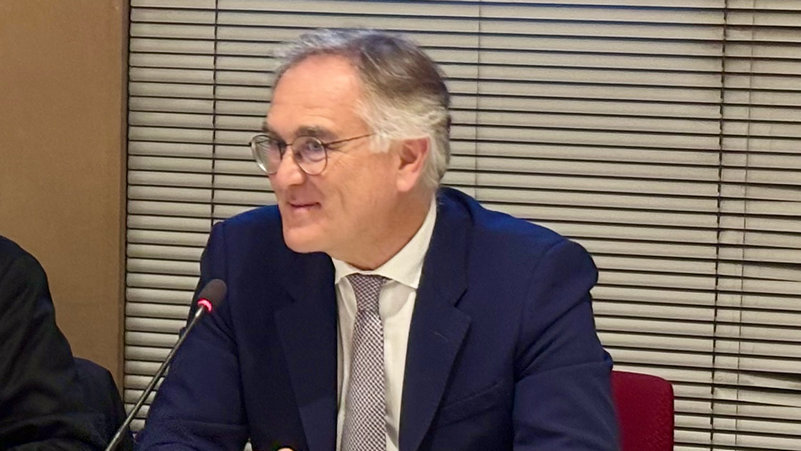
FS Energy has been established to ensure a more sustainable and economically efficient energy supply, actively contributing to the decarbonisation of the railway system. Leading the new company are Massimiliano Garri as chairman and Antonino Giunta as chief executive officer. FS Energy will focus on expanding in-house production from renewable sources, particularly through photovoltaic installations, with the aim of increasing self-consumption across the Group’s companies. At the same time, the company will manage the remaining market-exposed energy more efficiently, thanks to an advanced risk management system designed to mitigate fluctuations in the cost of energy commodities.
According to Stefano Antonio Donnarumma, CEO and general director of the FS Group, the establishment of FS Energy represents a strategic move that brings together two key sectors for the country’s future: transport and energy. By 2029, the company aims to install 1.1 gigawatts of renewable capacity, generating approximately 1.5 terawatt-hours from solar power, which would account for 19 percent of the Group’s total consumption. The longer-term target, set for 2034, is to reach 2 gigawatts, enough to cover 40 percent of FS Group’s energy needs.
FS Energy will not only develop new generation plants but will also carry out energy audits of railway stations and infrastructure, identifying and implementing energy efficiency improvements. Advanced technologies will be introduced to cut consumption and reduce carbon dioxide emissions, further enhancing the environmental sustainability of rail transport.
A concrete step towards these goals has already been taken with the awarding of Italy’s first public tender for the multi-year supply of electricity from renewable sources for non-traction uses. Valued at €204.2 million, the tender involves the fixed-price purchase of 275 gigawatt-hours per year, divided into five lots. The supply profiles include photovoltaic and wind energy, as well as constant-load deliveries, with contracts awarded to major players such as Enel Energia, Edison Energia and ERG Power Generation.
Another tender is currently underway, worth €46 million, aimed at selecting qualified energy partners to co-develop new photovoltaic plants. The goal is to achieve an installed capacity of between 200 and 300 megawatts. The plan includes the construction of eighteen plants connected to as many railway substations, with varying sizes: ten will have a capacity between 6 and 12 megawatts, while the remaining eight will be larger, ranging from 25 to 90 megawatts.