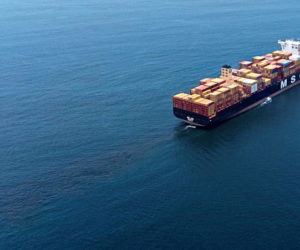





The judicial proceedings that saw logistics giant Dsv pitted against Vestas and IF insurance concluded on 25th August 2025 at the Maritime and Commercial Court in Copenhagen, and the verdict is now awaited. The latter two have demanded millions of euros in compensation from the freight forwarder (official sources have not specified the amount) for damages suffered to the cargo of wind turbine components that was stowed on the ship. The fire broke out at 10.45 local time on 18th December 2020 whilst the Kota Bahagia was moored at Napier port during the unloading operations of components that Vestas was importing from China.
According to the report by New Zealand's Transport Accident Investigation Commission (Taic), the flames broke out in hold number 2 during gas cutting activities conducted to remove the cargo's safety restraints. The molten material expelled during this operation ignited dry sawdust present in the area, creating a fire that rapidly spread to PVC tarpaulins and other fibreglass components. The fire was suppressed using the ship's fixed CO2 extinguishing system, but was only officially declared extinguished on 24th December 2020, after six days of operations.
Whilst no fatalities or injuries were recorded, extensive damage occurred: in addition to damage to the ship, wind turbine components were severely damaged, including nacelles, blades and other precision technological elements. Subsequently, Napier District Court sentenced the director of Tong Engineering to a heavy fine and compensation because his company did not have the appropriate resources and processes to minimise fire risk, failing to implement adequate safety procedures for hot work, including the lack of thorough safety controls, complete risk assessments and effective fire surveillance systems.
But that was only the beginning, because the real legal dispute is taking place in Denmark, with the claim for millions in damages because Vestas considers Dsv co-responsible, whilst the latter denies any responsibility. The case represents an important maritime legal case because it concerns not only contractual liability issues but also complex technical assessments of safety protocols in the maritime transport of advanced technological components.
This case falls within a broader troubled relationship between the two companies since January 2020, when Vestas signed a three-year exclusive transport agreement with Dsv. But already in June of the following year, Vestas removed Dsv's exclusivity in project cargo and in November announced that from 2022 all its container transport would be carried out by Maersk. The Danish freight forwarder would only handle the wind power supply chain. Also in 2022, Vestas accused Dsv of not respecting contractual terms and of increasing prices beyond permitted limits.
From an operational perspective, the Kota Bahagia fire highlighted the risks of hot work on cargo ships. The Taic report indeed highlighted that precautions for such work were not completely implemented by the ship's crew and that the close arrangement of the cargo hindered the visibility and access of the person assisting the gas cutting operations. On the legal front, the court will have to evaluate complex technical issues relating to Dsv's contractual responsibility as freight forwarder, the safety protocols applicable during port operations and the distribution of responsibilities among the various actors in the logistics chain.