





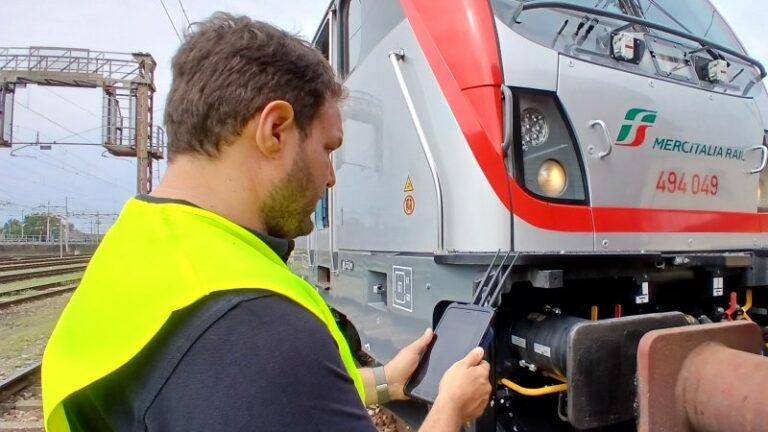
On 15 April 2026, the first FS Logistix convoy dedicated to the operational testing of the smart train on the Milan–Catania Bicocca route departed. The train, operated by Mercitalia Intermodal in collaboration with Mercitalia Rail, marks the start of real-world trials of digital technologies developed for rail freight transport. The aim is to assess in the field the effectiveness of wireless communication systems between sensors installed on the wagons and the driver, with particular attention to safety and reliability.
The project introduces a network of sensors capable of transmitting real-time data on key operational parameters. Among the main functions under evaluation are continuous monitoring of the braking system, load stability, automatic verification of train composition and the prompt detection of any derailments. This represents a significant step towards more integrated and digitalised freight train management, enabling faster intervention in the event of anomalies and improving overall service safety.
According to Sabrina De Filippis, chief executive of Mercitalia Logistics, the departure of the first demonstration train is consistent with the group’s industrial strategy, which identifies digitalisation and technological innovation as the main drivers of growth. The initiative comes against a market backdrop marked by increasing demand for operational efficiency, reliability and traceability across the entire logistics chain.
Alongside the testing phase, the fleet modernisation programme continues. During 2025, Mercitalia Intermodal equipped 180 wagons with the WaggonTracker digital system, bringing the total number of digitalised wagons to around 700 units. This upgrade provides the infrastructural basis for the large-scale adoption of smart train functionalities, enabling more advanced management of rail operations. The integration of digital technologies also supports predictive maintenance models, reducing downtime and improving wagon utilisation. Benefits include shorter train preparation times, increased service reliability and lower operating costs, thanks to fewer extraordinary maintenance interventions.