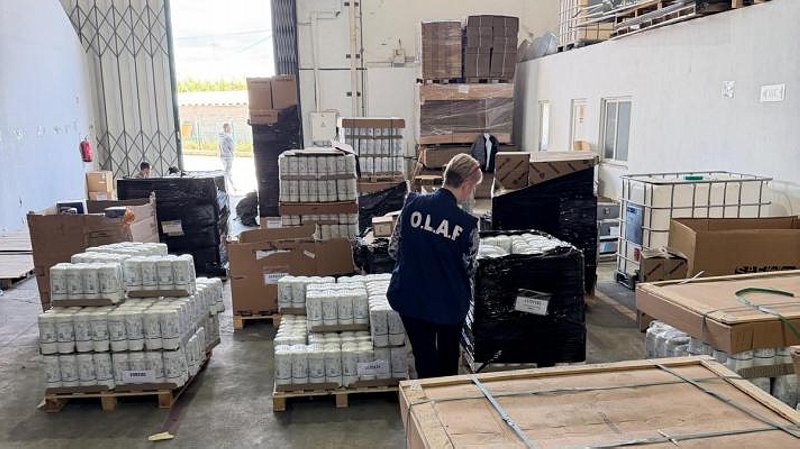

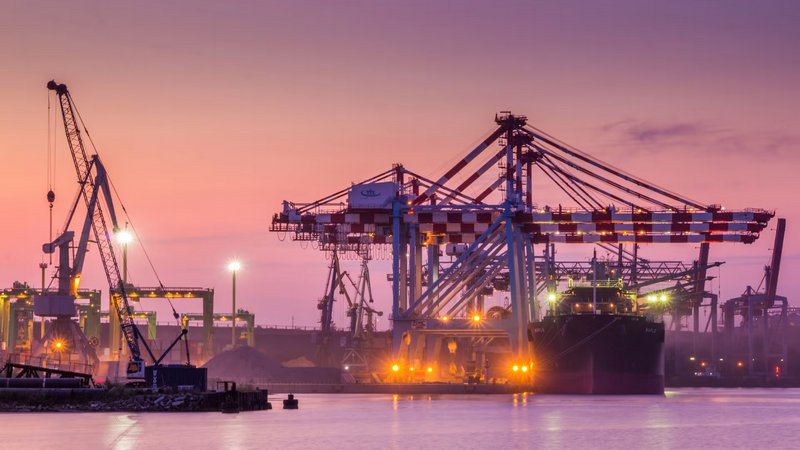



- On 9 February 2026, inspectors from the Hauptzollamt Oldenburg (Oldenburg Main Customs Office) intercepted a container at JadeWeserPort in Wilhelmshaven. The unit had arrived from Sierra Leone, was declared as carrying cocoa beans and was bound for Barcelona. An X-ray scan revealed anomalies in the density of the cargo. When the container was opened, more than 400 packages wrapped in black film were found, each containing about 20 blocks of pressed cocaine, for a total of more than eight tonnes and an estimated value of €500m.
- The German customs authorities destroyed the drugs on site under strict security measures, partly because the blocks were fitted with GPS devices, and allowed the empty container to continue towards Spain as bait for a controlled delivery. The Spanish phase began on 14 May 2026: in the industrial area of El Ejido, in the province of Almería, two alleged organisers were arrested, including the director of an import-export company already linked to previous cocaine shipments.
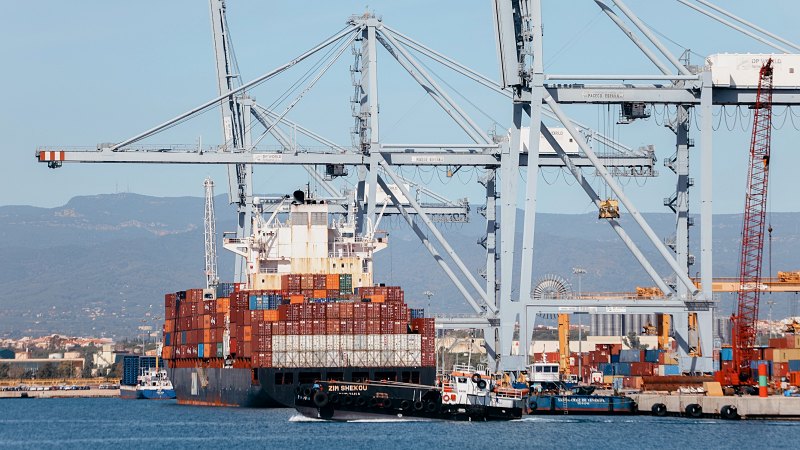
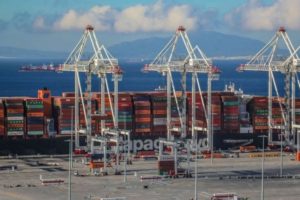
- According to UNODC (United Nations Office on Drugs and Crime), cocaine seizures in western and central Europe have exceeded those in North America for five consecutive years. West Africa acts as a transhipment platform between Latin America and Europe, with cargoes passing through Freetown, Dakar, Abidjan or Tema before being redirected to major European container ports such as Antwerp, Rotterdam, Algeciras, Valencia and Gioia Tauro, or smaller ports such as Wilhelmshaven.
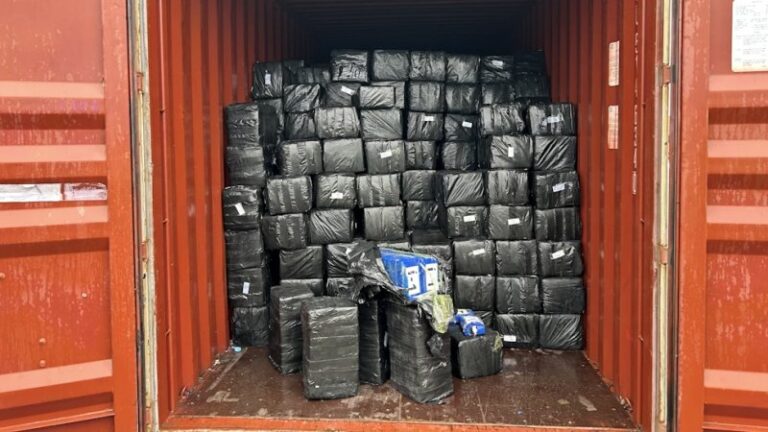
On 9 February 2026, German inspectors from the Hauptzollamt Oldenburg (Oldenburg Main Customs Office) selected a container for inspection at JadeWeserPort in Wilhelmshaven. The documents indicated an ordinary shipment: cocoa beans from Sierra Leone, bound for Barcelona, on a trade route commonly used by Europe’s food industry. The X-ray scan, however, showed irregularities in the density of the cargo and, when the container was opened, more than 400 packages wrapped in black film were found, each containing about 20 pressed blocks of cocaine. The total weight exceeded eight tonnes, with an estimated market value of about €500m. The German authorities described it as one of the country’s largest seizures in recent years.
The operation, however, did not end in Wilhelmshaven. The cocaine blocks were fitted with GPS devices, probably to allow the traffickers to track the container’s position in real time and organise a possible recovery. To prevent an armed operation and reduce the risk on the port quay, the German customs authorities destroyed the entire cargo "under extremely strict security measures" before allowing the container to continue towards Spain. The now-empty unit therefore followed its declared route towards Barcelona, turned into bait for the next stage of the investigation.
Using information shared by Oldenburg, the Spanish authorities prepared a controlled delivery by simulating a normal transport chain to the final destination. The operational phase began on 14 May 2026: during a fake redelivery of the container in an industrial area near El Ejido, in the province of Almería, police arrested two alleged organisers of the trafficking operation. One of them was the director of an import-export company which, according to the Spanish authorities, had already been linked to previous cocaine shipments intercepted by customs. Both are in pre-trial detention, accused of being the alleged organisers behind the shipment, although investigators have not ruled out further arrests.
This method reflects a pattern now well established in international drug trafficking: infiltration of legal supply chains, the use of credible commercial cover and the exploitation of high-volume container ports as transit hubs. The use of plausible commodities, such as cocoa moving from West Africa to Spain in this case, reduces the likelihood of checks because it is a route frequently used by Europe’s food industry. The use of GPS devices in the packages and the presence of a formally legitimate economic operator as the named consignee complete a picture that international analyses now classify as standard practice for drug-trafficking cartels.
The Wilhelmshaven-El Ejido case is not isolated. It forms part of a trend documented by UNODC (United Nations Office on Drugs and Crime): over the past five years, cocaine seizures in western and central Europe have exceeded those recorded in North America. The scale of the seizure is consistent with other major consignments intercepted in recent years at the continent’s main ports, confirming the cartels’ ability to move industrial-scale volumes in single shipments.
At the centre of this criminal logistics system is West Africa, which, according to analyses by Global Initiative (Global Initiative Against Transnational Organized Crime), ENACT (Enhancing Africa’s Capacity to Respond More Effectively to Transnational Organised Crime) and UNODC (United Nations Office on Drugs and Crime), has become a key transit platform between Latin America and Europe. Shipments from Brazil, Colombia and Ecuador pass through the ports and coastlines of countries such as Sierra Leone, Guinea-Bissau, Cape Verde, Ghana and Côte d’Ivoire before being redirected towards the European continent. The routes are hybrid: large container ships or general cargo vessels call at Freetown, Tema, Abidjan or Dakar; from there, transfers by fast boats or fishing vessels carry the cargo towards the Canary Islands, Andalusia or directly to the major ports of northern Europe. In this system, West Africa acts as a "pivot": it receives large consignments, breaks them down or repositions them, then relaunches them towards Europe on less suspicious vessels or with cleaned-up documentation. The case of Sierra Leone, the loading country of the container intercepted at Wilhelmshaven, fits this profile exactly.
Spanish ports are among the most exposed arrival points. In November 2024, Algeciras was the site of the largest anti-drug operation in Spanish history, with 13 tonnes of cocaine seized after being hidden among legal cargoes on routes linking the Atlantic to the western Mediterranean. In November 2025, more than two tonnes of cocaine were intercepted in Valencia on board a fruit container from Ecuador and, in May 2026, Spain’s Guardia Civil (Civil Guard) intercepted a cargo vessel off Western Sahara travelling from Freetown towards the Mediterranean: the estimated load was between 35 and 40 tonnes of cocaine, and the ship was escorted to Las Palmas de Gran Canaria.
The Belgian port of Antwerp also remains one of the main entry points for cocaine in Europe: 55 tonnes were seized there in 2025, largely from Atlantic routes that included transits or drop-offs off West Africa. Drug traffickers are diversifying routes to avoid tighter controls, exploiting transhipments in African ports where surveillance is weaker and corruption more widespread before re-entering the major gateways of northern Europe. Ports including Gioia Tauro, Livorno, Barcelona and Las Palmas are also among the European facilities with the highest number of seizures recorded in recent years. Recurring smuggling techniques include concealing cocaine in false bottoms in containers or in ships’ structures, using perishable commodities such as fruit, fish and cocoa to create urgency and reduce the time available for checks, and using magnetic devices, known as "torpedoes" or "boxes", attached to the hull and recovered off the African or European coast.
Antonio Illariuzzi