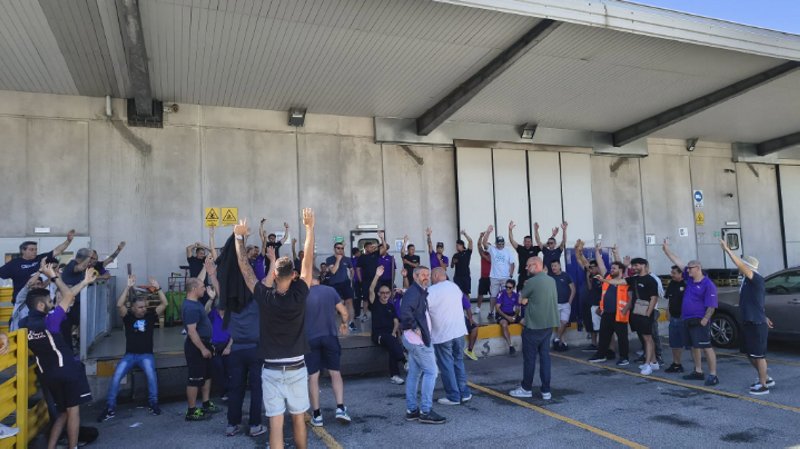








On 1 June 2026, Ziegler Belgium filed for bankruptcy with the Tribunal de l’entreprise francophone de Bruxelles (Brussels Enterprise Court), bringing to an end the 118-year history of one of the logistics groups most deeply rooted in the heart of continental Europe. The liquidation affects four of the group’s legal entities in Belgium: Ziegler SA, Intertrans, Dornach and Universal Express.
The collapse in Belgium comes just a few months after that of the French subsidiary, which entered court-supervised restructuring proceedings on 2 March 2026, with the date of insolvency backdated to autumn 2024. On 31 March, the Tribunal de commerce de Lille Métropole (Lille Métropole Commercial Court) ordered the judicial liquidation of Ziegler France and its subsidiary Satra, with no continuation of operations, closing around 50 branches and affecting approximately 1,500 workers. Ziegler France’s 2025 accounts showed an operating loss of more than €6 million on revenue of €445 million, compared with an operating profit of €10 million in the previous financial year, marking a sharp deterioration in just one year. The sequence of events in France and Belgium has effectively dismantled the group’s two main pillars in European road transport, substantially weakening a business that employed more than 3,200 people across 16 countries.
Most of the Belgian operations have been acquired by Ghent-based Transuniverse Forwarding, which is taking over seven sites: Aalst, Antwerp, Brussels Expo, Kontich, Rekkem/Lar, Welkenraedt and Zeebrugge. The transaction covers transport, distribution, logistics, customs services and maritime forwarding. Transuniverse’s revenue is expected to rise from around €100 million to €135 million. Chairman Frank Adins identified the Welkenraedt site as a potential transhipment platform for customers in Limburg and Wallonia with flows towards Germany and Central and Eastern Europe, presenting it as an alternative to the congested Antwerp corridor. A substantial proportion of Ziegler Belgium’s workforce is expected to transfer to Transuniverse, although the final number has not yet been disclosed.
The air freight forwarding operations have instead transferred to Van Moer Logistics with immediate effect. The acquired division operates as an IATA-certified air freight forwarder at Brussels Airport and serves a diversified portfolio of cargo customers. For Van Moer, the transaction adds the final missing element to a service portfolio already covering road transport, inland waterways, warehousing, port and terminal logistics, container storage and forwarding. The acquisition brings air freight into the group’s in-house offering. Following the transaction, Van Moer reports more than 2,200 employees, 500 trucks, 15 inland vessels, 850,000 square metres of warehousing and more than 40 locations in Belgium.
Ziegler’s bankruptcy comes amid severe pressure on Belgium’s freight transport sector. In 2025, bankruptcies in the road transport industry reached a record 413, an increase of around 35% compared with 2024. According to Transport & Logistics Flanders, the crisis is structural rather than cyclical, with margins squeezed by rising fuel, wage and toll costs amid constant pressure on freight rates. Most bankruptcies involve micro-enterprises operating between one and five vehicles, but the wave of insolvencies is now beginning to affect medium-sized and large operators, as the Ziegler case demonstrates. Another figure highlights the vulnerability of local businesses: almost one-third of transport insolvencies are concentrated in the Brussels region, which is home to fewer than 10% of the country’s active hauliers.
P.R.