






Helrom, the German operator specialising in the rail transport of non-craneable semi-trailers, is to be liquidated. The decision came at the end of May 2026, when employees were informed that operations were no longer economically viable. Its trains had been at a standstill for at least a week, and the company filed for insolvency proceedings for a second time. The process, however, ended with the decision to liquidate the business. Its patents, wagons and other assets will now pass to the insolvency administrator. Helrom’s difficulties date back to the summer of 2025. In July that year, the company applied to the Frankfurt court for preliminary insolvency proceedings, citing a shortage of equity after funds expected from existing shareholders failed to materialise. At that stage, the company kept its main services running and publicly stressed that the process was intended as a restructuring rather than a liquidation.
The plan reached its first formal conclusion in January 2026, when the court approved the insolvency agreement. Helrom then emerged from the proceedings with a new corporate structure, Helrom Holding Limited, and a new majority shareholder, the Hrg group. Other parties involved included Greenbrier, the wagon manufacturer, and lenders Dal and Société Générale, which had already provided about €67 million in loans for the development of the Trailer Rail fleet. Less than five months passed between the formal completion of those proceedings, on 19 and 20 January 2026, and the decision to liquidate the company at the end of May.
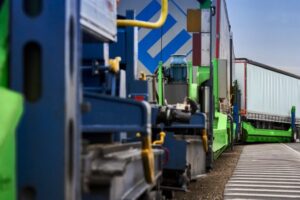
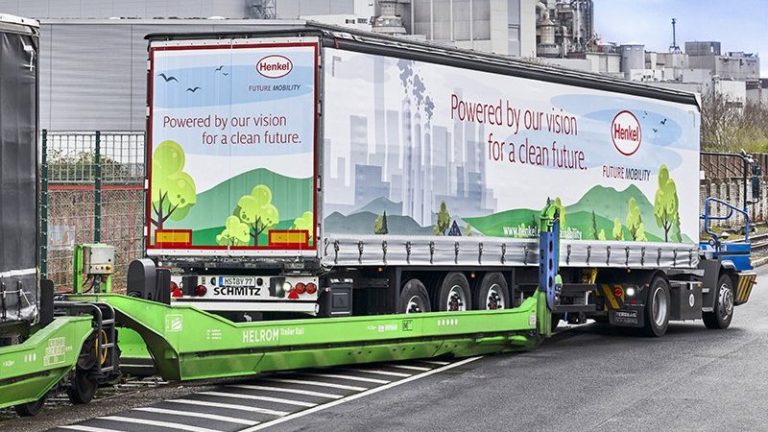
Helrom’s business model stood out in the European market because of its articulated Trailer Rail wagons, which allow standard road semi-trailers to be loaded horizontally without the need for dedicated crane-equipped terminals. Each unit consists of two pockets mounted on three bogies and can accommodate three semi-trailers, using a sideways tilting system for loading and unloading at the terminal. The solution received support from the German Federal Ministry of Transport in the form of a €15 million grant for the market launch of Trailer Rail technology. It also secured long-term financing of about €34-35 million from Société Générale and Deutsche Leasing/Dal for the series production of the wagons.
Following the liquidation, the patents and fleet will pass to the insolvency administrator, who will be responsible for realising their value through a sale to another operator or manufacturer. In the absence of a buyer, the assets may be disposed of separately. Some analysts say there is still a possibility that a financially stronger company could acquire the technology and wagons, but no buyer has yet been announced. For Europe’s combined transport sector, Helrom’s closure represents a loss of innovative capacity in the non-craneable semi-trailer segment, which is regarded as strategically important to the modal-shift objectives of the European Union and national governments. The case also sends a negative signal to other capital-intensive projects based on non-standard technological solutions without firm backing from major customers and multi-year public support schemes.
M.L.